RBI Cautions On Fiscal Risks Emerging From States Going To The Polls
An intention to consolidate finances at the state level could be derailed for a fourth consecutive year due to state elections, cautioned the Reserve Bank of India in its annual report on state finances. Fiscal pressures across states are already elevated with states breaching the 3 percent threshold set under the Fiscal Responsibility and Budget Management Act for the third consecutive year in 2017-18.
Slippage at the state level, along with the central government's decision to push back the goal of a 3 percent fiscal deficit, will mean a general government deficit much higher than the medium-term target, the report said.
With a combined GFD to GDP ratio at about 6.4 percent vis-à vis the FRBM Committee's medium-term target of 5.0 percent, private investment risks getting crowded out of the finite pool of financial resources.RBI Report On State Finances
Fiscal Slippage In 2017-18
The revised estimates for 2017-18, show that the gross fiscal deficit of states rose to 3.1 percent of GDP. This was largely due to higher revenue expenditure on farm loan waivers and pay revisions. At the same time, states' own taxes declined due to the implementation of the Goods and Services Tax but the compensation failed to keep pace, said the report.
- Gross fiscal deficit slipped by 0.35 percentage points of GDP in 2017-18.
- Revenue expenditure overshot budget estimates by 13 basis points
- Revenue receipts saw a shortfall of 27 basis points mainly due to states' own taxes declining by 0.33 percent of GDP vis-a-vis the budget estimate.
The decline in states' tax revenues is essentially associated with the pending accounting issues related to GST implementation. However, strict comparison with previous years is not possible due to lack of data. Also being the first year of implementation, states have not provided data on uniform basis.RBI Report On State Finances
Fiscal Consolidation In 2018-19?
Following the third consecutive year of slippage above the 3 percent threshold, states will make another attempt at consolidation in 2018-19.
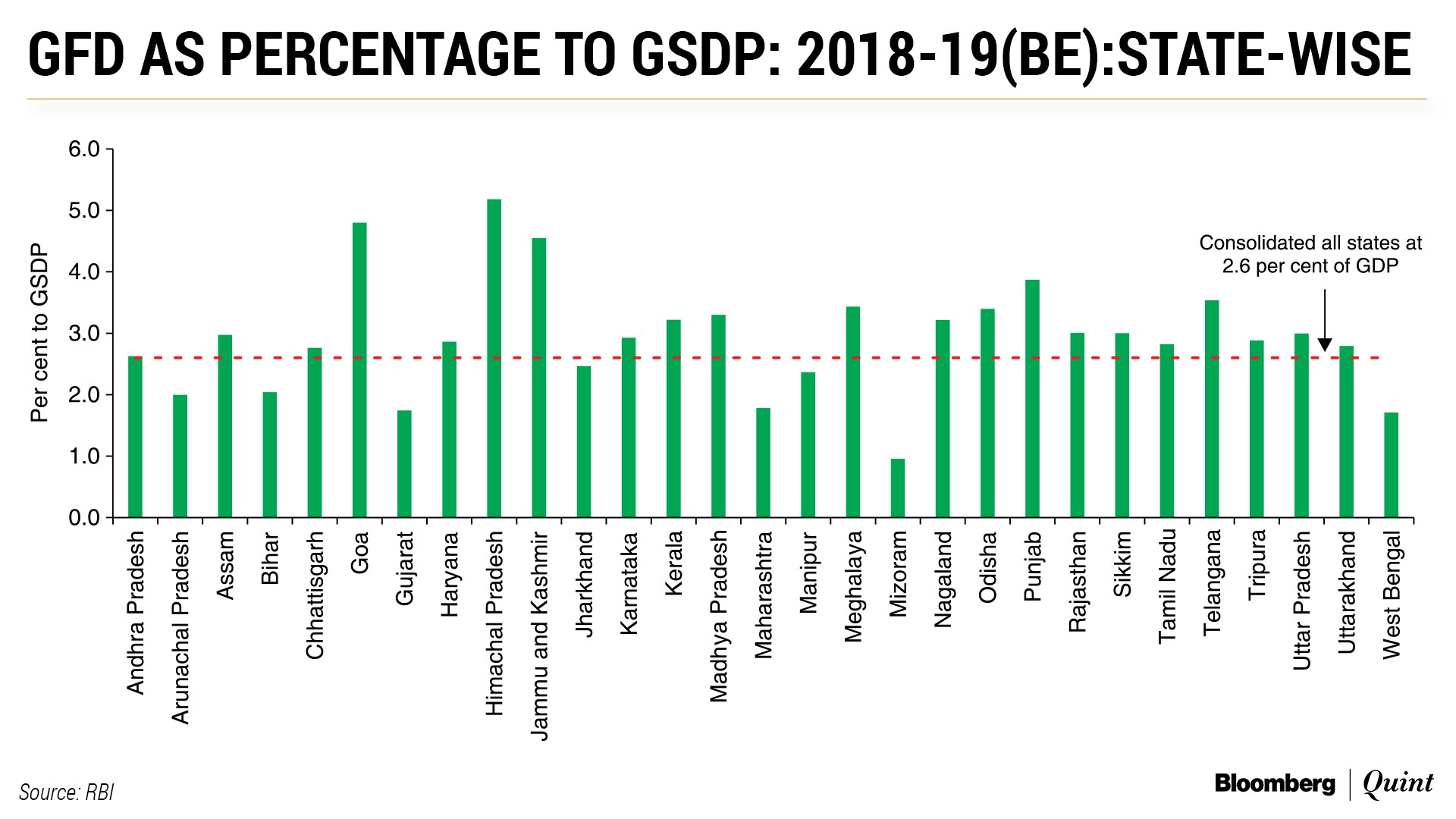
“The consolidated fiscal deficit of states is budgeted at 2.6 percent of GDP in 2018-19 to be achieved through higher revenue collection and lower revenue expenditure,” said the report. States are projecting a revenue surplus of 0.2 percent of GDP in the current year as against a deficit of 0.4 percent last year.
Capital outlay across states is expected to grow slower at about 14 percent in 2018-19 as against a growth of 20 percent a year ago.
However, the RBI fears that the attempt at fiscal consolidation may be derailed by spending ahead of the upcoming state elections. Continuing farm loan waiver announcements as well as the implementation of the pay commission awards by some states are risks that the RBI flagged off.
Revenue mobilisation remains the key towards attaining the budgeted targets. As the GST stabilises, it should boost states' revenue capacity and support the resumption of fiscal consolidation.RBI Report On State Finances
Rising State Debt
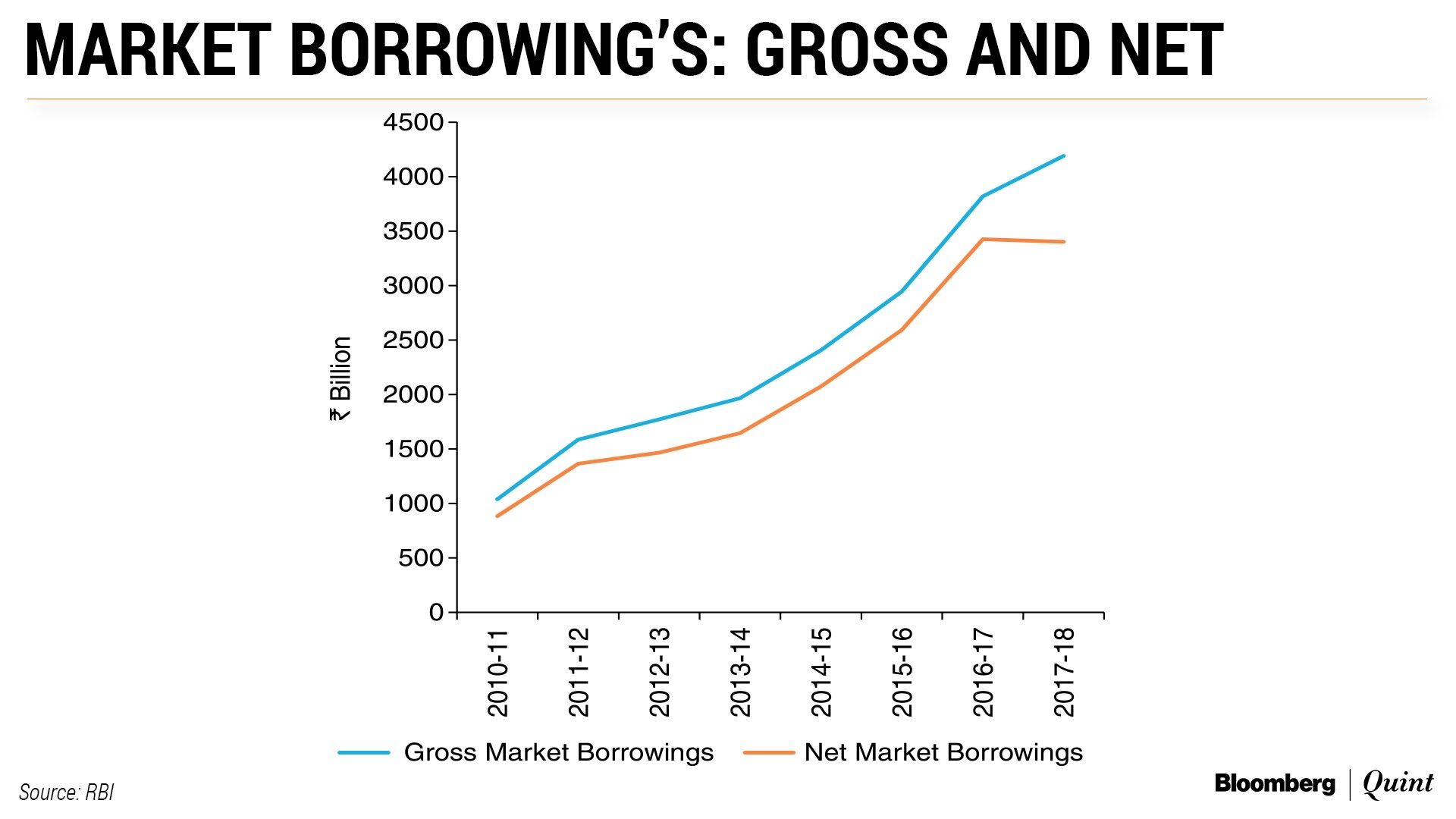
The RBI also flagged off the risk from rising state debt, which has pushed up state borrowings from the markets.
The issuance of UDAY bonds in 2015-16 and 2016-17, farm loan waivers and the implementation of pay commission awards have led to a higher debt-to-GDP ratio of 24 percent in 2017-18. This number is seen rising further to 24.3 percent of GDP in 2018-19, with 16 states likely to see this ratio rise in the current year.
The report also highlighted rising redemption pressures for states. It explained that state borrowings increased in the aftermath of the global financial crisis in 2008. Since states mostly issue bonds of 10-year maturity, these borrowings are now coming up for redemption.
About 16.7 per cent of outstanding SDLs will mature in the next three years, keeping redemption pressure high in the near future.

-
Signature Play: The Classic Cocktail Is Dead. Or Is It?

Classic cocktails are disappearing from India's cocktail menus. But they're still being ordered, taught to bartenders and borrowed from. So, who's really having the last drink?
-
A New Samvat Wishlist: Inclusive Prosperity And Human Development
India has strengthened its economic foundations through infrastructure, digital access and enterprise. Its next growth chapter must deepen productivity, create better livelihoods and widen participation in prosperity.
-
Love, Sex Aur Dhokha: The Audacious Plot To Spy On Jensen Huang
A Taipei dinner, a Singapore chip buyer and a suspected Chinese asset: inside the alleged spy operation that got close to NVIDIA's Jensen Huang.
-
Ten Things I Learnt This Samvat
Patience can be a trap. Cheap stocks can stay cheap. Leverage can wipe you out. What did Samvat 2082 teach us? Niraj Shah writes on 10 lessons from the year gone by.
-
Talking Points This Week: Tech Nerves, FII Buying, And A Faraway Banking Shock
The global markets are not shining this Diwali. The exception in the large markets is, India.
-
Midterm Rally Lasted A Day. The Hard Reality Of A Divided US May Last Two Years | Opinion
Between a contested AI boom, a debt ceiling that arrives in 2027 and a president with every incentive to act alone, the next two years may prove more volatile than the first day's rally suggests.
-
Blue Wave Will Derail the AI Trade but Won't Dismantle the AI Era | Unhedged Position
The Democrats' sweep of the US Congress will see politics collide with economic forces both over the long and short term.
-
It's Time To Take The GST Council's Bet On Trust Global
Payment records can prove India's services exports, and clear, proportionate rules can bring foreign digital sellers into the tax net.
-
Opinion | India at 38: From Innovation Overperformer to Innovation Powerhouse
India now has 453 VC-backed deep science startups, 18 of them late-stage, after 117 percent growth since 2020. Laurus Labs, at USD 9.3 billion, is the most valuable deep science company in any middle-income economy outside China.









