Putin’s Bid To Reassert Kremlin Authority Is Showing Cracks
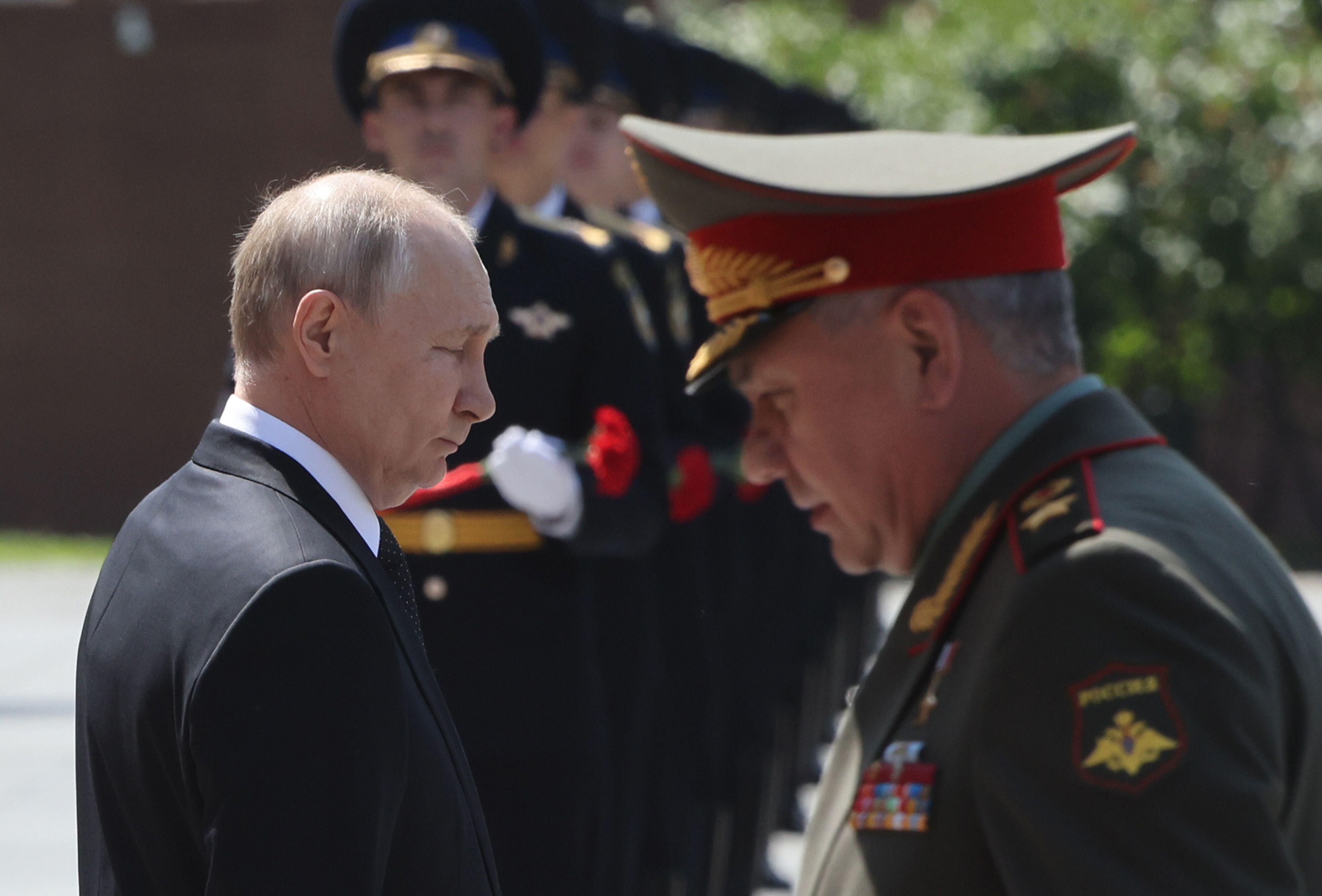
(Bloomberg) -- A week after an abortive uprising by a mercenary chief shook his authority, Vladimir Putin's efforts to reassert his control are showing cracks.
Infighting spread within the security establishment as the Russian president moved on senior players thought to have supported the 24-hour mutiny by Wagner chief Yevgeny Prigozhin. One top general was detained for questioning, according to people familiar with the moves.
Opponents of Defense Minister Sergei Shoigu from the security services stepped up internal calls for his removal, they said, speaking on condition of anonymity to describe events that aren't public. Prigozhin had been publicly attacking Shoigu, a longtime ally of Putin's, for months over the lack of success in the invasion of Ukraine.
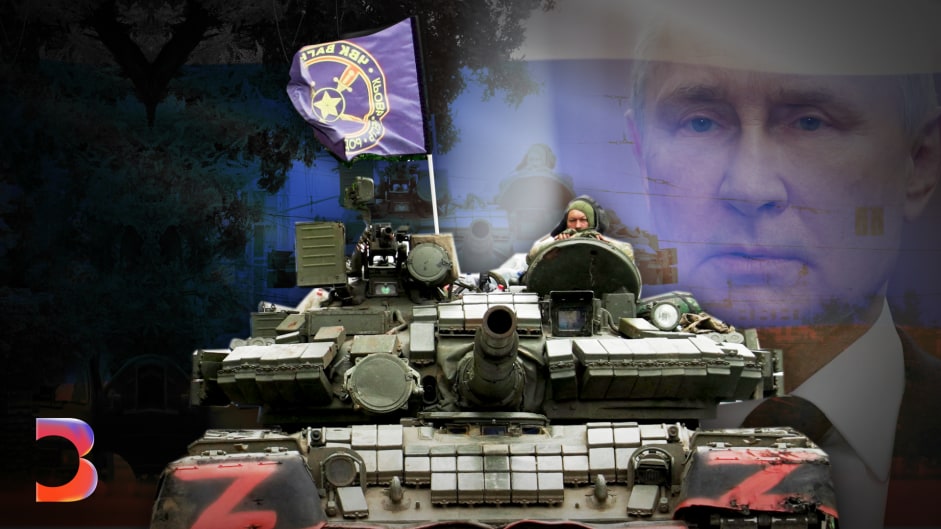
Putin spent the week trying to reassure key constituencies, with televised public events involving military, business and other groups. While polls showed his public support remained strong, doubts about his control among the government and business elite spread, insiders said.
The continuing turmoil deepened questions about what Prigozhin's dramatic march on Moscow a week ago would mean for Putin's 17-month-old invasion of Ukraine. The government in Kyiv renewed calls for more assistance for its military. There were growing signs that the US and some of its allies were reconsidering earlier caution on sending new kinds of weapons, despite fears about how the shaken Russian president might react.
“It's clear that Putin comes out of this crisis weakened,” EU foreign policy chief Josep Borrell said Thursday. “But a weaker Putin is a greater danger.”
While western officials agreed that Putin's authority had been eroded by the events, some suggested his undermined position will make him less likely to escalate the war. Ukraine's allies were pushing for stronger assurances for the country's possible membership in NATO at the alliance's summit next month.
US and European officials were watching closely for any indication the turmoil might affect Russia's vast nuclear arsenal but said so far, there's no sign of any increased risk. Many capitals have grown jaded to the Kremlin's repeated threats to use the arms in the war against Ukraine, officials said.
“In the US, they view this mutiny as a kind of victory — the war in Ukraine has shown cracks in Putin's rule,” said Livia Paggi, managing director and head of political risk at consultancy J.S. Held. “What isn't fully understood is what kind of chaos would follow if it were actually to happen,” she said, referring to the possibility of regime change.
In Russia, investigators questioned Sergei Surovikin, a prominent general who oversaw the invading forces from October to January, over the events, according to a person familiar with the situation. Known as “General Armageddon” for his ruthless fighting in Syria, Surovikin isn't in custody but his movements are restricted, the person said. He couldn't be reached for comment.
CNN reported Thursday, citing documents from the Dossier Center, which investigates the Russian leadership, that the general had a personal registration with Wagner.
“A massive investigation has begun,” said Sergei Markov, a political analyst with close Kremlin ties. “All the generals and officers who were in contact with Prigozhin and Wagner will be questioned.”
Broader probes were also underway into close allies of Shoigu, the defense minister, according to a person familiar with the situation. There has been no public confirmation of that or of Surovikin's whereabouts.
One insider described what he called a power vacuum in the wake of the uprising that has undermined Putin proteges like Shoigu.
But western-allied officials said they don't expect an imminent shakeup that would threaten the positions of Shoigu and Russia's military chief, General Valery Gerasimov. Known for his loyalty, Putin is especially reluctant to remove longtime supporters under pressure.
“The loss of face for all the players involved hasn't been overcome,” said Mikhail Vinogradov, head of the St. Petersburg Politics Foundation. “About repressions among security forces there is absolutely no clarity, but no one is in a hurry to refute them.”
Putin chose to spotlight the military in his first public appearance after the weekend revolt ended. On Tuesday, he addressed 2,500 troops on the main square inside the Kremlin and later met with uniformed officers in an ornate hall to thank them for their loyalty.
On a stop in Dagestan the next day, Putin waded into a crowd of adoring supporters, something he's rarely done since the Covid-19 pandemic.
Putin struck a positive note at a business forum on Thursday. “There's a feeling of confidence that no matter what difficulties arise, we will overcome them all calmly, rhythmically, and moving forward,” he said, after a standing ovation from the invited guests on his arrival.
A new opinion poll showed support for the president has held steady despite the mutiny. At the same time, the survey showed a majority of Russians now support peace talks to end the war in Ukraine instead of continuing the military operation.
Among the elite, the abortive uprising by a longtime protege has fueled doubts about Putin's control, but he's bound top government and business leaders to him with the international isolation wrought by his war. Many of them are subject to US and European sanctions.
“The most likely scenario is not a direct challenge to Putin as leader, but the continuing decay of the ruling system,” said Oksana Antonenko, a global fellow at the Kennan Institute. With his current term set to end next year, “it's still his choice whether to stay post-2024 but the arguments are stronger for him to step down than before.”
(Updates with analysts in ninth, last paragraphs.)
More stories like this are available on bloomberg.com
©2023 Bloomberg L.P.

-
The Economic Imperative: Analysing The Material Driving Force Behind India-Canada Strategic Reset

This economic complementarity is further reinforced by deep institutional investment ties and talent mobility, which form the bedrock of the bilateral framework.
-
Medicine Pricing: Where Must Profit Stop?
India must confront excessive margins, hidden incentives and regulatory gaps that threaten the integrity of medicine.
-
Why Amazon And Flipkart Are Struggling To Beat Meesho In India's Smaller Cities
With 274 million users and lowest-cost logistics, Meesho is defending its value commerce crown against giants like Amazon and Flipkart.
-
High US Salaries, No Green Card Certainty: The Financial Calculation Facing Indian H-1B Families
The suspension of PERM processing at eight technology employers does not cancel existing H-1B visas. What it does is force a question many Indian families have been avoiding: is the US salary worth tying your career and family plans to one employer?
-
Swiggy vs Eternal: Food Delivery's Two Rivals Are No Longer In The Same Race
Eternal is building a private AI assistant, dark.ai. Swiggy is still working out how to make Instamart pay, with an operating loss of Rs 895 crore in the July-September quarter while Blinkit stayed profitable.
-
Where You Live Shapes How You Get To Work | The Reason Why
Two-wheelers are the most popular way to get to work in India, accounting for nearly 43% of workplace commutes.
-
Unhedged Position: Can India See An Indonesia-Style Time Correction?
The Nifty is trading below levels it first clocked in 2024. Is there, then, as I have suggested in the headline, potential that the current time correction drags on painfully for the next three-five, even ten years?
-
Navigating Friction And Energy Realities: An Analysis Of Marco Rubio's October Visit To India
Occurring at a critical juncture marked by stalled trade negotiations and escalating geopolitical pressures over global energy supplies, the visit offers a profound window into modern US-India relations.
-
India Exports Capital. Why Not Export Trusteeship?
The big question, then, is whether India can build an institution that global borrowers, investors, banks, and lawyers can trust, even without an Indian connection.
-
France's Economy & Politics Are In Crisis | The Reason Why
Let's look at how the French economy and politics evolved under Nicolas Sarkozy, Franois Hollande and Emmanuel Macron.










