At Least 68 Dead as Nepal Plane Crashes Seconds Before Landing
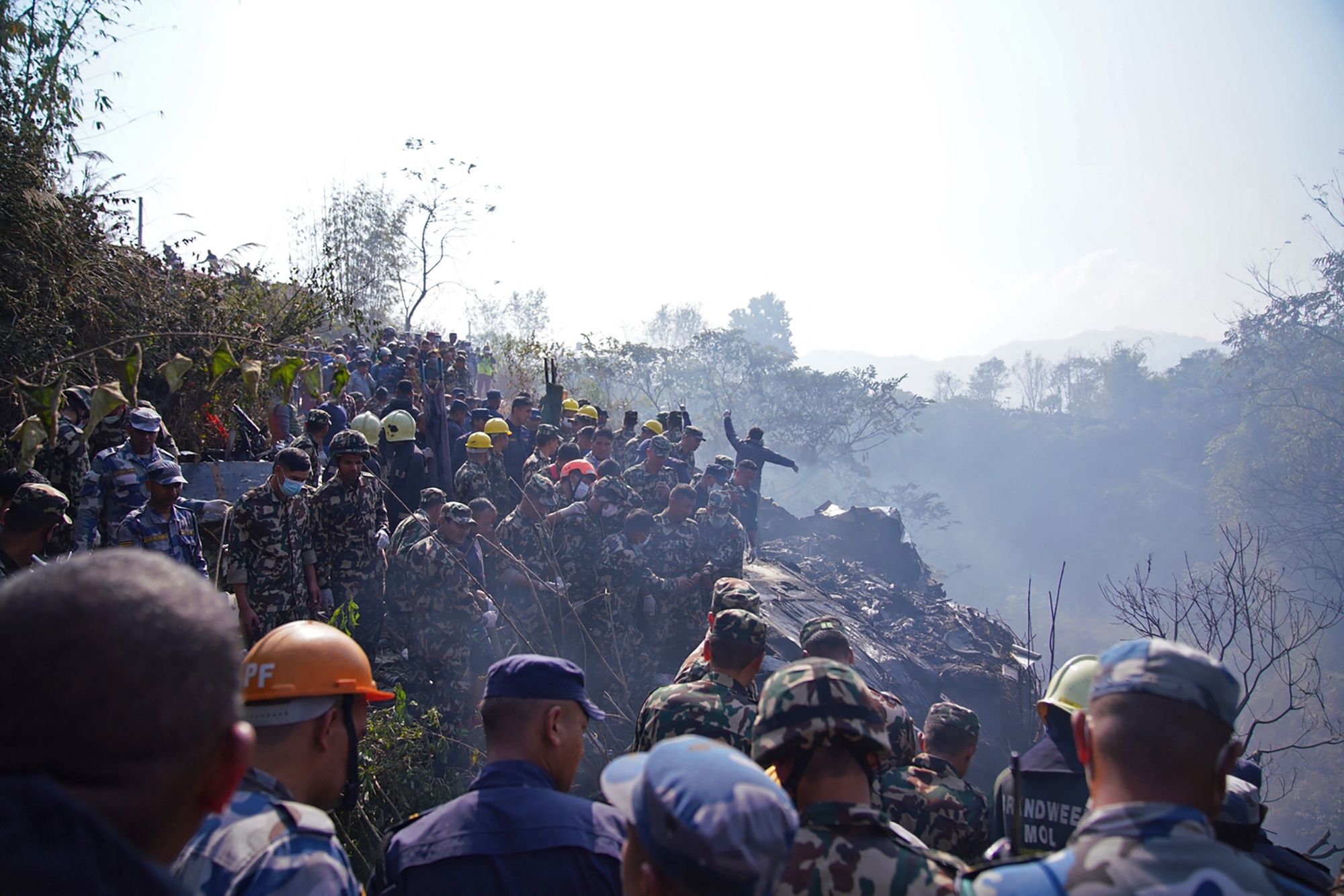
(Bloomberg) -- At least 68 people were killed after a Yeti Airlines flight crashed in Nepal on Sunday just seconds before it was due to land, the latest deadly air disaster in the Himalayan nation.
The twin-engine ATR-72 turboprop, which took off from Kathmandu at 10:32 a.m. local time, crashed close to its destination of Pokhara airport at around 11 a.m., Sanjay Kumar, deputy director of the Civil Aviation Authority of Nepal, said by phone. There were 68 passengers and four crew members on board, airline spokesman Sudarshan Bartaula said.
The flight crashed “10 to 20 seconds before landing,” Bartaula said. There was no distress call from the cockpit before the disaster, he said. Nepal's armed forces and police are carrying out rescue operations, Kumar said.

There were 15 foreigners on board including those from India, France, Australia, Ireland, Russia and Korea, the Civil Aviation Authority of Nepal said.
The weather was clear when the aircraft crashed, said Kumar.
ATR, which is a joint venture of Airbus SE and Leonardo SpA, said in a statement Sunday that it has been informed about the accident and its specialists are “fully engaged to support both the investigation and the customer.”
Pokhara, in central Nepal, is a lakeside tourist mecca nestled below the Annapurna mountain range.
Flying is notoriously risky in Nepal, the picturesque Himalayan nation that's a favorite with adventurous tourists, pilgrims and mountaineers. In May, a Tara Air plane carrying 22 people from Pokhara crashed in the mountains, killing all on board.
There have been 42 fatal plane crashes in Nepal since 1946, the Associated Press reported, citing the Flight Safety Foundation's Aviation Safety database. The European Union has banned airlines from Nepal from flying into the region since 2013, citing weak safety standards, the news outlet said.
World's Riskiest Place for Flying Averages One Disaster a Year
Turboprop aircraft were once popular in the US but regulators banned them from icy-weather flights after a 1994 plane crash in Indiana. The Federal Aviation Administration was unable to immediately comment on whether this is still the case.
--With assistance from .
(Adds plane crashes and US ban on aircraft in ninth and 10th paragraphs)
More stories like this are available on bloomberg.com
©2023 Bloomberg L.P.

-
One El Nino, India Can Handle. Two Could Break The Granary

India's grain stocks can absorb one bad year, but a second El Nino could drain the buffer in two to three years, economists say.
-
India's Troika Of Good Luck | Joining The Dots
As Jensen Huang's exit drags Nvidia down, a cooling AI trade and resilient earnings have revived investor interest in India. A likely RBI rate hike looms.
-
Talking Points This Week: Leadership Shock At Nvidia, Earnings Strength, And The Fog Over Hormuz
The Anthropic IPO pricing and first trading day, Nvidia's upcoming earnings, and any fresh signals from Iran will set the tone for the following week.
-
Signature Play: The Classic Cocktail Is Dead. Or Is It?
Classic cocktails are disappearing from India's cocktail menus. But they're still being ordered, taught to bartenders and borrowed from. So, who's really having the last drink?
-
A New Samvat Wishlist: Inclusive Prosperity And Human Development
India has strengthened its economic foundations through infrastructure, digital access and enterprise. Its next growth chapter must deepen productivity, create better livelihoods and widen participation in prosperity.
-
Love, Sex Aur Dhokha: The Audacious Plot To Spy On Jensen Huang
A Taipei dinner, a Singapore chip buyer and a suspected Chinese asset: inside the alleged spy operation that got close to NVIDIA's Jensen Huang.
-
Ten Things I Learnt This Samvat
Patience can be a trap. Cheap stocks can stay cheap. Leverage can wipe you out. What did Samvat 2082 teach us? Niraj Shah writes on 10 lessons from the year gone by.
-
Talking Points This Week: Tech Nerves, FII Buying, And A Faraway Banking Shock
The global markets are not shining this Diwali. The exception in the large markets is, India.
-
Midterm Rally Lasted A Day. The Hard Reality Of A Divided US May Last Two Years | Opinion
Between a contested AI boom, a debt ceiling that arrives in 2027 and a president with every incentive to act alone, the next two years may prove more volatile than the first day's rally suggests.
-
Blue Wave Will Derail the AI Trade but Won't Dismantle the AI Era | Unhedged Position
The Democrats' sweep of the US Congress will see politics collide with economic forces both over the long and short term.









