Over 1 Lakh Children Under 5 Years Died Due To Toxic Air In India: WHO
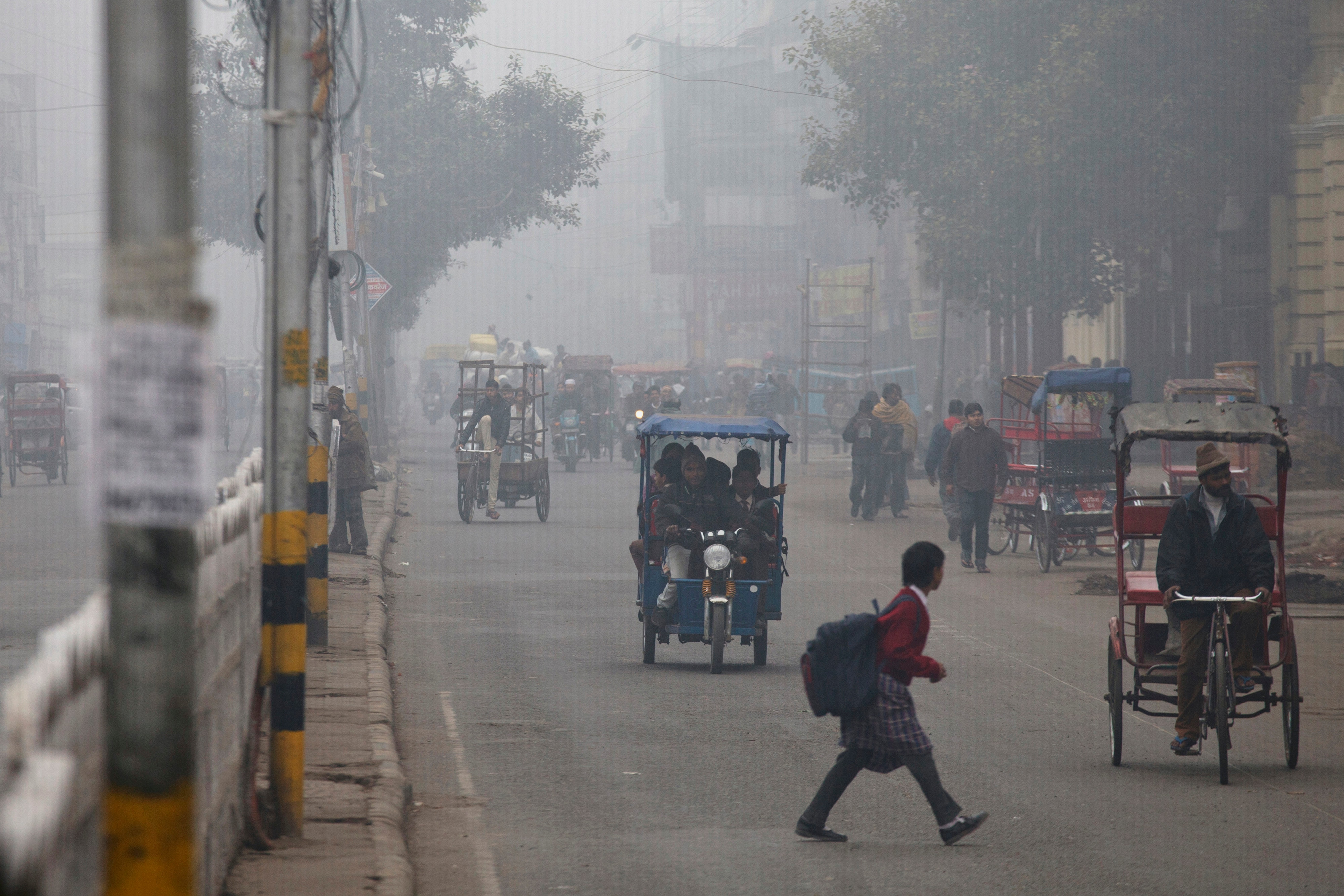
Over one lakh children under the age of five died in India in 2016 due to exposure to toxic air, according to a new World Health Organization study.
Deaths of about 600,000 children under 15 years of age in 2016 were attributed to the joint effects of ambient and household air pollution, in the report titled 'Air Pollution and Child Health: Prescribing Clean Air'. It also noted that about 98 percent of children in the same age group in low- and middle-income countries were exposed to air pollution.
"Globally, 93 percent of the world's children under 18 years of age are exposed to ambient fine particulate matter (PM2.5) levels above WHO air quality guidelines. The figure includes around 630 million of children under 5 years of age, and 1.8 billion of children under 15 years," the World Health Organisation (WHO) study released Monday said.
Another report by Greenpeace presented a grim picture of India's pollution level. The green body's report said three of the world's largest nitrogen oxide air pollution emission hotspots that contribute to formation of PM2.5 and ozone layer depletion, are in India with one in the Delhi-NCR.
Delhi-NCR, Sonbhadra in Uttar Pradesh, Singrauli in Madhya Pradesh and Talcher-Angul in Odisha are the hotspots identified. Sonbhadra and Singrauli combined have one hotspot.
The study said a total of 101,788 deaths under the age of five — 54,893 were girls and 46,895 were boys — were reported due to joint effects of exposure of children to ambient and household PM 2.5 and burden of disease by the country in 2016.
Out of the over 1 lakh deaths in the country in 2016, 60,987 were due to ambient air pollution (32,889 were girls and 28,097 boys), it said. Industries, households, cars and trucks emit complex mixtures of air pollutants and form ambient air pollution.
Due to household air pollution in 2016, about 66,890 deaths of children below five years were reported out of which 36,073 were girls and 30,817 were boys, the WHO report said.
Household air pollution from cooking and ambient air pollution caused more than 50 percent of acute lower respiratory infections in children under five years of age in low- and middle-income countries, it said.
The WHO report examines the heavy toll of both ambient (outside) and household air pollution on the health of the children across world, particularly in low- and middle-income countries, like India.
PM2.5 (or particles with a diameter of less than 2.5 micrometres present in the air), also called "fine particulates", can be a matter of more serious health concern than PM10 (those with a diameter of less than 10 micrometres). It poses greater harm as it can easily be inhaled into the respiratory tract, and has reached dangerous levels in New Delhi in the last two weeks.
A thick blanket of haze engulfed the city, and an overall air quality index of 348 was recorded on Monday, which falls in the very poor category, according to data of the Central Pollution Control Board.
"Polluted air is poisoning millions of children and ruining their lives," WHO Director-General Dr Tedros Adhanom Ghebreyesus said. "This is inexcusable. Every child should be able to breathe clean air so they can grow and fulfil their full potential."
"Air Pollution is stunting our children's brains, affecting their health in more ways than we suspected," said Dr. Maria Neira, Director, Department of Public Health, Environmental and Social Determinants of Health, WHO. "But there are many straight-forward ways to reduce emissions of dangerous pollutants.”
The WHO report cited a case study that investigated whether exposure to PM2.5 during pregnancy was associated with low birth weight in an integrated rural-urban, mother-child cohort in Tamil Nadu.
"The researchers recruited 1,285 women in the first trimester of pregnancy in primary health care centres and urban health posts and followed them until the birth of their child to collect data on maternal health, prenatal care, exposure to air pollution during pregnancy and the birthweight of the child," the study said.
The report, launched ahead of the WHO's first ever Global Conference on Air Pollution and Health, revealed that when pregnant women are exposed to polluted air, they are more likely to give birth prematurely and have small, low birthweight children.

-
Indians Are Travelling, But Not Every Journey Is A Holiday | The Week In Whys

Pilgrims, patients and working women are the real travellers, and the system hasn't quite caught up with them.
-
Getting To Work Costs Women More | The Reason Why
It is not just about women paying more than men. It is about women paying much more in cities than in villages.
-
AI Bias In Investing Cannot Be Eliminated, But It Can Be Governed
Framing is a particularly important example as identical financial information presented in terms of gains rather than losses can lead an LLM to reach a different assessment.
-
Joining The Dots | Dark Skies, Steady Diya: Why Hope Holds This Diwali
With war, a weak rupee and foreign outflows weighing on sentiment, policymakers at the NDTV World Summit and market veterans at NDTV Profit Ignite: Diwali Edition offered the same advice: stay invested and filter out the noise.
-
The Curious Case of Equitas Small Finance Bank And A CEO Who Quit For Stock
PN Vasudevan believes persistent investor concerns over a perceived conflict of interest had become a governance overhang on Equitas Small Finance Bank's stock, even as the lender improved profitability and asset quality.
-
Talking Points This Week: AI Cash Burn, A Tiger Comeback And An India That Still Finds Its Own Path
India is not immune to higher oil or tighter global liquidity, yet its earnings base is broader, its domestic policy levers are still available.
-
Foreign Investors Own Half Of HDFC Bank and ICICI Bank. An LTCG Cut Could Matter Most Here
Foreign portfolio investors have US$115 billion parked in HDFC Bank, ICICI Bank. If the government cuts long-term capital gains tax, Jefferies says returning foreign money could land here first.
-
'Never Seen This Level Of Negativity': Sandeep Tandon Says The Next Rally May Be Closer Than You Think
Veteran investor Sandeep Tandon says foreign selling is easing, large-caps are due a comeback and mid-caps are crowded, while he turns positive on gold, power and pharma this Diwali.
-
Indians Stay With Family, Not In Hotels | The Reason Why
India still lacks enough clean, reliable and affordable hotels for budget-conscious travellers.
-
The Economic Imperative: Analysing The Material Driving Force Behind India-Canada Strategic Reset
This economic complementarity is further reinforced by deep institutional investment ties and talent mobility, which form the bedrock of the bilateral framework.










