Oil-Watchers Expect OPEC+ To Extend Supply Cuts Into Second Half
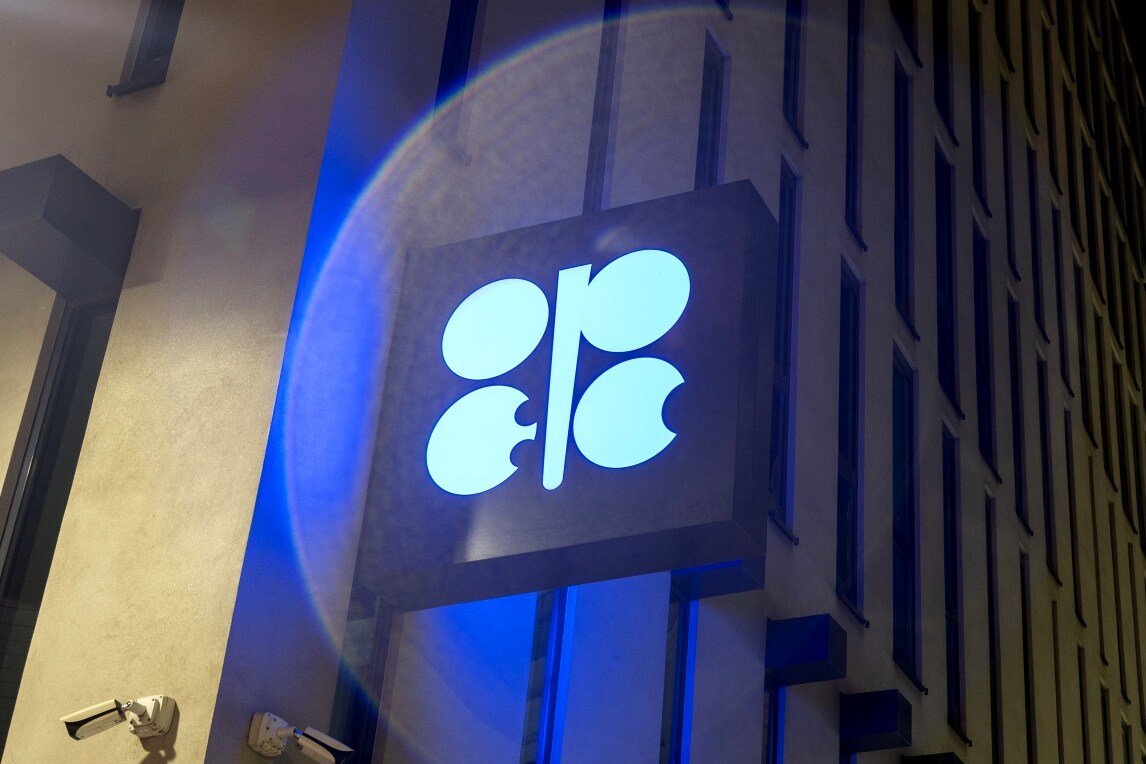
(Bloomberg) -- OPEC+ is expected to prolong oil output cuts into the second half of the year as it seeks to stave off a global surplus and shore up prices.
Saudi Arabia and its partners have been keeping roughly 2 million barrels-a-day offline this year, and will meet on June 1 to consider whether to continue. Crude prices soared last month on fears that conflict in the Middle East could disrupt oil supplies, stirring talk that OPEC+ might revive output to calm the market.
But 87% of traders and analysts surveyed by Bloomberg predict that the Organization of Petroleum Exporting Countries and its allies will extend the curbs, potentially to the end of the year.
“OPEC+ will want to see evidence of sustained tightness in oil markets before starting to add supply, so there's a good chance they will decide to extend,” said Richard Bronze, an analyst at Energy Aspects Ltd. “The discussions will not begin in earnest until closer to the meeting date.”
Oil prices have retreated close to a six-week low near $84 a barrel in London as traders shrug off hostilities between Iran and Israel, while the market outlook darkens amid faltering growth in China, and abundant crude supplies from the US, Brazil and Guyana.
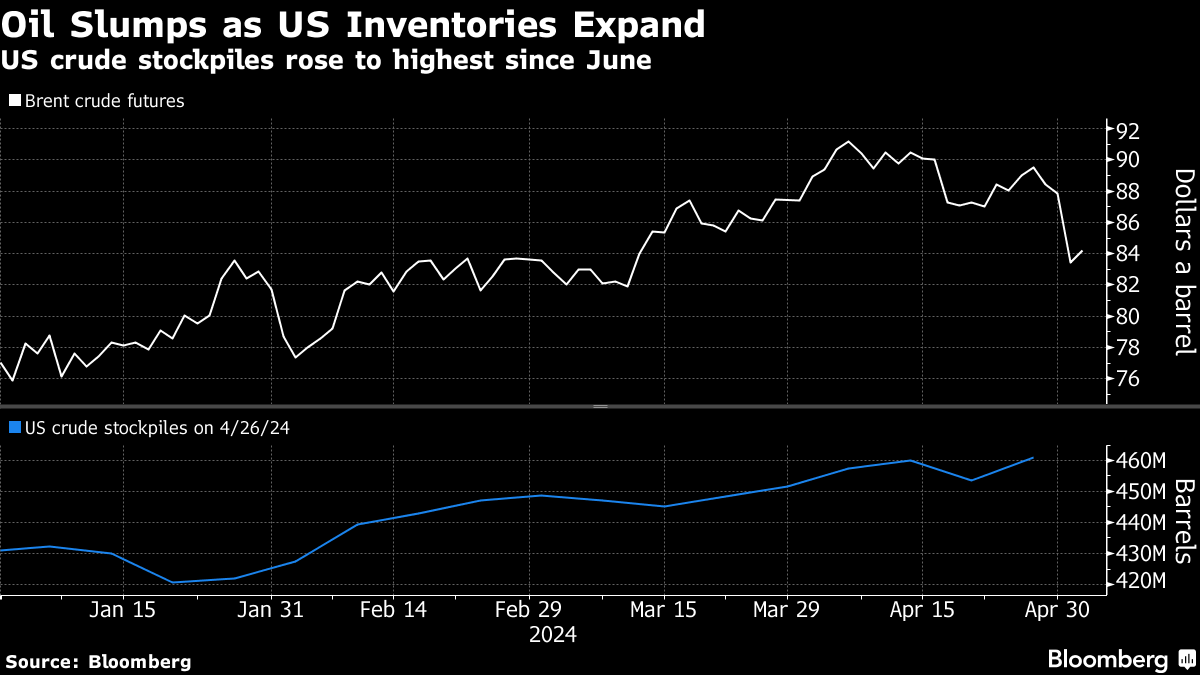
The price retreat could offer some relief for consumers and central banks grappling with stubborn inflation, and even for President Joe Biden as he campaigns for re-election with gasoline prices never far from the political agenda.
Yet it's a concern for many of the 22 OPEC+ nations.
Group leader Saudi Arabia needs prices near $100 a barrel, the International Monetary Fund estimates, as Crown Prince Mohammed bin Salman spends lavishly on futuristic cities and top-flight sports players. Co-leader Russia also requires revenues as President Vladimir Putin continues to wage war on Ukraine.
Price Pressures
If OPEC+ relaxes the supply restraints, world oil markets could tip back into surplus, according to the International Energy Agency in Paris, adding to the pressure on prices. The supply picture will only tighten up if OPEC+ continues to act, Shell Plc Chief Financial Officer Sinead Gorman said on Thursday.
Twenty-six of 30 survey respondents forecast that OPEC+ would persevere, and eight of those predicted the curbs would last to the end of 2024 or even longer. Only four projected production increases, of as much as 1.1 million barrels a day.
The alliance, which will gather at its Vienna headquarters on June 1, hasn't yet signaled its intentions.
OPEC's secretariat pledged in a report that the group will closely monitor oil markets in the coming summer months for signs of tightening, a shift in tone that some observers took as signaling readiness to add barrels. Meanwhile, Riyadh and Washington are privately negotiating a security pact that, if finalized, could encourage the kingdom adopt a more accommodating oil policy.
Tipping Point
Still, Saudi Energy Minister Prince Abdulaziz bin Salman hasn't made any public comments, and sometimes unveils surprise decisions to punish speculators. Several OPEC+ delegates privately said it's too early to form a view.
“We are at a tipping point in the oil markets where there is a strong case to add volumes,” said Christyan Malek, global head of energy strategy at JPMorgan Chase & Co. Still, “this is a balancing act — there's a case to add, and also a case not to add. It's not clear cut.”
Internal divisions could also stymie a consensus.
While Saudi Arabia often advocates caution when adding supplies to the market, its neighbor the United Arab Emirates sometimes takes a conflicting stance.
Abu Dhabi faces less financial pressure to keep prices high and has been keen to deploy new investments in production capacity. The emirate currently holds more than 1 million barrels-a-day of idle supply, and blamed the sacrifice imposed by OPEC+ quotas when it lowered economic growth projections last month.
Meeting Commitments
OPEC+ will also need to confront whether all members are adhering to their commitments.
Iraq and Kazakhstan have acknowledged pumping several hundred thousand barrels above their agreed limits and, while they've pledged to make additional cutbacks in compensation, have a patchy record when it comes to delivery.
Russia's cooperation has also been ambiguous.
Riyadh reluctantly allowed the country to deliver its share of output curbs during the first quarter via a blend of reductions to exports of crude oil and refined products, an arrangement complicated further by Ukrainian drone strikes on Russian refineries. Moscow has promised to step up its contribution by focusing more on cutting crude production.
Still, OPEC+ has repeatedly shown since the alliance's creation seven years ago that, faced with the collective risk of faltering prices, it can overcome divisions and perform effectively. A fragile market may once again compel the group to both persevere with supply curbs, and do a better job of delivering them.
“The alliance will have no choice but stay on course,” said Tamas Varga, an analyst at brokers PVM Oil Associates Ltd. in London. “Anything else will most plausibly lead to a sell-off.”
--With assistance from Salma El Wardany, Nayla Razzouk, Laura Hurst and Serene Cheong.
More stories like this are available on bloomberg.com
©2024 Bloomberg L.P.

-
We May Need Another Tukaram Mundhe To Fight Air Pollution | The Reason Why

Developers may install basic measures such as sprinklers and green nets, resume work, and continue violating rules when this equipment stops working.
-
Extracting Value From Battery Scrap Could Be Challenging For India | The Reason Why
A discarded lithium-ion battery still contains valuable materials such as lithium, nickel and cobalt. These can be recovered and reused. When such batteries are crushed and shredded, they produce a dark powder called black mass.
-
One El Nino, India Can Handle. Two Could Break The Granary
India's grain stocks can absorb one bad year, but a second El Nino could drain the buffer in two to three years, economists say.
-
India's Troika Of Good Luck | Joining The Dots
As Jensen Huang's exit drags Nvidia down, a cooling AI trade and resilient earnings have revived investor interest in India. A likely RBI rate hike looms.
-
Talking Points This Week: Leadership Shock At Nvidia, Earnings Strength, And The Fog Over Hormuz
The Anthropic IPO pricing and first trading day, Nvidia's upcoming earnings, and any fresh signals from Iran will set the tone for the following week.
-
Signature Play: The Classic Cocktail Is Dead. Or Is It?
Classic cocktails are disappearing from India's cocktail menus. But they're still being ordered, taught to bartenders and borrowed from. So, who's really having the last drink?
-
A New Samvat Wishlist: Inclusive Prosperity And Human Development
India has strengthened its economic foundations through infrastructure, digital access and enterprise. Its next growth chapter must deepen productivity, create better livelihoods and widen participation in prosperity.
-
Love, Sex Aur Dhokha: The Audacious Plot To Spy On Jensen Huang
A Taipei dinner, a Singapore chip buyer and a suspected Chinese asset: inside the alleged spy operation that got close to NVIDIA's Jensen Huang.
-
Ten Things I Learnt This Samvat
Patience can be a trap. Cheap stocks can stay cheap. Leverage can wipe you out. What did Samvat 2082 teach us? Niraj Shah writes on 10 lessons from the year gone by.
-
Talking Points This Week: Tech Nerves, FII Buying, And A Faraway Banking Shock
The global markets are not shining this Diwali. The exception in the large markets is, India.