North Korea Fires More Ballistic Missiles as It Warns US
(Bloomberg) -- North Korea fired a barrage of suspected ballistic missiles and issued a warning to the US over joint military exercises, less than two days after Pyongyang launched a long-range rocket designed to hit the American mainland.
South Korea's Joint Chief of Staff said North Korea fired two short-range ballistic missiles between 7 and 7:11 a.m. on Monday from an area in the southwest part of the country. One missile flew about 400 kilometers (249 miles) and reached an altitude of about 100 km, while the other flew about 350 km and reached an altitude of 50 km, Japan's Ministry of Defense said in a statement.
North Korea, which typically waits a day to comment on a launch if it makes any statement at all, was quick to issue a dispatch on its official Korean Central News Agency, saying it fired two shots from multiple rocket launchers that traveled a distance of 395 km and 337 km.
“Through today's shooting exercise using super-large multiple rocket launchers, a means of tactical nuclear attack, North Korea fully demonstrated its deterrence readiness and will to respond to the combined air force capability of US and South Korea,” it added.
On Sunday, the US held aerial drills with South Korea and Japan that included B1-B bombers and F-35A stealth fighters in a show of force that came a day after Pyongyang conducted an intercontinental ballistic missile test. The tit-for-tat military moves added to simmering tensions in the region.
“We affirm once again that there is no change in our will to make the worst maniacs escalating the tensions pay the price for their action,” Kim Yo Jong, the powerful sister of North Korean leader Kim Jong Un, was quoted by official media as saying before the dispatch on the launch.
The US and its two biggest allies in Asia — Japan and South Korea — have stepped up security cooperation after conservative President Yoon Suk Yeol took office about a year ago and pledged Seoul would take a tougher line on Pyongyang for its provocations.
The US and South Korea in late January pledged to step up the scope of their joint exercises at a meeting of their defense ministers in Seoul. The drills had been scaled down or halted under former President Donald Trump, who was hoping the move would facilitate his nuclear negotiations with the North Korean leader.
Those talks, however, produced no concrete steps to wind down Pyongyang's nuclear program, which has only grown larger as disarmament talks sputtered. In recent months, Japan has joined in some of the drills that have included the US and South Korea, a move that angered Pyongyang, which has responded with shows of force to signal its displeasure.
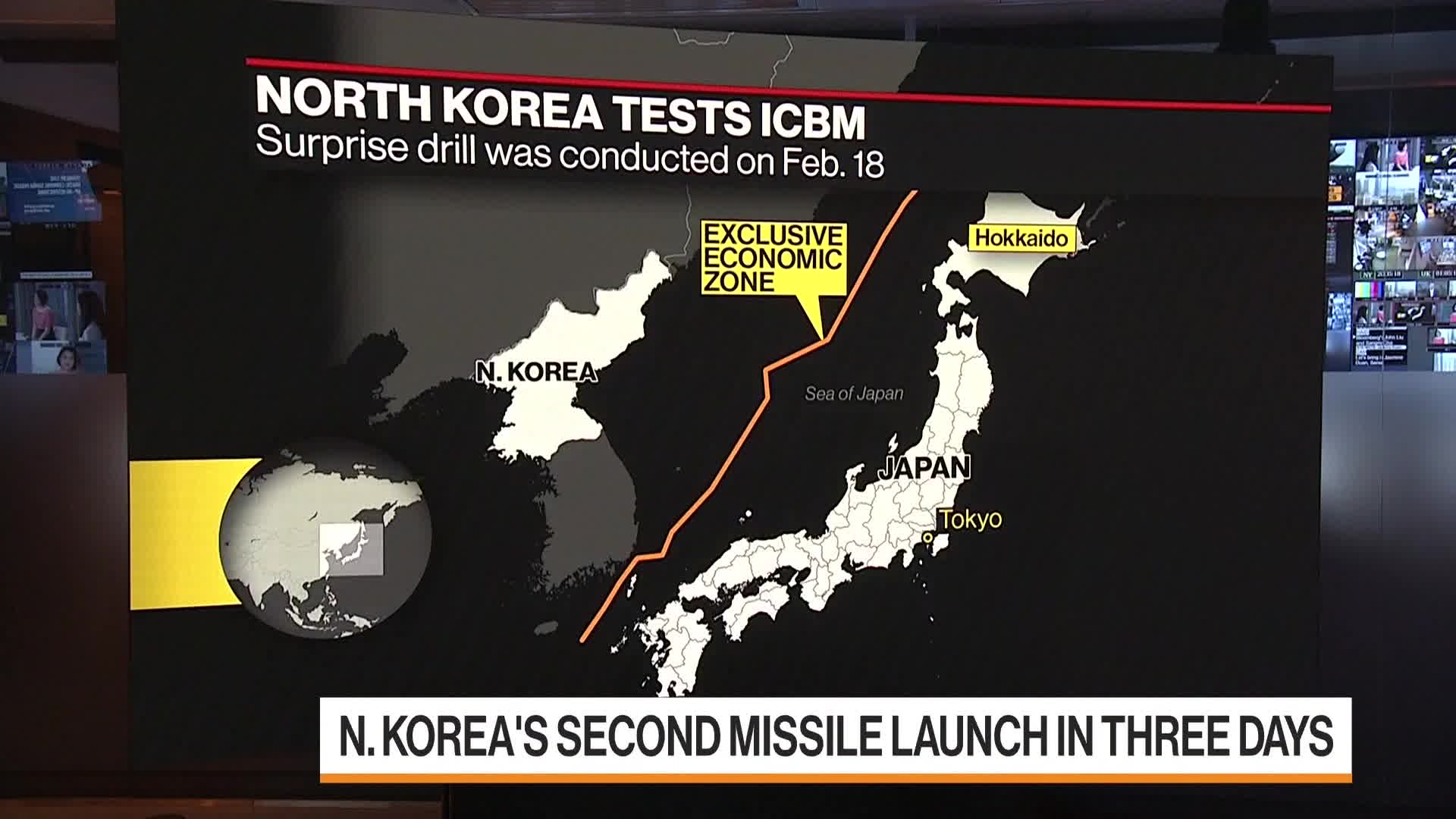
North Korea on Saturday fired a Hwasong-15 ballistic missile that flew for more than an hour and reached an altitude of about 5,700 km. It landed in waters off of Japan's main northern island of Hokkaido. It was also the first ICBM launch since November, when Kim brought along his school-age daughter, who made her debut in state media at the event.
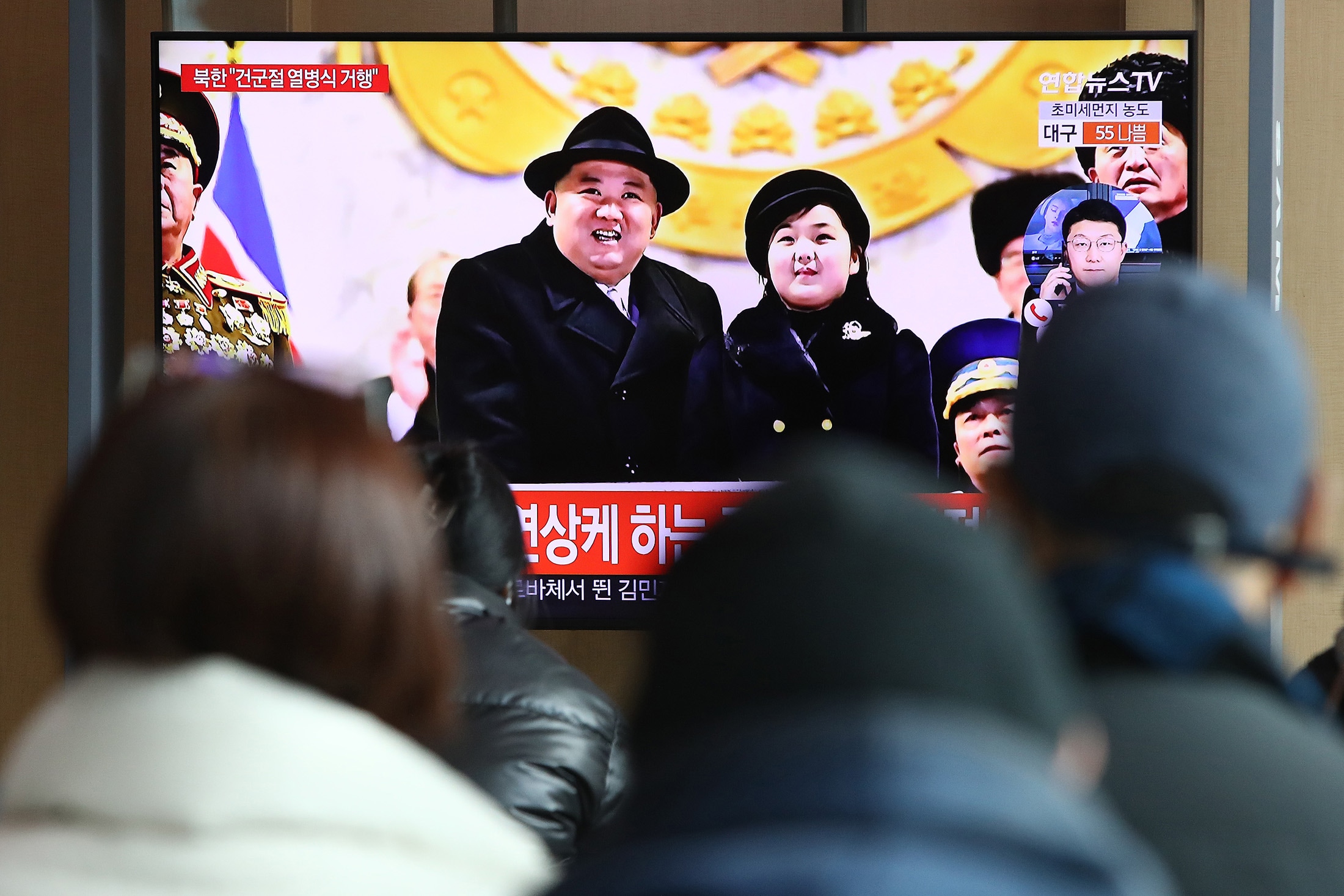
The latest launches come after North Korea put on its biggest display of ICBMs during a military parade in Pyongyang earlier this month. Kim oversaw the event with his daughter on hand to watch from a seat of honor. Her attendance signaled there's another generation ready to take over the Cold War's last continuous family dynasty and it will depend on nuclear weapons for its survival.
Images from the parade included 11 of its Hwasong-17 missiles, which experts say is the world's largest road-worthy ICBM, and five canisters for an apparent new solid-fuel ICBM.
All of the ICBMs were on mobile launchers, and the most of their type ever displayed at a parade. This increases his chances of a strike that could overwhelm US missile defenses. The solid-propellant missiles would be easier to move and quicker to fire than the state's current arsenal of liquid-fuel ICBMs, giving Washington less time to shoot one down.
Kim pledged to increase his nuclear arsenal in the new year to stifle what he called US and South Korean hostile acts, in a policy-setting address released on Jan. 1 where he left almost no opening for a return to long-stalled disarmament talks.
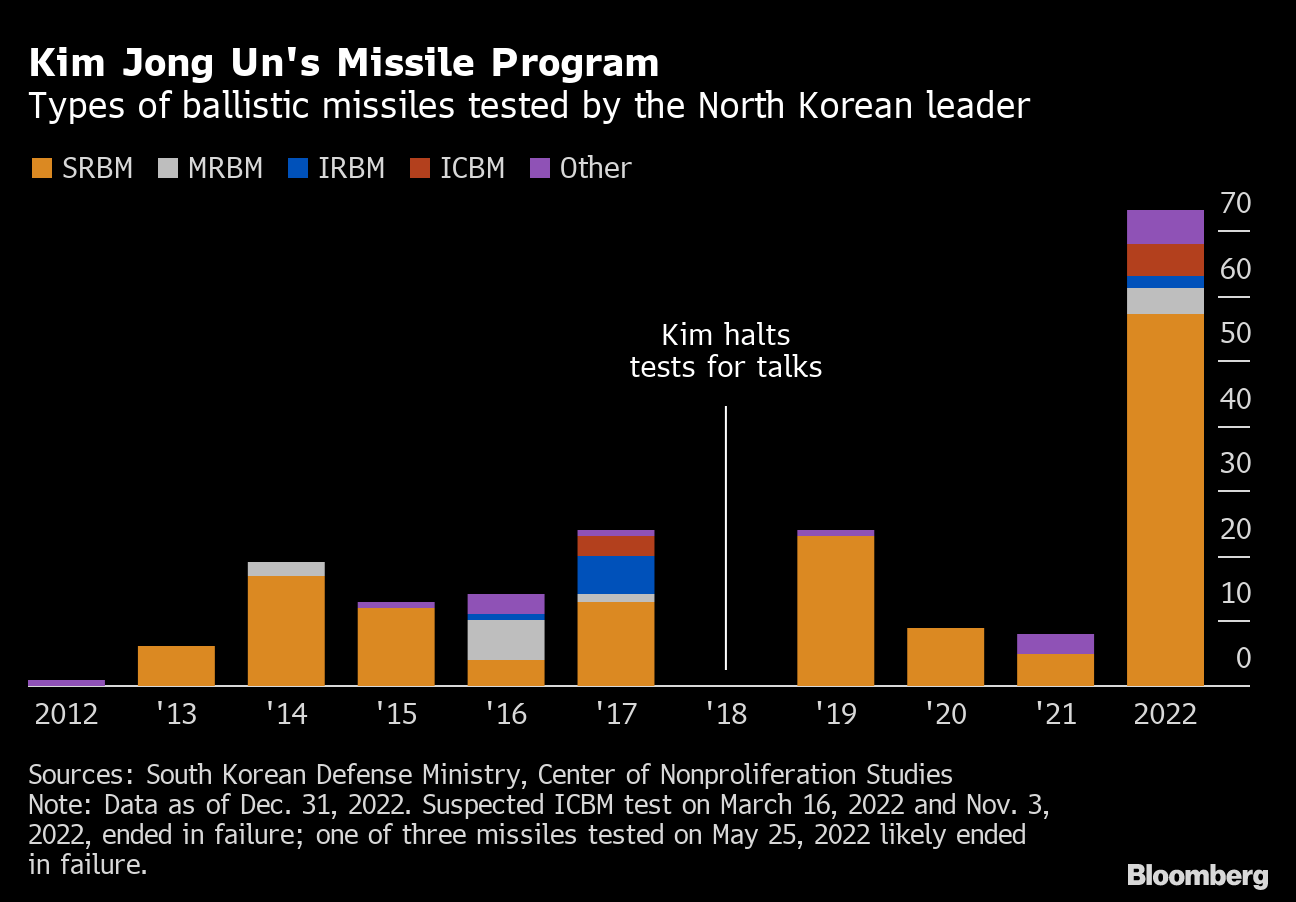
Last year, Kim's regime test fired more than 70 ballistic missiles, the most in his decade in power and in defiance of United Nations resolutions that prohibit the launches. The North Korean leader has been modernizing his inventory of missiles over the past several years to make them easier to hide, quicker to deploy and more difficult to shoot down.
He also is poised to conduct his first test of a nuclear bomb since 2017. The US, Japan and South Korea has pledged a stern a coordinated response if North Korea goes ahead the with blast.
--With assistance from , and .
(Updates with details throughout.)
More stories like this are available on bloomberg.com
©2023 Bloomberg L.P.

-
Signature Play: The Classic Cocktail Is Dead. Or Is It?

Classic cocktails are disappearing from India's cocktail menus. But they're still being ordered, taught to bartenders and borrowed from. So, who's really having the last drink?
-
A New Samvat Wishlist: Inclusive Prosperity And Human Development
India has strengthened its economic foundations through infrastructure, digital access and enterprise. Its next growth chapter must deepen productivity, create better livelihoods and widen participation in prosperity.
-
Love, Sex Aur Dhokha: The Audacious Plot To Spy On Jensen Huang
A Taipei dinner, a Singapore chip buyer and a suspected Chinese asset: inside the alleged spy operation that got close to NVIDIA's Jensen Huang.
-
Ten Things I Learnt This Samvat
Patience can be a trap. Cheap stocks can stay cheap. Leverage can wipe you out. What did Samvat 2082 teach us? Niraj Shah writes on 10 lessons from the year gone by.
-
Talking Points This Week: Tech Nerves, FII Buying, And A Faraway Banking Shock
The global markets are not shining this Diwali. The exception in the large markets is, India.
-
Midterm Rally Lasted A Day. The Hard Reality Of A Divided US May Last Two Years | Opinion
Between a contested AI boom, a debt ceiling that arrives in 2027 and a president with every incentive to act alone, the next two years may prove more volatile than the first day's rally suggests.
-
Blue Wave Will Derail the AI Trade but Won't Dismantle the AI Era | Unhedged Position
The Democrats' sweep of the US Congress will see politics collide with economic forces both over the long and short term.
-
It's Time To Take The GST Council's Bet On Trust Global
Payment records can prove India's services exports, and clear, proportionate rules can bring foreign digital sellers into the tax net.
-
Opinion | India at 38: From Innovation Overperformer to Innovation Powerhouse
India now has 453 VC-backed deep science startups, 18 of them late-stage, after 117 percent growth since 2020. Laurus Labs, at USD 9.3 billion, is the most valuable deep science company in any middle-income economy outside China.









