New Projects Fall To Lowest Level Of Modi Government’s Tenure, Shows CMIE Data
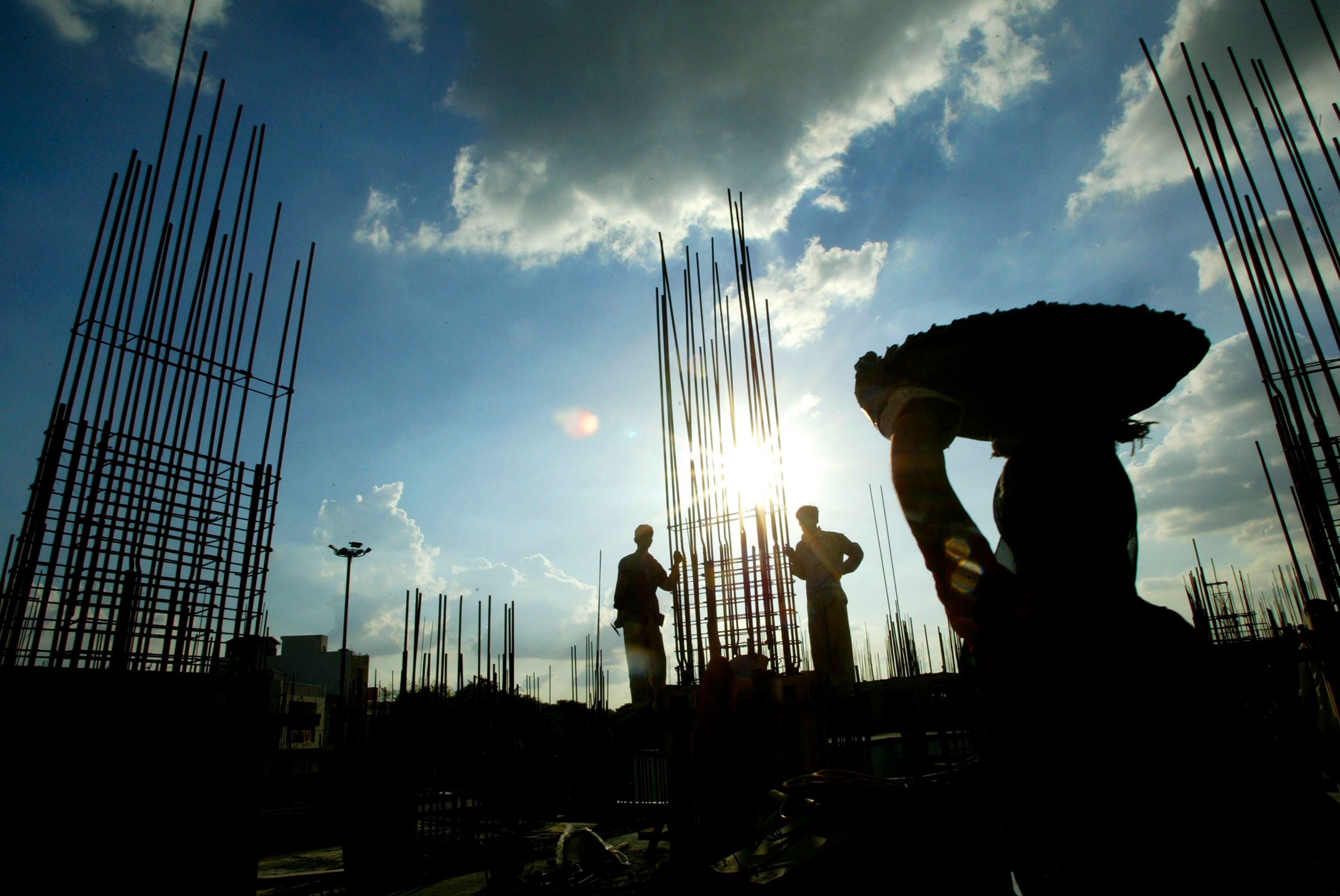
New projects announced during the December 2018 quarter fell sharply to the lowest level seen over the tenure of the Narendra Modi-led government, showed data from the Centre For Monitoring Indian Economy. The value of projects announced in the three-months ending December is the lowest in fourteen years, the data shows.
Project additions fell to Rs 1 lakh crore from an annual high of Rs 4 lakh crore in the March quarter, Rs 2.95 lakh crore in the June quarter and Rs 2.12 lakh crore in the September quarter of calendar year 2018.
“There could be some upward revision in the new projects data to about Rs 1.4 lakh crore in a few weeks. But even at that level, this will be one of the lowest new investment proposals being made in 14-15 years,” Mahesh Vyas, chief executive officer at CMIE told BloombergQuint.
Data between June 2013 and December 2018 shows that new project announcements peaked at Rs 6.4 lakh crore in the December 2014 quarter. The value of projects has fallen below Rs 2 lakh crore only twice over this period — in the September 2017 ended quarter and now in the December 2018 ended quarter.
We have seen this trend of falling new investments being, more or less, a continuous trend since 2015...This is not because of a funding issue. The problem is essentially demand. There is a problem of demand and that is why capacity utilisation is still low. I, therefore, expect that new investments will not pick-up significantly in the coming year as well.Mahesh Vyas, Chief Executive Officer, CMIE
To be sure, quarterly project announcements can be volatile and don't always give an accurate picture of the overall investment environment. Other available indicators suggest that the investment cycle rebounded last year after a period of sluggishness induced by excess capacity and an overhang of debt on corporate balance sheets.
Gross fixed capital formation rose by 12.4 percent in the September ended quarter and has seen double digit growth for the last four quarters. While the current bout of investment growth is led by government spending, India's Monetary Policy Committee expects a steady revival in private investments as excess capacities get utilised and corporate balance sheets get repaired.
“The acceleration in investment activity also bodes well for the medium-term growth potential of the economy. The time is apposite to further strengthen domestic macroeconomic fundamentals. In this context, fiscal discipline is critical to create space for and crowd in private investment activity,” said the MPC in its statement in December.
CMIE data shows that the contribution of private projects has been rising steadily. It stood at 55.6 percent in 2017-18 compared to 42 percent in 2013-14.
Unraveling Stalled Projects
Among the key promises made by the Modi administration at the start of its tenure was that an attempt would be made to kick start stalled projects. Delays in clearances ranging from land acquisition to environment had led to a number of projects being stalled. Slower than expected economic growth and inflated projections for power and road projects had also left some of these projects unviable.
The progress in restarting these projects has been patchy, shows CMIE data.
In the latest December 2018 ended quarter, the value of stalled projects was at Rs 3.07 lakh crore. This is the second highest in the current government's tenure. The highest value of stalled projects was reported in the March 2018 quarter at Rs 3.45 lakh crore.
Stalled projects data can be volatile, acknowledged Vyas. For instance, the surge in value of stalled projects in the December quarter is attributable to one large refinery project getting stalled due to land acquisition problems, he explained.
This quarter's stalled projects has spiked because one project in Maharashtra - a refinery - has been stalled because of land acquisition problems. This refinery was very big with an investment proposal of nearly Rs 3 lakh crore...so that has contributed significantly to the data. But land acquisition remains a key reason why projects are getting stalled.Mahesh Vyas, Chief Executive Officer, CMIE
In the last two financial years, an equal proportion of government and private projects have been part of the stalled projects list. In 2017-18, 50.6 percent of the value of stalled projects fell in the government sector. At the start of the current administration's tenure, 34.5 percent of the stalled projects in value terms were government projects.
Watch the full interview with Mahesh Vyas of CMIE below:

-
The Curious Case of Equitas Small Finance Bank And A CEO Who Quit For Stock

PN Vasudevan believes persistent investor concerns over a perceived conflict of interest had become a governance overhang on Equitas Small Finance Bank's stock, even as the lender improved profitability and asset quality.
-
Talking Points This Week: AI Cash Burn, A Tiger Comeback And An India That Still Finds Its Own Path
India is not immune to higher oil or tighter global liquidity, yet its earnings base is broader, its domestic policy levers are still available.
-
Foreign Investors Own Half Of HDFC Bank and ICICI Bank. An LTCG Cut Could Matter Most Here
Foreign portfolio investors have US$115 billion parked in HDFC Bank, ICICI Bank. If the government cuts long-term capital gains tax, Jefferies says returning foreign money could land here first.
-
'Never Seen This Level Of Negativity': Sandeep Tandon Says The Next Rally May Be Closer Than You Think
Veteran investor Sandeep Tandon says foreign selling is easing, large-caps are due a comeback and mid-caps are crowded, while he turns positive on gold, power and pharma this Diwali.
-
Indians Stay With Family, Not In Hotels | The Reason Why
India still lacks enough clean, reliable and affordable hotels for budget-conscious travellers.
-
The Economic Imperative: Analysing The Material Driving Force Behind India-Canada Strategic Reset
This economic complementarity is further reinforced by deep institutional investment ties and talent mobility, which form the bedrock of the bilateral framework.
-
Medicine Pricing: Where Must Profit Stop?
India must confront excessive margins, hidden incentives and regulatory gaps that threaten the integrity of medicine.
-
Why Amazon And Flipkart Are Struggling To Beat Meesho In India's Smaller Cities
With 274 million users and lowest-cost logistics, Meesho is defending its value commerce crown against giants like Amazon and Flipkart.
-
High US Salaries, No Green Card Certainty: The Financial Calculation Facing Indian H-1B Families
The suspension of PERM processing at eight technology employers does not cancel existing H-1B visas. What it does is force a question many Indian families have been avoiding: is the US salary worth tying your career and family plans to one employer?
-
Swiggy vs Eternal: Food Delivery's Two Rivals Are No Longer In The Same Race
Eternal is building a private AI assistant, dark.ai. Swiggy is still working out how to make Instamart pay, with an operating loss of Rs 895 crore in the July-September quarter while Blinkit stayed profitable.










