Marco Rubio Says US Can’t Let Russia Become China’s ‘Junior Partner’
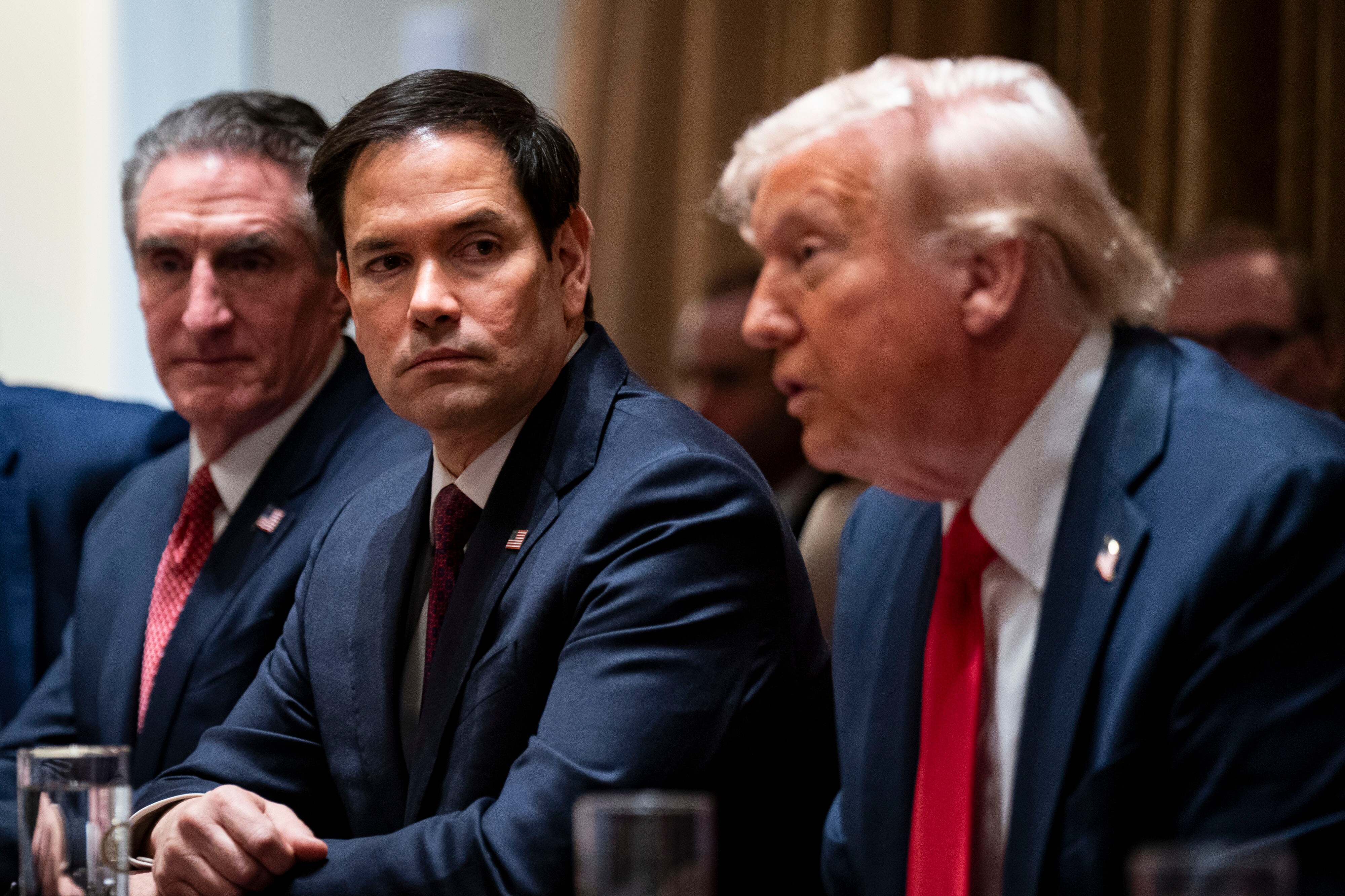
Secretary of State Marco Rubio mapped out US strategy for managing Russia's close relationship with China, saying Washington wants to dilute ties without sowing division between the nuclear-armed neighbors.
“I don't know if we'll ever be successful completely at peeling them off of a relationship with the Chinese,” Rubio told conservative media outlet Breitbart News, referring to Russia. “I also don't think having China and Russia at each other's neck is good for global stability because they're both nuclear powers.”
Donald Trump's recent embrace of Russia has been seen by some analysts as an attempt to split Moscow from Beijing, in a so-called “reverse Nixon.” President Richard Nixon's historic trip to China some 53 years ago undermined the Kremlin's global influence, and pulled Beijing closer to Washington, in a move that shifted the international balance of power for decades.
While President Xi Jinping's government has praised Russia for holding talks with Washington over ending the war in Ukraine, it's unclear what such a thaw means for Beijing. The Chinese leader and Vladimir Putin declared a “no limits” friendship days before the 2022 invasion and have united in opposing America on the world stage.
Chinese Foreign Ministry spokesman Lin Jian pushed back against Rubio's comments, saying the relationship between Beijing and Moscow isn't influenced by any third party.
“The US attempt of sowing discord between China and Russia is doomed to fail,” he told reporters at a regular press conference in Beijing Thursday. “Both China and Russia have long-term development strategies and foreign policies. No matter how the international landscape changes, our relationship shall move forward at its own pace.”
‘Completely Dependent'
Rubio warned that closer ties between China and Russia would pose a problem for the US, if Moscow became the “permanent junior partner” to Beijing, pitting two nuclear powers against Washington. Access to Chinese markets have thrown Moscow an economic lifeline after US-led sanctions isolated Russia in recent years, while Xi has given Putin diplomatic shelter.
“We could find ourselves in a situation where, whether Russia wants to improve its relations with the US or not, they can't because they've become completely dependent on the Chinese because we have cut them off,” Rubio said. “What's a better outcome for us is to have a relationship.”
Trump has performed a stunning reversal of US policy on Russia in recent weeks, blindsiding Europe by bringing Putin out of isolation to begin peace talks without including other stakeholders. The Republican president has been accused of parroting Kremlin talking points about the conflict, including blaming Ukrainian leader Volodymyr Zelenskiy for the war.
Xi reaffirmed his relationship with Putin last week on the third anniversary of Moscow's invasion of Ukraine, telling the Russian that he welcomed positive efforts made by Moscow and relevant parties to resolve the crisis.
In a further sign that the Xi-Putin partnership remains intact, both leaders have signaled plans to visit each other's nations this year, while Trump has floated a trilateral meeting between all three men.
In his interview, Rubio characterized US-China relations as the “big story of the 21st century.” While he said Washington was going to have disagreements and confrontation with both Beijing and Moscow, Rubio stressed that maintaining a relationship with both was important.
“These are big, powerful countries with nuclear stockpiles. They can project power globally,” he said. “I think we have lost the concept of maturity and sanity in diplomatic relations.”

-
Signature Play: The Classic Cocktail Is Dead. Or Is It?

Classic cocktails are disappearing from India's cocktail menus. But they're still being ordered, taught to bartenders and borrowed from. So, who's really having the last drink?
-
A New Samvat Wishlist: Inclusive Prosperity And Human Development
India has strengthened its economic foundations through infrastructure, digital access and enterprise. Its next growth chapter must deepen productivity, create better livelihoods and widen participation in prosperity.
-
Love, Sex Aur Dhokha: The Audacious Plot To Spy On Jensen Huang
A Taipei dinner, a Singapore chip buyer and a suspected Chinese asset: inside the alleged spy operation that got close to NVIDIA's Jensen Huang.
-
Ten Things I Learnt This Samvat
Patience can be a trap. Cheap stocks can stay cheap. Leverage can wipe you out. What did Samvat 2082 teach us? Niraj Shah writes on 10 lessons from the year gone by.
-
Talking Points This Week: Tech Nerves, FII Buying, And A Faraway Banking Shock
The global markets are not shining this Diwali. The exception in the large markets is, India.
-
Midterm Rally Lasted A Day. The Hard Reality Of A Divided US May Last Two Years | Opinion
Between a contested AI boom, a debt ceiling that arrives in 2027 and a president with every incentive to act alone, the next two years may prove more volatile than the first day's rally suggests.
-
Blue Wave Will Derail the AI Trade but Won't Dismantle the AI Era | Unhedged Position
The Democrats' sweep of the US Congress will see politics collide with economic forces both over the long and short term.
-
It's Time To Take The GST Council's Bet On Trust Global
Payment records can prove India's services exports, and clear, proportionate rules can bring foreign digital sellers into the tax net.
-
Opinion | India at 38: From Innovation Overperformer to Innovation Powerhouse
India now has 453 VC-backed deep science startups, 18 of them late-stage, after 117 percent growth since 2020. Laurus Labs, at USD 9.3 billion, is the most valuable deep science company in any middle-income economy outside China.









