Man Who Sold Air India Tasked With Reinventing Market Regulator
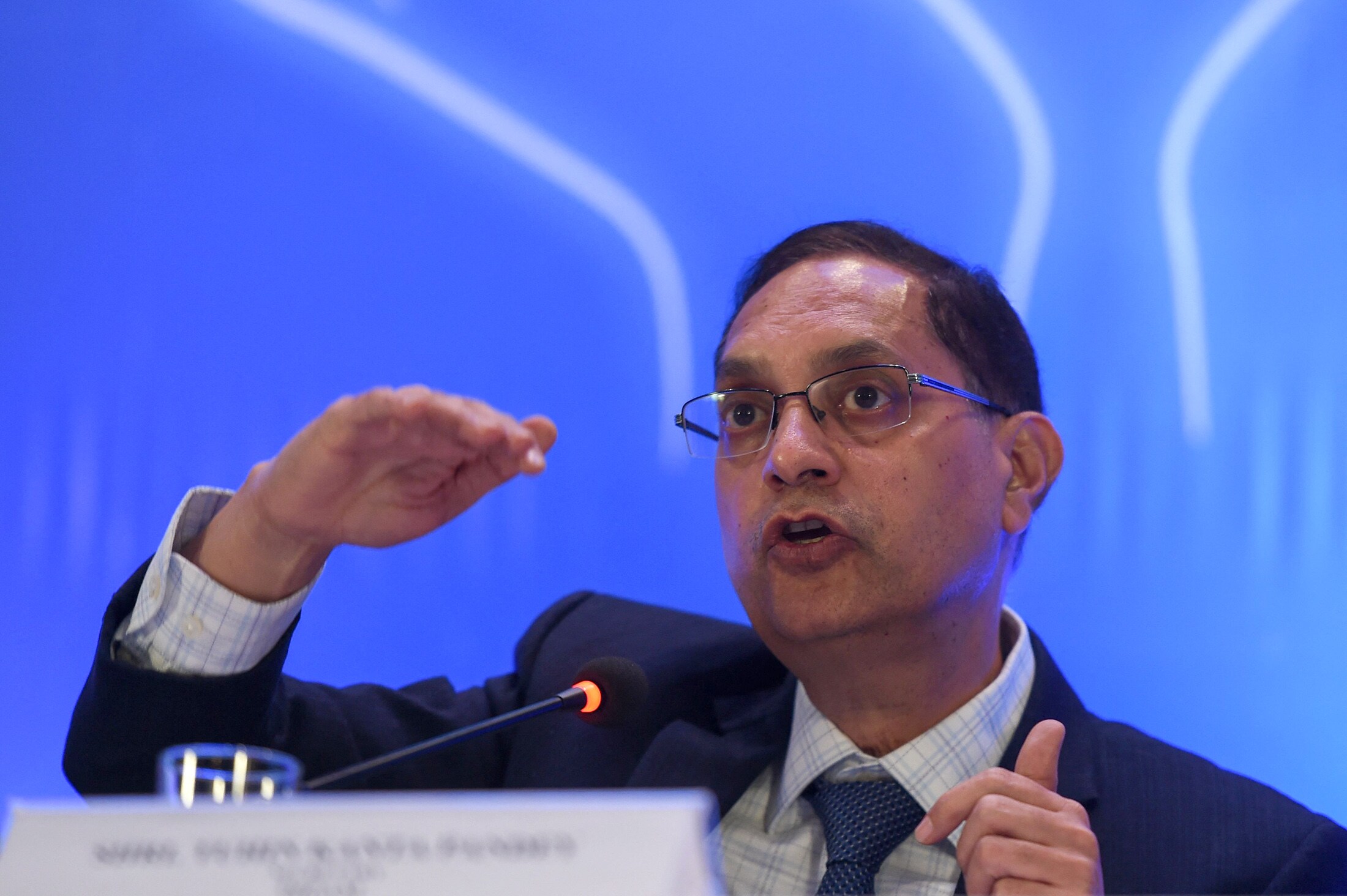
India's top finance ministry bureaucrat Tuhin Kanta Pandey has a track record of market-friendly reforms. That will come in handy in his new job overseeing the country's top regulator.
Pandey previously delivered the sale of India's largest state-owned airline, a deal that had been mired in red tape for years, and has helped implement sweeping reforms at other state enterprises. His next challenge: bringing a sense of calm to the country's beleaguered stock market.
Many market participants hope he will start by reducing India's dizzying number of regulations.
Pandey, a career bureaucrat, succeeds banker-turned-regulator Madhabi Puri Buch, whose term ends on Friday. Buch oversaw a boom period for stocks, including a sharp growth in retail accounts, and implemented some regulatory changes investors welcomed — but she also faced concerns over policy flip-flops, allegations of conflicts of interest and signs of discontent among SEBI staffers.
Pandey, who was picked as India's finance secretary in September, previously spent five years running the government's divestment initiatives. That will help him bring a “unique experience” to the market regulator, said Mumbai-based Vikas Gupta, chief investment strategist at OmniScience Capital.
A big transaction like the sale of Air India involves bringing everyone from investors to bankers and the government to the table, an important skillset for a market regulator, Gupta said.
Pandey is likely to be a consensus builder at SEBI, listening to feedback from market participants rather than prescribing ready-made solutions, said Narinder Wadhwa, managing director at SKI Capital Services Ltd.

Keep It Simple
Pandey's appointment marks a return to India's legacy of appointing bureaucrats to the helm of its stock market regulator. Buch, the first woman to run SEBI, joined in 2017 after decades as an investment banker and fund manager, getting the top job five years later.
Buch's three-year tenure included a raft of new regulatory proposals, raising eyebrows among some market participants who say India already struggles with too much red tape. There were as many as 197 discussion papers released during her tenure, a 73% rise from her predecessor's five-year term, SEBI data compiled by Bloomberg showed.
“SEBI must balance innovation with stable, long-term policies,” said Sonam Srivastava, founder of Wright Research in Mumbai. Frequent regulatory changes create uncertainty, she added.
SEBI didn't respond to emailed requests for comments from Buch for this story. Pandey didn't immediately respond to calls and text messages seeking comment.

Pandey enters office at a time of pain in India's stock market. The benchmark Nifty 50 index is down more than 6% so far this year after a long period of gains, with a slowing economy, worries about earnings growth and a resurgence of interest in Chinese stocks all weighing.
Few investors will expect the boss of SEBI to single-handedly turn around sentiment. But what those working in the market do want is a more hands-off approach to regulation, a change of course following a surprise clampdown on derivatives trading last year.
“The new SEBI head needs to abide by the mantra of keeping it simple,” said Deven Choksey, managing director at DRChoksey FinServ Pvt, speaking before Pandey's appointment. “Investors will appreciate if the new chairperson can first simplify the regulations for derivatives and know-your-client norms to ease investor participation in the market.”
Governance Standards
Foreign investors have been forced to think harder about corporate governance standards in India over the past few years. A short seller report in early 2023 accusing the Adani Group of wrongdoing — allegations the group denied — led to a lengthy probe by the regulator that kept markets on edge.
Questions about board independence and the front-running of equity orders have also rattled nerves. That points to another challenge facing Pandey — reassuring foreign investors that corporate governance is up to scratch despite multiple examples of misbehavior by company founders.
“They really need to have strengthened corporate governance with speedier investigation and enforcement,” said Gary Dugan, chief executive officer at The Global CIO Office in Singapore. “Foreign investor confidence continues to be undermined by inconsistency and the slow pace of reform.”

-
One El Nino, India Can Handle. Two Could Break The Granary

India's grain stocks can absorb one bad year, but a second El Nino could drain the buffer in two to three years, economists say.
-
India's Troika Of Good Luck | Joining The Dots
As Jensen Huang's exit drags Nvidia down, a cooling AI trade and resilient earnings have revived investor interest in India. A likely RBI rate hike looms.
-
Talking Points This Week: Leadership Shock At Nvidia, Earnings Strength, And The Fog Over Hormuz
The Anthropic IPO pricing and first trading day, Nvidia's upcoming earnings, and any fresh signals from Iran will set the tone for the following week.
-
Signature Play: The Classic Cocktail Is Dead. Or Is It?
Classic cocktails are disappearing from India's cocktail menus. But they're still being ordered, taught to bartenders and borrowed from. So, who's really having the last drink?
-
A New Samvat Wishlist: Inclusive Prosperity And Human Development
India has strengthened its economic foundations through infrastructure, digital access and enterprise. Its next growth chapter must deepen productivity, create better livelihoods and widen participation in prosperity.
-
Love, Sex Aur Dhokha: The Audacious Plot To Spy On Jensen Huang
A Taipei dinner, a Singapore chip buyer and a suspected Chinese asset: inside the alleged spy operation that got close to NVIDIA's Jensen Huang.
-
Ten Things I Learnt This Samvat
Patience can be a trap. Cheap stocks can stay cheap. Leverage can wipe you out. What did Samvat 2082 teach us? Niraj Shah writes on 10 lessons from the year gone by.
-
Talking Points This Week: Tech Nerves, FII Buying, And A Faraway Banking Shock
The global markets are not shining this Diwali. The exception in the large markets is, India.
-
Midterm Rally Lasted A Day. The Hard Reality Of A Divided US May Last Two Years | Opinion
Between a contested AI boom, a debt ceiling that arrives in 2027 and a president with every incentive to act alone, the next two years may prove more volatile than the first day's rally suggests.
-
Blue Wave Will Derail the AI Trade but Won't Dismantle the AI Era | Unhedged Position
The Democrats' sweep of the US Congress will see politics collide with economic forces both over the long and short term.









