Makeover for World's Oldest City Drives India Steel Recovery
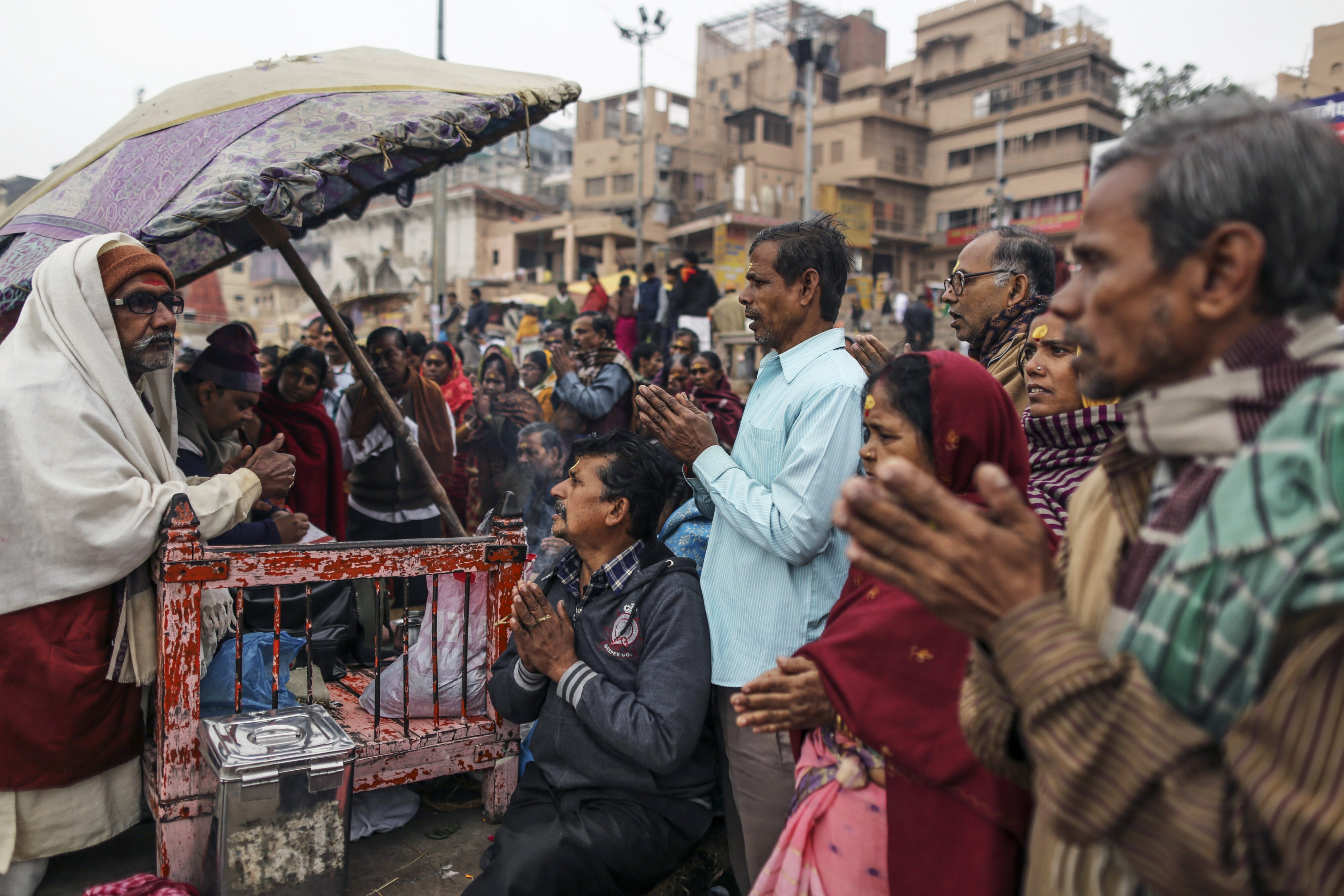
(Bloomberg) -- The world's oldest living city is getting a makeover.
Varanasi, Hinduism's holiest site on the Ganges River in northern India, is one of 100 places earmarked to receive trillions of rupees to transform their aging infrastructure and become ‘Smart Cities,' replete with affordable housing, improved sanitation, and better transportation. To build it all, India plans to triple its steel-making capacity, making it the world's second-biggest producer, trumping Japan, and reviving an industry that a year ago was on its knees.
“India is one of the bright spots for the global steel industry,” said Bijoy Thomas, a senior analyst at India Ratings & Research, the local unit of Fitch Ratings, by phone from New Delhi. “We have a very low base of per-capita consumption and the nation is on the path to development.”
India used about 63 kilograms of steel per person last year, compared with 493 kilograms in China, according to the World Steel Association. That low consumption base, and the promise of a government-backed boom in construction, has prompted a flurry of expansion plans as steel prices recover from a slump in 2015.
India's biggest producer, JSW Steel Ltd., plans to build two new plants of 10 million tons each in the resource-rich states of Odisha and Jharkhand, and spend billions more expanding its existing mills in an effort to double its size by 2030. Rival Tata Steel Ltd. has sought environmental clearances to expand its two plants in India by 4 million tons a year.
India's ambitious plans could force the country increasingly to turn to global markets to get enough coking coal and iron ore, Thomas said.
Pink City
Among the cities due for an upgrade are Jaipur, a favorite stop for tourists who come to view its pink stone palaces, and the nineteenth century battlegrounds of Kanpur and Lucknow. But Varanasi, also known as Benares, is especially symbolic of Prime Minister Narendra Modi's plan to transform India.
Continuously inhabited since the 11th century B.C., the city of 1.2 million people is Modi's political base. Its narrow lanes wind their way to ancient sandstone palaces above the famous ghats or riverfront steps, where the Hindu faithful burn funeral pyres or come to wash away their sins in the sacred river. About 6 million tourists visit the city every year, but it lacks basic urban facilities like a proper sewage system.
The local government has a 25 billion rupee ($390 million) plan to build affordable houses, bury the millions of wires and cables that clutter the streets, install solar panels and upgrade the ghats by 2020-21. There are also plans for a metro system, part of a new urban rail policy approved this month that would bring new subways to 15 Indian cities and expand networks at 12 others.
All of it will require millions of tons of additional steel.
India's steel consumption could almost triple to as much as 240 million tons by 2030, with the majority being used in construction, according to Sanak Mishra, secretary general of the Indian Steel Association. He predicts India will overtake the U.S. as the world's second-biggest consumer next year.
“The Indian steel story is a growth story,” said Mishra, who previously ran the Indian projects of ArcelorMittal, the world's biggest producer. “India is one of the few major economies where steel use has not matured.”
Shares of Tata Steel have surged 62 percent in Mumbai this year, while JSW Steel's stock has climbed 51 percent. The benchmark S&P BSE Sensex Index has gained 18 percent.
Even so, like many of Modi's ambitious plans, the National Steel Policy has a challenging target. To meet it, capacity would need to grow at a 6.4 percent annual rate, requiring around $140 billion of investment, according to ICRA Ltd. Given the weak financial health of many domestic players, and the central bank's efforts to clean up bad loans, banks may be reluctant to lend the money, the local unit of Moody's Investors Service said on Aug. 24.
‘India Growth'
The growth in demand will come with a caveat “that the government's policies are supportive of all these investments,” said Vishal Kulkarni, a Singapore-based analyst at S&P Global Ratings. Steel demand will rise, “but it will not be like China growth, it will be more like India growth.”
The government has earmarked a total of 1.9 trillion rupees ($30 billion) for 90 cities so far, with some money coming from the federal government and an equal amount contributed by state or local governments, the Ministry of Urban Development said in June.
For most local municipalities, that means borrowing. In the western city of Pune, home to the grand Aga Khan Palace, the Pune Municipal Corp. priced a 2-billion-rupee bond in June, the country's first municipal bond since the regulator cleared the way for such sales in 2015.
More cities will follow. The program could push the volume of municipal debt issued to as much as 400 billion rupees in the next five years, India Ratings said in June.
That's highlighted concerns about the nation's borrowings, just at a time when the U.S. Federal Reserve is making money more expensive overall. India's general government debt level is "significantly" higher compared with similarly rated countries, Moody's Investor Service has said. There's also the risk of a blowout in India's current account deficit, which the International Monetary Fund projects to be at its widest since 2013, when the Fed first signaled tightening after years of unprecedented stimulus.
Investors, so far, aren't spooked. Pune got bids worth six times the amount it was offering.
That's encouraging for steelmakers, both in India and abroad, who are coming out of the worst price meltdown in decades. A glut in global supply, record imports of cheap steel and weak demand saw the profitability of India's mills slump in the 2015-16 financial year. At the same time a government crackdown on dubious practices in the mining industry disrupted local coal and iron ore supplies. Indebted steelmakers including Essar Steel India Ltd., Bhushan Steel Ltd. and Monnet Ispat & Energy Ltd. joined a list of companies under insolvency proceedings as part of the central bank's move to clean up bad loans.
The government responded with a slew of protectionist measures against steel imports, leading local producers to increase output to record levels. Accelerating demand from infrastructure, construction and auto-making will see India's steel output record average annual growth of about 9 percent between 2017 to 2021, according to BMI Research.
The expansion could turn India into a net importer of iron ore within two years, said Ashok Kumar, Tata Steel's chief technology officer of process.
The rebound has also fueled speculation for mergers and acquisitions. JSW Steel said it is seeking to pick up some assets to add capacity. At Tata Steel, which has been trying to sell its unprofitable European business, new Chairman Natarajan Chandrasekaran said the company would focus on its domestic market, given the current stage of development of the Indian economy and likely growth path in the next decade.
In Varanasi, Mayor Ram Gopal Mohley is betting that the support of the nation's charismatic prime minister will help push forward renovation that has been needed for so long.
“Development of the city's overstretched infrastructure will be a hard job, but the willpower is there and with Modi leading the way, he will ensure that modern development will go hand in hand with conserving our heritage,” he said. “The city needs the change.”
To contact the reporter on this story: Swansy Afonso in Mumbai at safonso2@bloomberg.net.
To contact the editors responsible for this story: Jason Rogers at jrogers73@bloomberg.net, Adam Majendie, Jake Lloyd-Smith

-
Getting To Work Costs Women More | The Reason Why

It is not just about women paying more than men. It is about women paying much more in cities than in villages.
-
AI Bias In Investing Cannot Be Eliminated, But It Can Be Governed
Framing is a particularly important example as identical financial information presented in terms of gains rather than losses can lead an LLM to reach a different assessment.
-
Joining The Dots | Dark Skies, Steady Diya: Why Hope Holds This Diwali
With war, a weak rupee and foreign outflows weighing on sentiment, policymakers at the NDTV World Summit and market veterans at NDTV Profit Ignite: Diwali Edition offered the same advice: stay invested and filter out the noise.
-
The Curious Case of Equitas Small Finance Bank And A CEO Who Quit For Stock
PN Vasudevan believes persistent investor concerns over a perceived conflict of interest had become a governance overhang on Equitas Small Finance Bank's stock, even as the lender improved profitability and asset quality.
-
Talking Points This Week: AI Cash Burn, A Tiger Comeback And An India That Still Finds Its Own Path
India is not immune to higher oil or tighter global liquidity, yet its earnings base is broader, its domestic policy levers are still available.
-
Foreign Investors Own Half Of HDFC Bank and ICICI Bank. An LTCG Cut Could Matter Most Here
Foreign portfolio investors have US$115 billion parked in HDFC Bank, ICICI Bank. If the government cuts long-term capital gains tax, Jefferies says returning foreign money could land here first.
-
'Never Seen This Level Of Negativity': Sandeep Tandon Says The Next Rally May Be Closer Than You Think
Veteran investor Sandeep Tandon says foreign selling is easing, large-caps are due a comeback and mid-caps are crowded, while he turns positive on gold, power and pharma this Diwali.
-
Indians Stay With Family, Not In Hotels | The Reason Why
India still lacks enough clean, reliable and affordable hotels for budget-conscious travellers.
-
The Economic Imperative: Analysing The Material Driving Force Behind India-Canada Strategic Reset
This economic complementarity is further reinforced by deep institutional investment ties and talent mobility, which form the bedrock of the bilateral framework.
-
Medicine Pricing: Where Must Profit Stop?
India must confront excessive margins, hidden incentives and regulatory gaps that threaten the integrity of medicine.










