Krishnamurthy Subramanian Appointed As The Next Chief Economic Adviser
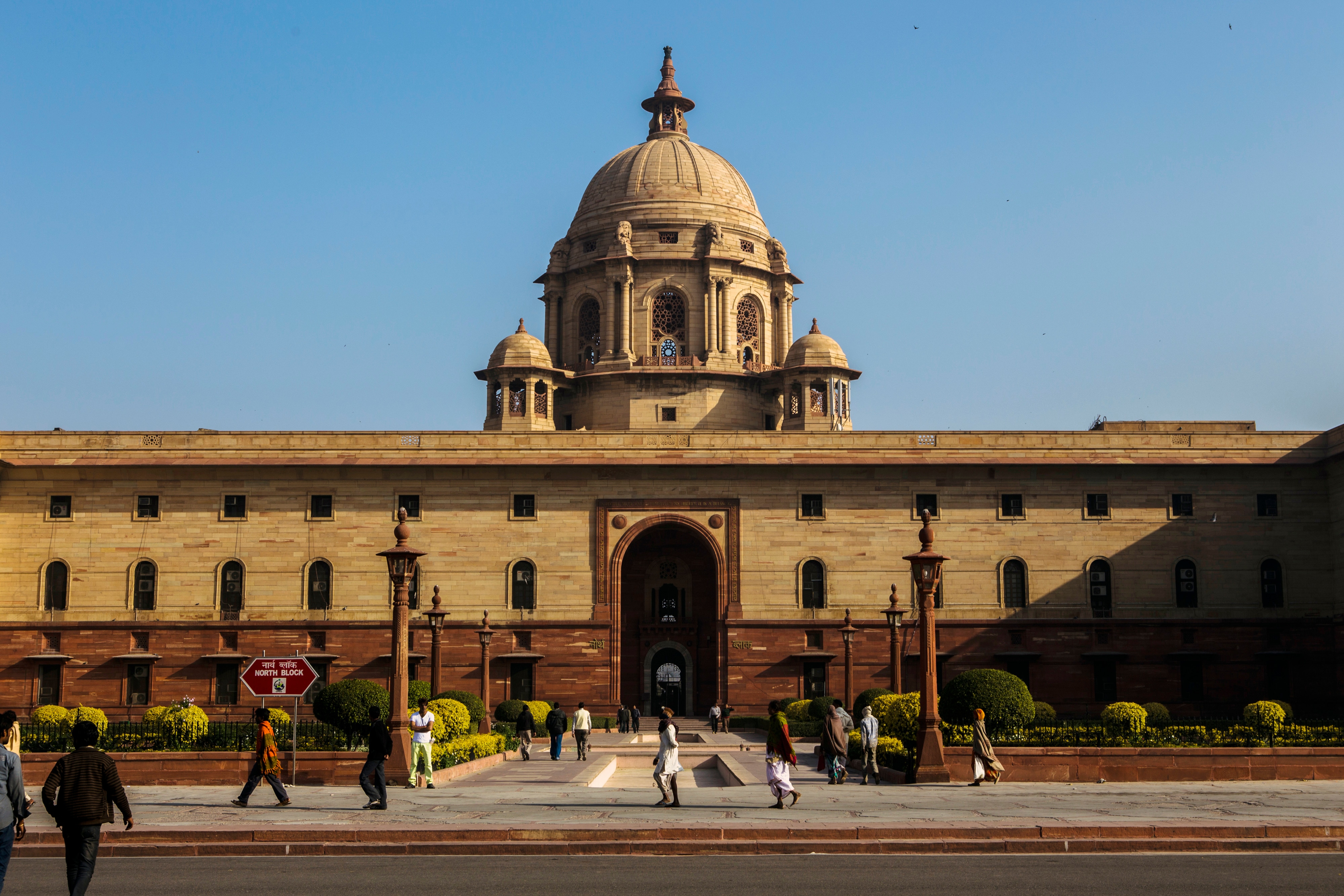
India has named Krishnamurthy Subramanian, an associate professor at Indian School of Business and a banking expert, as the country's next chief economic adviser.
The Appointments Committee of Cabinet approved the proposal to appoint Subramanian for three years, according to a statement by the Department of Personnel and Training. He will succeed Arvind Subramanian, who stepped down in June 2018 after cutting short an extended term citing personal reasons.
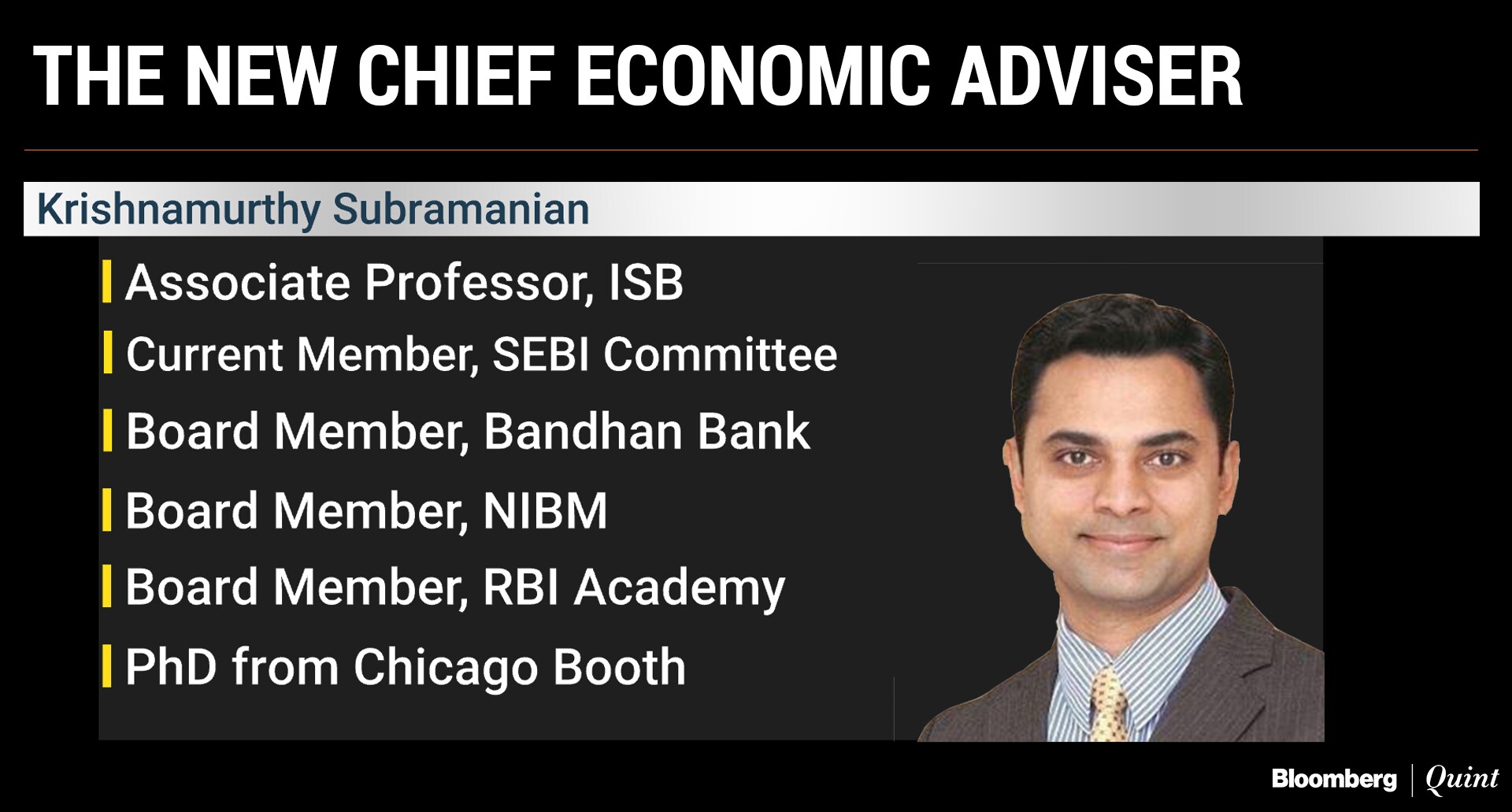
A PhD from Chicago-Booth and an alumnus of Indian Institute of Technology, Kanpur and Indian Institute of Management, Calcutta, Subramanian's expertise lies in banking, corporate governance and economic policy, according to his profile on the website of ISB, Hyderabad.
He has been part of expert committees on corporate governance for the Securities and Exchange Board of India and on bank governance for the Reserve Bank of India. He serves as a member of SEBI's Standing Committees on Alternative Investment Policy, Primary Markets, Secondary Markets and Research.
He serves on the boards of Bandhan Bank Ltd., the National Institute of Bank Management, and the RBI Academy.
CEA With A Banking Touch
Subramanian comes to the CEA office with a strong understanding of the banking sector troubles being faced by India.
In 2015, he co-authored a paper with now RBI deputy governor Viral Acharya on the health of India's public sector banks.
The paper noted that unless Indian public sector banks raise “significant capital in the next five years”, their balance sheets would have to “shrink alarmingly” to stay compliant with Basel-III standards. The paper went on to say that public sector banks pose a significantly greater systemic risk when compared to private sector banks.
This scenario is playing out to a T.
Subramanian was also a member of the 2014 P.J. Nayak led committee on bank governance. The committee had made wide ranging recommendations including the setting up of an independent ‘Banks Board Bureau' and a ‘Bank Investment Company' to help distance the government from the functioning of public sector banks. The recommendations of the committee, still widely cited, have only been accepted in bits and pieces.
In a September 2018 interview with BloombergQuint, soon after a three-way merger between Bank of Baroda, Dena Bank and Vijaya Bank was announced, Subramanian said that mergers don't solve the problem of asset quality plaguing the sector. Subramanian had explained that India remains an under-banked market and greater levels of competition would still benefit the economy. He had added that governance reforms across PSU banks are essential to ensure that large capital infusions from the government into these banks pay the necessary dividends.
Writing in BloombergQuint earlier in the year, Subramanian had also argued that public sector banks have become clones of each other, often making the same mistakes. “If organisational and governance aspects that created the cloning among PSBs are not removed, the same set of issues are likely to get repeated,” he wrote.
Away from banking, in the early days, Subramanian supported demonetisation. In a Nov. 11, 2016 article in the Times of India, he countered the view that bringing in a higher denomination note of Rs 2000 would lead to more black money. At the time he called demonetisation a refreshing change. Writing in the Mint newspaper on Nov. 23, 2016 he argued that data suggests that complaints of hardship faced by the poor in exchanging currency notes was exaggerated. To be sure, his views on the controversial government policy since then are not clear.

-
Extracting Value From Battery Scrap Could Be Challenging For India | The Reason Why

A discarded lithium-ion battery still contains valuable materials such as lithium, nickel and cobalt. These can be recovered and reused. When such batteries are crushed and shredded, they produce a dark powder called black mass.
-
One El Nino, India Can Handle. Two Could Break The Granary
India's grain stocks can absorb one bad year, but a second El Nino could drain the buffer in two to three years, economists say.
-
India's Troika Of Good Luck | Joining The Dots
As Jensen Huang's exit drags Nvidia down, a cooling AI trade and resilient earnings have revived investor interest in India. A likely RBI rate hike looms.
-
Talking Points This Week: Leadership Shock At Nvidia, Earnings Strength, And The Fog Over Hormuz
The Anthropic IPO pricing and first trading day, Nvidia's upcoming earnings, and any fresh signals from Iran will set the tone for the following week.
-
Signature Play: The Classic Cocktail Is Dead. Or Is It?
Classic cocktails are disappearing from India's cocktail menus. But they're still being ordered, taught to bartenders and borrowed from. So, who's really having the last drink?
-
A New Samvat Wishlist: Inclusive Prosperity And Human Development
India has strengthened its economic foundations through infrastructure, digital access and enterprise. Its next growth chapter must deepen productivity, create better livelihoods and widen participation in prosperity.
-
Love, Sex Aur Dhokha: The Audacious Plot To Spy On Jensen Huang
A Taipei dinner, a Singapore chip buyer and a suspected Chinese asset: inside the alleged spy operation that got close to NVIDIA's Jensen Huang.
-
Ten Things I Learnt This Samvat
Patience can be a trap. Cheap stocks can stay cheap. Leverage can wipe you out. What did Samvat 2082 teach us? Niraj Shah writes on 10 lessons from the year gone by.
-
Talking Points This Week: Tech Nerves, FII Buying, And A Faraway Banking Shock
The global markets are not shining this Diwali. The exception in the large markets is, India.
-
Midterm Rally Lasted A Day. The Hard Reality Of A Divided US May Last Two Years | Opinion
Between a contested AI boom, a debt ceiling that arrives in 2027 and a president with every incentive to act alone, the next two years may prove more volatile than the first day's rally suggests.