Kim Seeks to Boost War Defenses, Cuts Link with South Korea
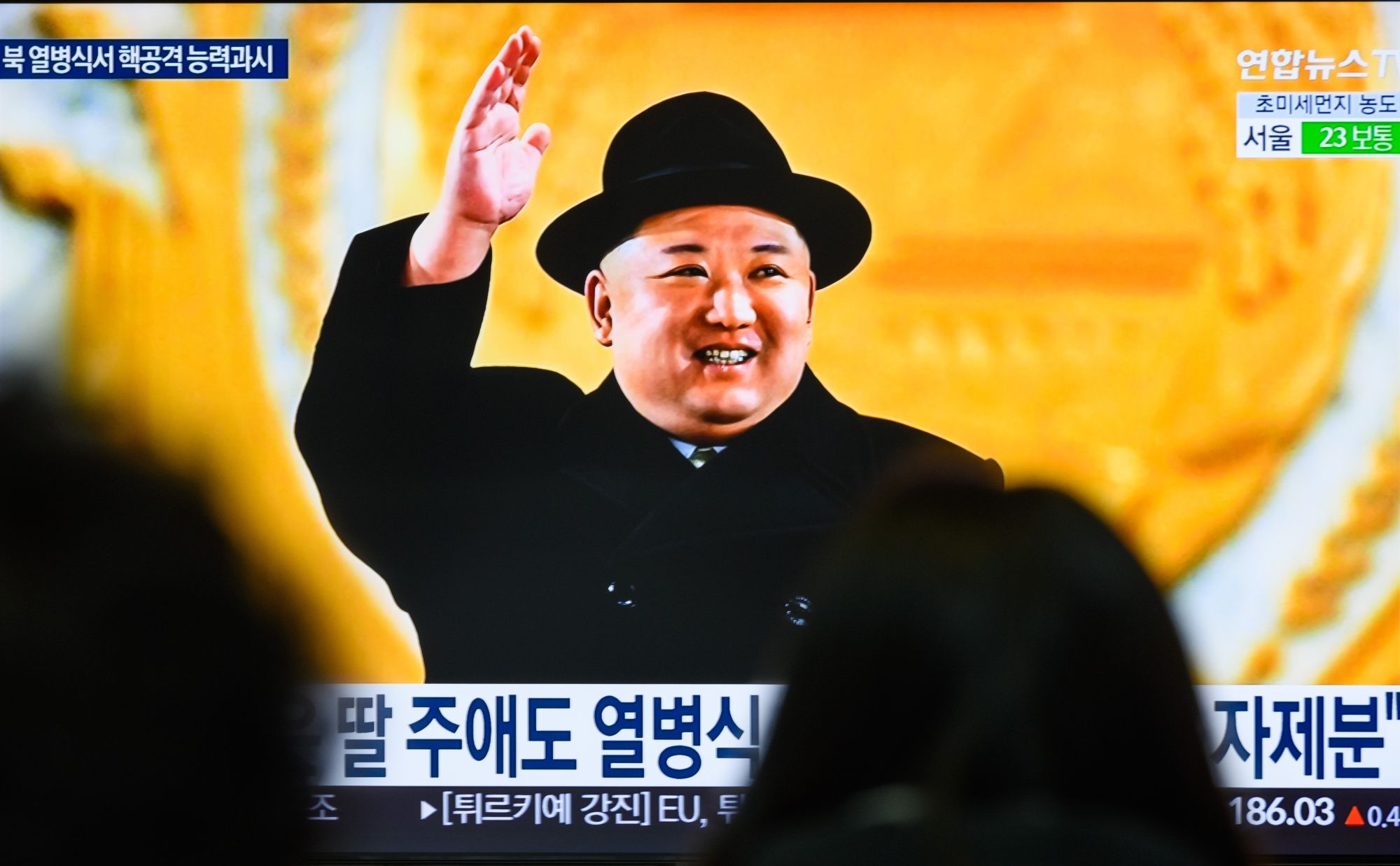
(Bloomberg) -- North Korean leader Kim Jong Un called for “practical and offensive” war capabilities as his state issued a fresh warning to the US and cut communications links with South Korea used to reduce tensions on their heavily armed border.
Kim told a meeting of military officials that he wanted to step up the country's defenses due to “the ever-worsening security on the Korean Peninsula,” the official Korean Central News Agency reported Tuesday.
His state was determined to “strengthen the war deterrent of the country in every way to cope with the escalating moves of the US imperialists and the south Korean puppet traitors to unleash a war of aggression,” KCNA said. North Korea's official media almost never refers to its neighbor by its formal name.
North Korea stepped up its pressure campaign by last week cutting off the communication links with South Korea. This year it has also ratcheted up tensions by testing new weapons and systems to deliver nuclear strikes against the US and its two allies that host the bulk of American troops in the region — South Korea and Japan.
That response also included a new undersea “Haeil” drone North Korea tested recently that it said could deliver a “radioactive tsunami” — a claim doubted by South Korea's military.
The US, Japan and South Korea this month held joint anti-submarine drills in waters off the South Korean island of Jeju. North Korea responded by warning that the US and its “puppet state” allies were bringing grave danger to themselves and saying its nuclear arsenal was ready to be used at any time to deter the “war maniacs' reckless moves.”
South Korean Unification Minister Kwon Young-se said the communication links were still silent on Tuesday. He expressed “strong regret” over North Korea's “unilateral and irresponsible attitude,” warning in a statement that it would lead to further isolation and hardship for the country.
He also said North Korea has been illegally using South Korean facilities at the Kaesong Industrial Complex. The factory plant located just north of the border was once seen as a symbol of economic cooperation but has been shuttered for years due to political rancor.
The two Koreas, which are technically still at war, don't have regular phone service. They set up hotlines in 2018 after a series of summits aimed at decreasing tensions. But since then, North Korea has shut the communications links in displays of anger.
North Korea cut the lines from June 2020 for over a year in protest against South Korean activists who sent leaflets critical of Kim's regime across the border by balloon. A few weeks later the lines were cut again for about two months in a show of anger from Pyongyang over joint military drills.
(Updates with comments from South Korea's unification minister.)
More stories like this are available on bloomberg.com
©2023 Bloomberg L.P.

-
Signature Play: The Classic Cocktail Is Dead. Or Is It?

Classic cocktails are disappearing from India's cocktail menus. But they're still being ordered, taught to bartenders and borrowed from. So, who's really having the last drink?
-
A New Samvat Wishlist: Inclusive Prosperity And Human Development
India has strengthened its economic foundations through infrastructure, digital access and enterprise. Its next growth chapter must deepen productivity, create better livelihoods and widen participation in prosperity.
-
Love, Sex Aur Dhokha: The Audacious Plot To Spy On Jensen Huang
A Taipei dinner, a Singapore chip buyer and a suspected Chinese asset: inside the alleged spy operation that got close to NVIDIA's Jensen Huang.
-
Ten Things I Learnt This Samvat
Patience can be a trap. Cheap stocks can stay cheap. Leverage can wipe you out. What did Samvat 2082 teach us? Niraj Shah writes on 10 lessons from the year gone by.
-
Talking Points This Week: Tech Nerves, FII Buying, And A Faraway Banking Shock
The global markets are not shining this Diwali. The exception in the large markets is, India.
-
Midterm Rally Lasted A Day. The Hard Reality Of A Divided US May Last Two Years | Opinion
Between a contested AI boom, a debt ceiling that arrives in 2027 and a president with every incentive to act alone, the next two years may prove more volatile than the first day's rally suggests.
-
Blue Wave Will Derail the AI Trade but Won't Dismantle the AI Era | Unhedged Position
The Democrats' sweep of the US Congress will see politics collide with economic forces both over the long and short term.
-
It's Time To Take The GST Council's Bet On Trust Global
Payment records can prove India's services exports, and clear, proportionate rules can bring foreign digital sellers into the tax net.
-
Opinion | India at 38: From Innovation Overperformer to Innovation Powerhouse
India now has 453 VC-backed deep science startups, 18 of them late-stage, after 117 percent growth since 2020. Laurus Labs, at USD 9.3 billion, is the most valuable deep science company in any middle-income economy outside China.









