Japan's First Woman PM Sanae Takaichi’s 3 AM Staff Meeting Sparks Debate Over Work Culture
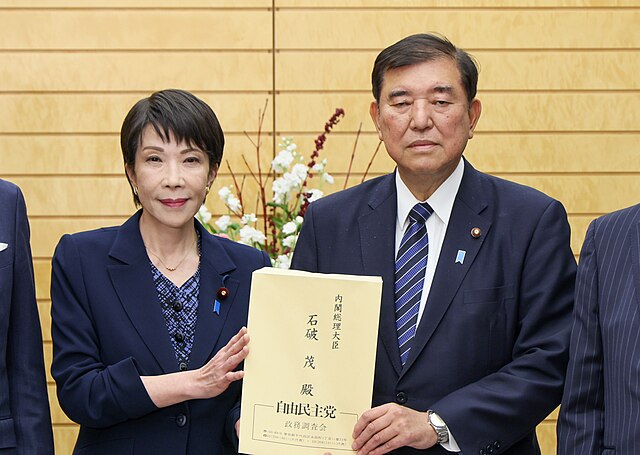
Japan's first woman Prime Minister, Sanae Takaichi, who vowed to “work like a horse” upon taking charge, is facing questions over her relentless schedule and its possible toll on her health.
According to the Asahi Shimbun newspaper, 64-year-old Takaichi arrived at her office at 3 a.m. on Nov. 7 to prepare for her first parliamentary debate. She reportedly spent three and a half hours with her aides and secretaries before the Lower House Budget Committee session began at 9 a.m. Budget Committee meetings usually involve detailed exchanges between lawmakers and the prime minister, but such an early start is considered highly unusual.
“My jaw dropped when I heard it was 3 a.m.,” an official was quoted as saying by Fuji News Network, speaking on condition of anonymity.
When she was elected president of the Liberal Democratic Party on Oct. 4, Takaichi had promised lawmakers, “I will have you work like horses,” adding, “I myself will discard the term ‘work-life balance.' I will work, work, work, work, and keep on working.”
Her early-morning routine soon drew concern from other lawmakers during the committee meeting, Asahi Shimbun reported. “I imagine some staff members worked through the night drafting responses,” said Takahiro Kuroiwa of the Constitutional Democratic Party.
Takaichi, who has been staying at a Diet dormitory in central Tokyo, said limited facilities were making her work harder. The building, she explained, only had an old fax machine, creating logistical challenges. When asked by Kuroiwa why she had not moved into the prime minister's official residence, she replied, “I want to move once the series of events settles down. Right now, not only do I not have time to pack, but I am working in a situation where I can hardly get any sleep.”
Concerns about her well-being were also raised by members of her own party. Ken Saito, a lawmaker from the ruling Liberal Democratic Party, told her, “You say you will work, work and work, but honestly, I am a little worried.” Katsuhito Nakajima of the Constitutional Democratic Party also advised her to get sufficient rest, to which Takaichi responded with a smile and a nod.
As her administration pushes for easing restrictions on maximum working hours, her predawn schedule has sparked criticism for setting a dangerous example of overwork, or even 'karoshi' (death from overwork), reported the South China Morning Post.
Kazuyu Shimba, secretary general of the Democratic Party for the People, criticised her for disregarding her staff's well-being. “If the prime minister starts at 3 a.m., staff must start from 1.30 a.m. or 2 a.m.,” he said, as quoted by the Chosun Daily. “People cannot endure that physically.”
Government spokesperson Minoru Kihara defended Takaichi's approach, saying it was necessary to ensure “meticulous preparation” for parliamentary sessions.

-
Signature Play: The Classic Cocktail Is Dead. Or Is It?

Classic cocktails are disappearing from India's cocktail menus. But they're still being ordered, taught to bartenders and borrowed from. So, who's really having the last drink?
-
A New Samvat Wishlist: Inclusive Prosperity And Human Development
India has strengthened its economic foundations through infrastructure, digital access and enterprise. Its next growth chapter must deepen productivity, create better livelihoods and widen participation in prosperity.
-
Love, Sex Aur Dhokha: The Audacious Plot To Spy On Jensen Huang
A Taipei dinner, a Singapore chip buyer and a suspected Chinese asset: inside the alleged spy operation that got close to NVIDIA's Jensen Huang.
-
Ten Things I Learnt This Samvat
Patience can be a trap. Cheap stocks can stay cheap. Leverage can wipe you out. What did Samvat 2082 teach us? Niraj Shah writes on 10 lessons from the year gone by.
-
Talking Points This Week: Tech Nerves, FII Buying, And A Faraway Banking Shock
The global markets are not shining this Diwali. The exception in the large markets is, India.
-
Midterm Rally Lasted A Day. The Hard Reality Of A Divided US May Last Two Years | Opinion
Between a contested AI boom, a debt ceiling that arrives in 2027 and a president with every incentive to act alone, the next two years may prove more volatile than the first day's rally suggests.
-
Blue Wave Will Derail the AI Trade but Won't Dismantle the AI Era | Unhedged Position
The Democrats' sweep of the US Congress will see politics collide with economic forces both over the long and short term.
-
It's Time To Take The GST Council's Bet On Trust Global
Payment records can prove India's services exports, and clear, proportionate rules can bring foreign digital sellers into the tax net.
-
Opinion | India at 38: From Innovation Overperformer to Innovation Powerhouse
India now has 453 VC-backed deep science startups, 18 of them late-stage, after 117 percent growth since 2020. Laurus Labs, at USD 9.3 billion, is the most valuable deep science company in any middle-income economy outside China.









