Japan, China Discuss Economy As US Tariff Pressure Rises
Japan and China held their first economic dialogue in six years in Tokyo on Saturday, an event aimed at reducing tensions between the Asian giants as they face trade pressure from the US.
“We had a very lively discussion. It ended up going on for some time, but I think it was a fruitful meeting,” Japan's Foreign Minister Takeshi Iwaya told reporters following the meeting with his Chinese counterpart Wang Yi.
When asked whether the US tariffs were discussed, Iwaya said it was not the main topic of discussion in any of the meetings held on Saturday.
“We agreed with South Korea to continue working together closely and also communicate clearly with the US,” he said, referring to separate ministerial talks held earlier in the day with South Korea, without elaborating further. He did not say what was discussed with Wang regarding US tariffs.
The meeting took place less than two weeks before US President Donald Trump is set to unveil more tariffs on April 2, and follows failed attempts by Japan to lobby the US government directly for an exemption from the levies.
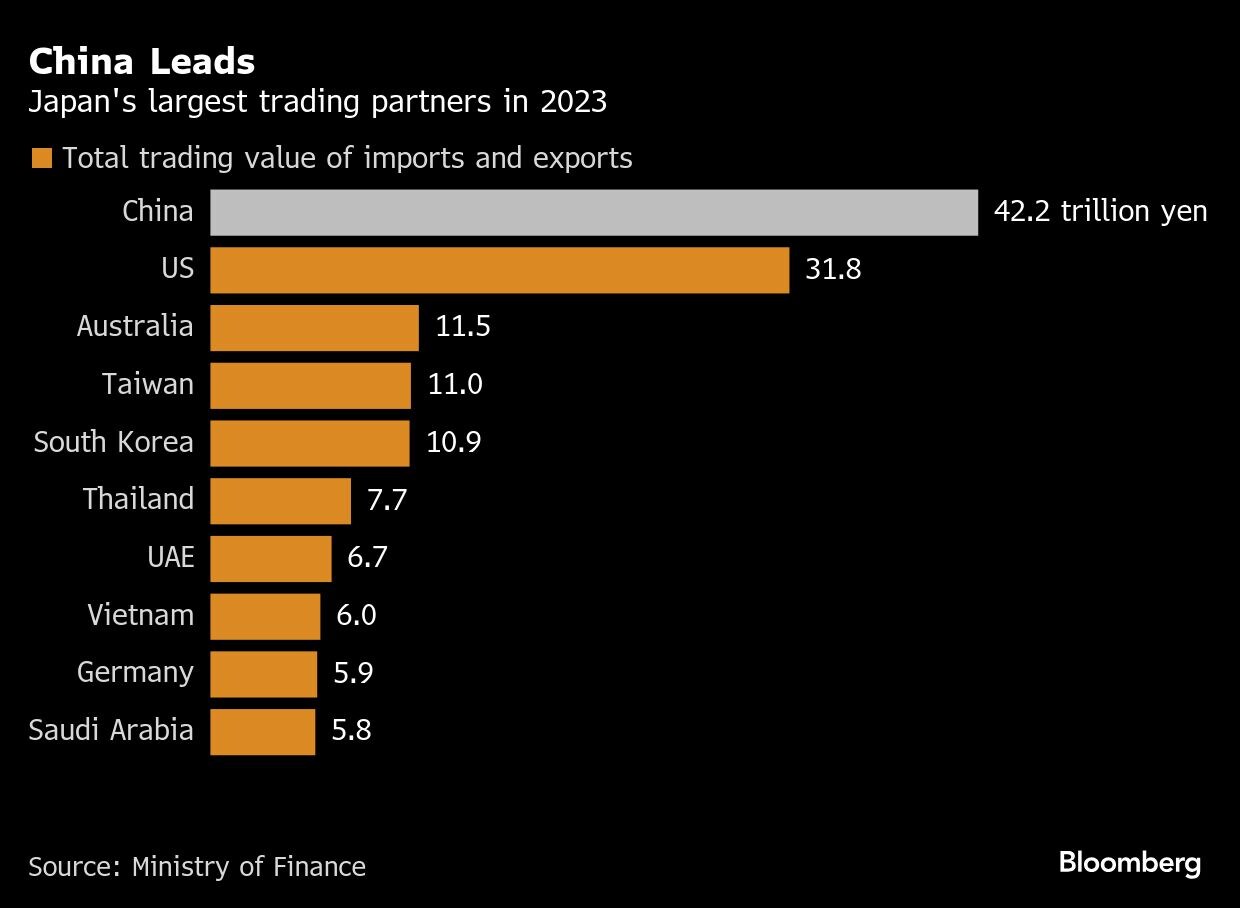
Although China is Japan's largest trading partner, the two nations have been at loggerheads over issues including a territorial dispute and a ban imposed by Beijing on seafood from Japan following the release of wastewater from the crippled Fukushima Dai-ichi Nuclear Power Plant.
The Senkaku islands, known as Diaoyu islands in China, and Japan's seafood and agricultural exports such as beef to China, were among topics discussed with Wang, Iwaya said.
Ahead of the meetings, Japan's foreign ministry downplayed the impact of the US tariffs on the talks. Japan will respond if China raises the issue of US tariffs in the economic dialogue, but a coordinated response to the tariffs is not likely, a Japanese foreign ministry official said.
Surveys show Japanese firms in China have become more pessimistic about doing business in China due to rising geopolitical tensions, fraying bilateral ties and stiff competition from Chinese firms. Still, the scale and close proximity of the Chinese market means it's in Japan's interest to maintain stable relations.
“Large Japanese companies are still making profits from China, so Japan has no choice but to continue to do business with China,” said Norihiko Ishiguro, chairman of the Japan External Trade Organization.
Beijing has also been making moves to stabilize ties with its major trading partners as it faces rising trade tariffs from Washington.
“We uphold multilateralism and free trade, and strive to develop economic blocs and globalization in a more inclusive direction,” Wang said earlier in the day.
South Korean Foreign Minister Cho Tae-Yul also joined Iwaya and Wang on Saturday morning to hold trilateral talks, in a move seeking to further cooperation and lay the groundwork for a potential leadership summit as the countries confront economic disruption and rising global political tensions.
“We shared the view that against the backdrop of the intertwined international situation and the weak recovery of the global economy, China, Japan and South Korea have the need and responsibility to further strengthen communication with each other, enhance mutual trust and deepen cooperation,” Wang said in remarks following the meeting.
He reiterated that the three economies will continue communicating with an eye on restarting negotiations to sign a three-way free trade agreement and promoting RCEP, a trade framework among Asia-Pacific countries.
Japan, China, and South Korea kicked off talks for a trade deal in 2012 but no meetings on the agreement have been held since 2019, according to Japan's foreign ministry website.
Cooperation between the three nations in recent years has focused on promoting people-to-people exchanges, green transformation and exploring how best to manage aging societies.

-
Indians Are Travelling, But Not Every Journey Is A Holiday | The Week In Whys

Pilgrims, patients and working women are the real travellers, and the system hasn't quite caught up with them.
-
Getting To Work Costs Women More | The Reason Why
It is not just about women paying more than men. It is about women paying much more in cities than in villages.
-
AI Bias In Investing Cannot Be Eliminated, But It Can Be Governed
Framing is a particularly important example as identical financial information presented in terms of gains rather than losses can lead an LLM to reach a different assessment.
-
Joining The Dots | Dark Skies, Steady Diya: Why Hope Holds This Diwali
With war, a weak rupee and foreign outflows weighing on sentiment, policymakers at the NDTV World Summit and market veterans at NDTV Profit Ignite: Diwali Edition offered the same advice: stay invested and filter out the noise.
-
The Curious Case of Equitas Small Finance Bank And A CEO Who Quit For Stock
PN Vasudevan believes persistent investor concerns over a perceived conflict of interest had become a governance overhang on Equitas Small Finance Bank's stock, even as the lender improved profitability and asset quality.
-
Talking Points This Week: AI Cash Burn, A Tiger Comeback And An India That Still Finds Its Own Path
India is not immune to higher oil or tighter global liquidity, yet its earnings base is broader, its domestic policy levers are still available.
-
Foreign Investors Own Half Of HDFC Bank and ICICI Bank. An LTCG Cut Could Matter Most Here
Foreign portfolio investors have US$115 billion parked in HDFC Bank, ICICI Bank. If the government cuts long-term capital gains tax, Jefferies says returning foreign money could land here first.
-
'Never Seen This Level Of Negativity': Sandeep Tandon Says The Next Rally May Be Closer Than You Think
Veteran investor Sandeep Tandon says foreign selling is easing, large-caps are due a comeback and mid-caps are crowded, while he turns positive on gold, power and pharma this Diwali.
-
Indians Stay With Family, Not In Hotels | The Reason Why
India still lacks enough clean, reliable and affordable hotels for budget-conscious travellers.
-
The Economic Imperative: Analysing The Material Driving Force Behind India-Canada Strategic Reset
This economic complementarity is further reinforced by deep institutional investment ties and talent mobility, which form the bedrock of the bilateral framework.










