Indonesia's Ex-General Prabowo Sworn In As Country's Eighth President
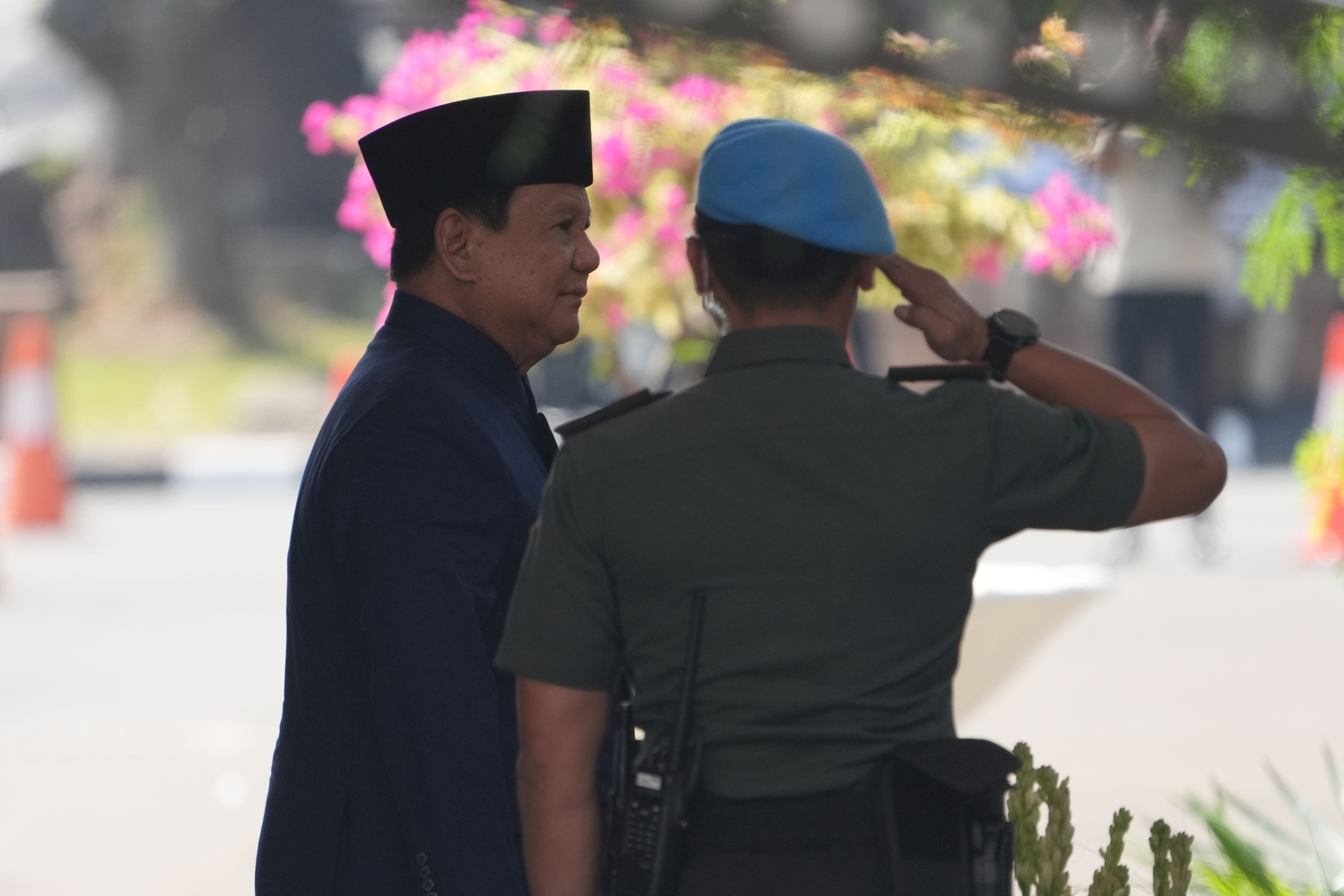
Former general Prabowo Subianto was sworn in as Indonesia's eighth president on Sunday, capping a 26-year rise that followed his dismissal from the military over alleged human rights abuses tied to protests that ousted his late former father-in-law and dictator, Suharto.
Prabowo took the oath of office together with Vice President Gibran Rakabuming Raka, the son of outgoing leader Joko Widodo The ceremony marks a remarkable comeback for a man who once faced Western-imposed sanctions and had two failed election bids against Widodo, the man he is now replacing.
The 73-year-old will unveil his cabinet later in the day with Sri Mulyani Indrawati expected to retain her finance portfolio, which suggests policy continuity. Prabowo, a former defense minister, wants to boost growth in Southeast Asia's largest economy to 8% annually and draw in more investments.
Prabowo's inauguration was witnessed by foreign dignitaries including billionaire Brunei King Hassanal Bolkiah and Singapore Prime Minister Lawrence Wong. Indonesia's key trade partners US and China also sent representatives.
A makeover on social media ahead of the February vote helped Prabowo reshape his image into a doting grandfather vowing to provide billions of dollars in free meals to students. He also pledged to maintain the business-friendly policies of the former president, popularly known as Jokowi.
But Prabowo's most ambitious goals entail transforming the sprawling Southeast Asian nation into the world's fastest-growing economy, setting an 8% annual growth target to hit in the next two to three years. Critics will also be watching to see if Indonesia faces democratic backsliding after Jokowi spent years strengthening the nation's political elite.
“A Prabowo presidency promises a mix of nationalist fervor and pragmatic governance,” said Dedi Dinarto, an associate with advisory firm Global Counsel. “His leadership style is expected to be more authoritative than that of the outgoing President Jokowi, which may bring greater political stability. However, there are concerns that this could come at the cost of political freedoms.”
Prabowo takes office inheriting an economy that has grown at a steady rate of about 5% the past decade but has struggled to expand beyond that.
Boosting that figure will require addressing a dwindling manufacturing sector, declining jobs and a growing informal economy. The government will also have to ensure that its efforts at downstreaming — increasing the domestic processing of key natural resources like nickel — can extend to other commodities and attract more foreign direct investment.
As Jokowi's defense minister, Prabowo modernized the country's military, purchasing French-built Rafale fighter jets and securing additional submarines. He also prioritized strengthening defense partnerships with the US, France and South Korea.
To reach the presidency, Prabowo formed an alliance with Jokowi that included naming the outgoing president's 37-year-old son as his running mate. Prabowo also vowed to continue building Jokowi's landmark new national capital on the island of Borneo, a roughly $30 billion project that could prove an expensive distraction.
In exchange for his loyalty, Prabowo secured key backers in the powerful ruling class, including some current ministers who may retain their roles in his cabinet. He appears to have consolidated majority support in parliament as part of a big-tent coalition championed by his predecessor.
“I have to have a big coalition,” Prabowo said at an investment summit this month. “It will be said, ‘huh, Prabowo's cabinet is a fat cabinet.'”
Prabowo will announce his cabinet picks following the inauguration.
To help pay for his $29 billion school lunch program and other new initiatives, Prabowo has promised to increase tax revenue to 14%-16% of GDP and cut back on wasteful spending.
After having served more than two decades in the military, some observers are concerned about what a president once banned from travel to the US for human rights violations will mean for a nation that only returned to open elections in 1999.
Prabowo — who has long rejected accusations that he committed human rights abuses — assured Indonesians that his military background will have no bearing on his oversight of Southeast Asia's biggest economy.
His administration is also likely to face scrutiny from democracy activists over the dominance of political dynasties in the country. Prabowo represents that thread of history not only through his running mate, but also as Suharto's former son-in-law.
“If there is no opposition, then democracy becomes just a name,” said D. Nicky Fahrizal, a researcher at the Jakarta-based Center for Strategic and International Studies. “The quality of democracy will decline, because everything will be controlled by the executive.”

-
Extracting Value From Battery Scrap Could Be Challenging For India | The Reason Why

A discarded lithium-ion battery still contains valuable materials such as lithium, nickel and cobalt. These can be recovered and reused. When such batteries are crushed and shredded, they produce a dark powder called black mass.
-
One El Nino, India Can Handle. Two Could Break The Granary
India's grain stocks can absorb one bad year, but a second El Nino could drain the buffer in two to three years, economists say.
-
India's Troika Of Good Luck | Joining The Dots
As Jensen Huang's exit drags Nvidia down, a cooling AI trade and resilient earnings have revived investor interest in India. A likely RBI rate hike looms.
-
Talking Points This Week: Leadership Shock At Nvidia, Earnings Strength, And The Fog Over Hormuz
The Anthropic IPO pricing and first trading day, Nvidia's upcoming earnings, and any fresh signals from Iran will set the tone for the following week.
-
Signature Play: The Classic Cocktail Is Dead. Or Is It?
Classic cocktails are disappearing from India's cocktail menus. But they're still being ordered, taught to bartenders and borrowed from. So, who's really having the last drink?
-
A New Samvat Wishlist: Inclusive Prosperity And Human Development
India has strengthened its economic foundations through infrastructure, digital access and enterprise. Its next growth chapter must deepen productivity, create better livelihoods and widen participation in prosperity.
-
Love, Sex Aur Dhokha: The Audacious Plot To Spy On Jensen Huang
A Taipei dinner, a Singapore chip buyer and a suspected Chinese asset: inside the alleged spy operation that got close to NVIDIA's Jensen Huang.
-
Ten Things I Learnt This Samvat
Patience can be a trap. Cheap stocks can stay cheap. Leverage can wipe you out. What did Samvat 2082 teach us? Niraj Shah writes on 10 lessons from the year gone by.
-
Talking Points This Week: Tech Nerves, FII Buying, And A Faraway Banking Shock
The global markets are not shining this Diwali. The exception in the large markets is, India.
-
Midterm Rally Lasted A Day. The Hard Reality Of A Divided US May Last Two Years | Opinion
Between a contested AI boom, a debt ceiling that arrives in 2027 and a president with every incentive to act alone, the next two years may prove more volatile than the first day's rally suggests.









