India’s Growing Affluence Does Not Promise Its Women More Rights, Safety
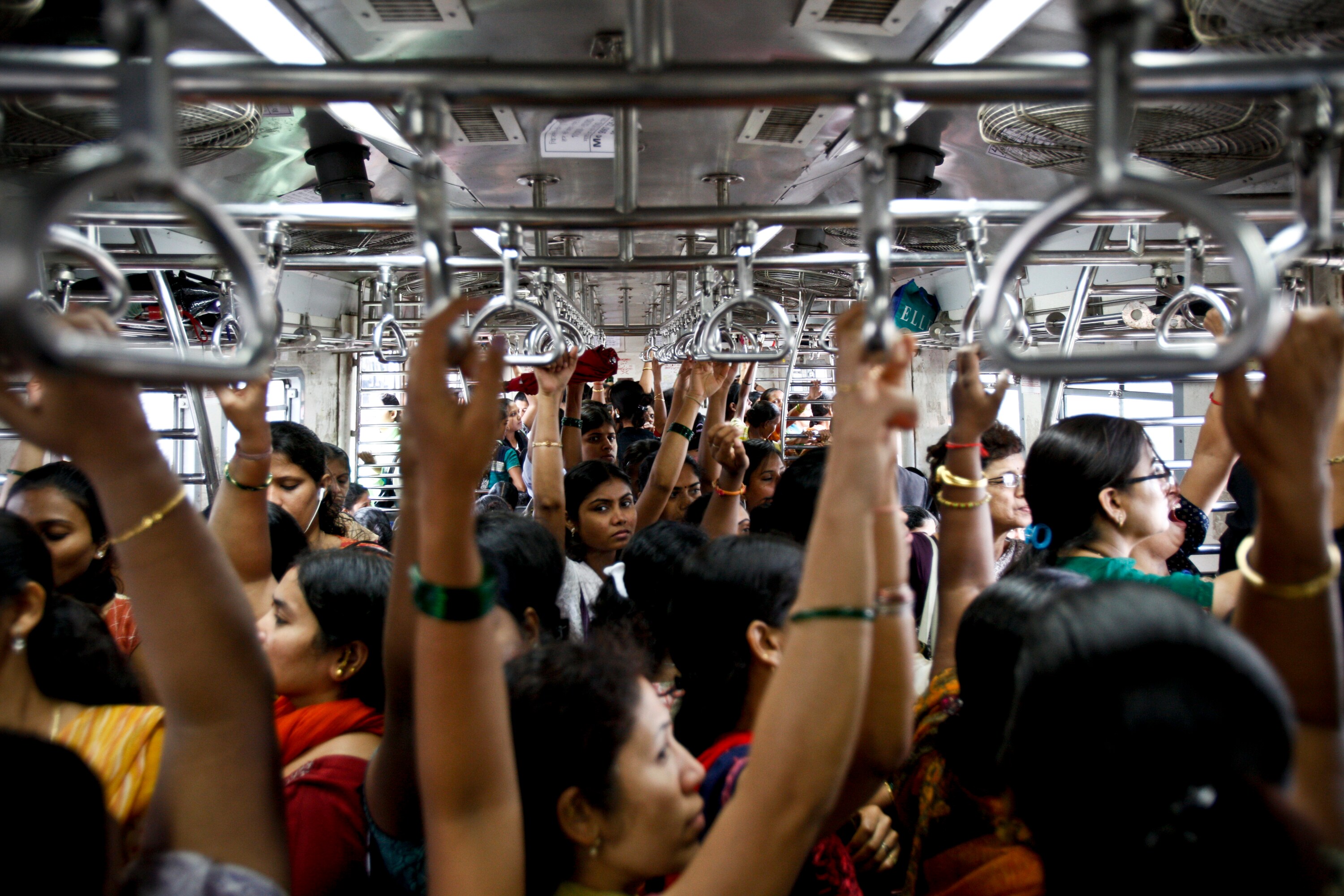
A nation's economic well-being does not necessarily ensure gender parity or safety for women, a new index has concluded. And India is an example of this disparity, the data showed.
Countries were studied on three parameters to see how they fared in the Women, Peace and Security Index. This index, developed by women's rights advocacy Georgetown Institute for Women, Peace and Security in Washington, DC, looked at gender rights in terms of inclusion, security and justice.
With a score of 0.58, India was ranked 131 among 153 nations, 27 places below its rank measured by per capita income. (The measure used was purchasing power parity dollar, for 2016, that estimates income according to a common basket of goods people might buy the world over.)
The global average was 0.662. The WPSI score ranges from zero (the worst) to one (the best).
“It is notable (that) top-performing countries… rank higher on the WPS Index than on their income per capita,” the report said. “National income helps performance on the WPS Index, but the two are not always closely correlated.”
The WPSI's assessment of inclusion covered economic, social and political factors. It looked at justice in terms of laws as well as informal discrimination. Security was defined at family, community and societal levels.
Zimbabwe Ranks Highest, Saudi Arabia Lowest
Cash-strapped, impoverished and politically unstable Zimbabwe topped when ranked by the gap between a country's WPSI and per capita income ranks, with its WPSI position 65 places better than its per capita income rank.
The difference between the two ranks will be less than zero for a richer country where women feel less secure, as in the case of India. The calculation works thus for India when we subtract its position on the WPSI (131) from its per capita income rank in the world (104): 104 – 131 = –27. In the case of nations like Zimbabwe, it will be a positive figure: 135 – 70 = 65.
Saudi Arabia ranks the worst, ranked 89 places lower than its per capita income position: 62 – 151 = –89.
As many as 57 countries ranked at least 10 places better on the WPSI than on per capita income. This included Nicaragua, Tajikistan, Serbia and Rwanda. And 52 countries, such as the US, Brazil, China and Qatar, ranked at least 10 places worse.
Nepal Fares The Best In South Asia
India was ranked seventh on the WPSI in south Asia. This list included Afghanistan, Bangladesh, Bhutan, Iran, Maldives, Nepal, Pakistan and Sri Lanka.
Nepal topped the south Asia list: Its WPSI stands 42 places higher than its per capita income ranking. Afghanistan was at the bottom of the list.

On the question of justice for women, India ranked third on legal discrimination and second on the percentage of men who find it acceptable for women to work. On security, India ranked third on women's perceptions of safety and seventh on the problem of intimate partner violence.
The best and worst in south Asia on legal discrimination were Maldives and Iran. On the question of men accepting a woman's right to work, Nepal performed the best and Pakistan the worst. Bangladesh ranked the highest on safety perceptions and Afghanistan the lowest. On intimate partner violence, Maldives and Bangladesh were the best and worst, respectively.
This copy has been published in arrangement with IndiaSpend.

-
We May Need Another Tukaram Mundhe To Fight Air Pollution | The Reason Why

Developers may install basic measures such as sprinklers and green nets, resume work, and continue violating rules when this equipment stops working.
-
Extracting Value From Battery Scrap Could Be Challenging For India | The Reason Why
A discarded lithium-ion battery still contains valuable materials such as lithium, nickel and cobalt. These can be recovered and reused. When such batteries are crushed and shredded, they produce a dark powder called black mass.
-
One El Nino, India Can Handle. Two Could Break The Granary
India's grain stocks can absorb one bad year, but a second El Nino could drain the buffer in two to three years, economists say.
-
India's Troika Of Good Luck | Joining The Dots
As Jensen Huang's exit drags Nvidia down, a cooling AI trade and resilient earnings have revived investor interest in India. A likely RBI rate hike looms.
-
Talking Points This Week: Leadership Shock At Nvidia, Earnings Strength, And The Fog Over Hormuz
The Anthropic IPO pricing and first trading day, Nvidia's upcoming earnings, and any fresh signals from Iran will set the tone for the following week.
-
Signature Play: The Classic Cocktail Is Dead. Or Is It?
Classic cocktails are disappearing from India's cocktail menus. But they're still being ordered, taught to bartenders and borrowed from. So, who's really having the last drink?
-
A New Samvat Wishlist: Inclusive Prosperity And Human Development
India has strengthened its economic foundations through infrastructure, digital access and enterprise. Its next growth chapter must deepen productivity, create better livelihoods and widen participation in prosperity.
-
Love, Sex Aur Dhokha: The Audacious Plot To Spy On Jensen Huang
A Taipei dinner, a Singapore chip buyer and a suspected Chinese asset: inside the alleged spy operation that got close to NVIDIA's Jensen Huang.
-
Ten Things I Learnt This Samvat
Patience can be a trap. Cheap stocks can stay cheap. Leverage can wipe you out. What did Samvat 2082 teach us? Niraj Shah writes on 10 lessons from the year gone by.
-
Talking Points This Week: Tech Nerves, FII Buying, And A Faraway Banking Shock
The global markets are not shining this Diwali. The exception in the large markets is, India.









