India Set To Take Back 18,000 Citizens From US To Placate Trump
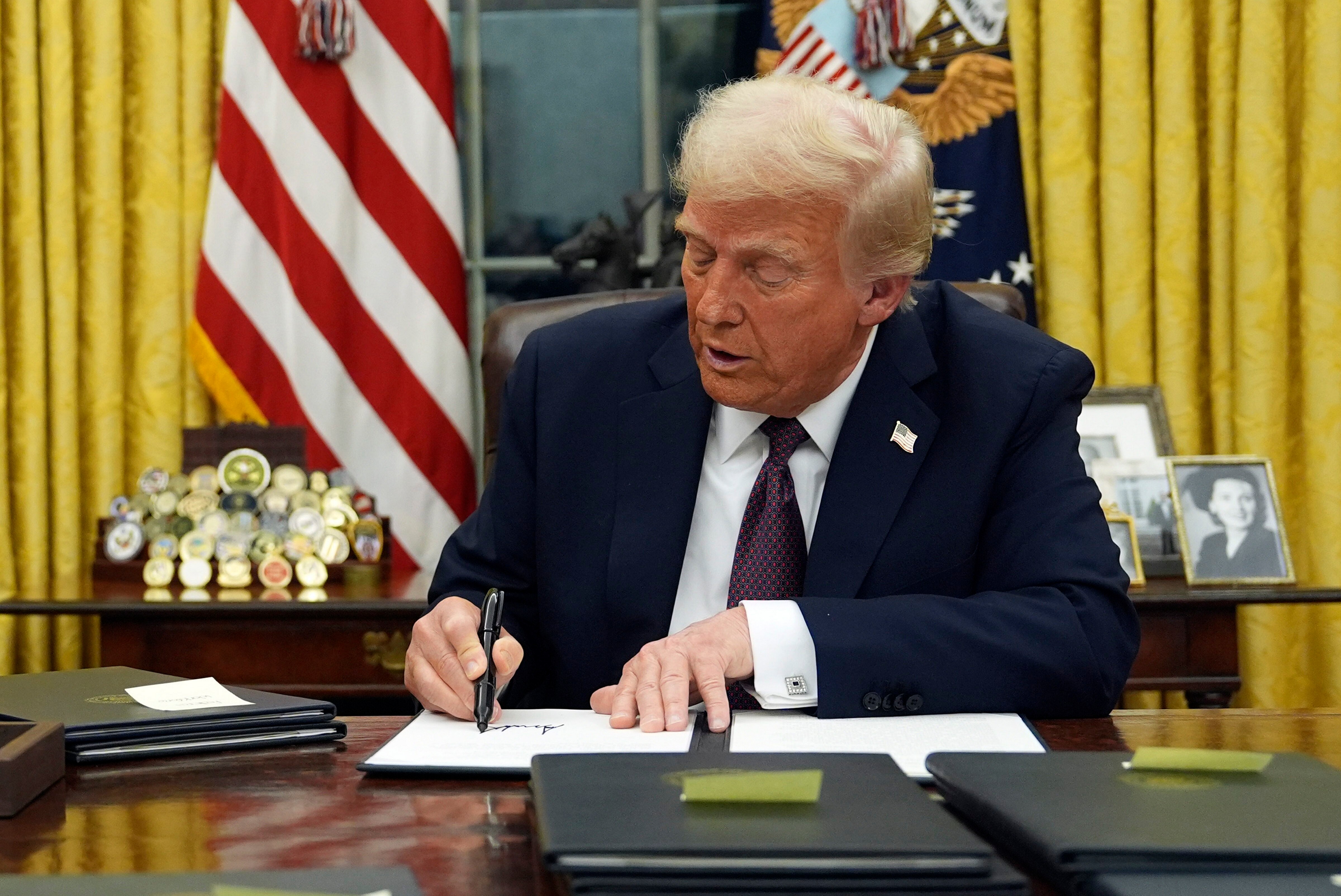
India's government is prepared to work with Donald Trump's administration to identify and take back all its citizens residing illegally in the US, an early signal from New Delhi that it's willing to comply with the incoming American president and avoid a trade war.
The two countries have together identified some 18,000 illegal Indian migrants in the US to be sent back home, according to people familiar with the matter. The figure could be much higher than that, though, given it's unclear how many illegal Indian migrants live in the US, the people added, asking not to be identified because the discussions are private.
Like several other nations, India is working behind the scenes to appease the Trump administration and avoid the brunt of its trade threats. The crackdown on illegal migration has been a signature campaign pledge for Trump. Within hours of his inauguration Monday, the new president moved to fulfill that pledge as he pushed to end birthright citizenship and mobilize troops on the US-Mexico border.
In return for its cooperation, India hopes that the Trump administration would protect legal immigration channels used by its citizens to enter the US, in particular the student visas and the H-1B program for skilled workers. Indian citizens accounted for almost three-fourths of the 386,000 H-1B visas granted in 2023, according to official data.
Any slack in taking back illegal US migrants could also adversely affect India's labor and mobility agreements with other countries, the people familiar with the matter said. With a jobs shortage back home, Prime Minister Narendra Modi's government has signed migration agreements with an array of countries in recent years, including Taiwan, Saudi Arabia, Japan, Israel and others.
“As part of India-US cooperation on migration and mobility, both sides are engaged in a process to deter illegal migration. This is being done to create more avenues for legal migration from India to the US,” said Randhir Jaiswal, spokesperson for India's Ministry of External Affairs. “The latest deportation of Indian nationals from the US by a chartered flight is a result of this cooperation,” he added, referring to an October repatriation action.
Rising Numbers
India is a relatively modest contributor of illegal migrants to the US, with its citizens accounting for about 3% of all unlawful crossings encountered by US border patrol officials in fiscal 2024, according to US Customs and Border Protection data. Latin American countries such as Mexico, Venezuela and Guatemala account for a far larger share.
However, the tally and share of Indian illegal migrants has been rising modestly in recent years. In particular, it has shot up at the less-trafficked northern US border, where Indians account for almost a quarter of all illegal crossings and also the biggest share of unlawful migrants stopped at that entry point, the data show.
While the total number of illegal Indian migrants in the US isn't certain, a report published last year by the Department of Homeland Security estimated some 220,000 unauthorised Indian immigrants resided in the US as of 2022.
India has already sought to show a cooperative attitude toward US border enforcement efforts, including toward officials in the Biden administration. In October, the Department of Homeland Security said it chartered a “large-scale” repatriation flight of more than 100 Indian nationals without the right to be the US, building on the more than 1,100 Indian citizens deported during the previous 12 months.
Taking back illegal migrants could also further Modi's goal of deterring secessionist movements overseas, according to people familiar with the discussions, including the so-called Khalistan movement, which seeks to establish a separate Sikh state on Indian soil. India has cracked down on the movement, and officials believe some of the group's backers in the US and Canada are illegal migrants.
Trade Worries
While Modi is seen to have friendly ties with Trump, and has welcomed the new administration, it is cautious of any unpredictable action from the US president, which could lead to a costly trade war. Trump has repeatedly complained that India's high import taxes hurt American businesses, and has vowed reciprocal duties on the South Asian nation.
In his first day in office, Trump has focused his attention on immediate neighbors. The US president said on Monday that he was planning to impose tariffs of as much as 25% on Mexico and Canada by Feb. 1, blaming them for “allowing vast numbers of people” into the country.
Canada in particular was “a very bad abuser,” Trump said, complaining about fentanyl and migrants crossing its US border.
While it's not fully clear why the northern US border has become such a major entry point for unauthorised migrants from India, reasons could include a halt to visa-free travel for Indians to El Salvador in 2023, and the relative ease of travel to Canada for Indians, according to the Niskanen Center, a Washington-based think tank.

-
Gold Is Rs 22,000 Cheaper Than A Month Ago. Should You Buy Amid The Wedding Season?

Gold's potential slide to $3,500 could save around Rs 4,700 per 10 grams, but a soft inflation print could just as easily push prices back up. One way to split the risk is to buy in parts, some now and the rest after the Fed's Dec. 9 decision.
-
AI Agents Are Gaining Power. Who Governs Them?
Artificial intelligence agents promise to transform productivity by moving machines from assisting decisions to executing them. But as organisations delegate greater authority to these AI-agents, they must first establish who controls that authority and who remains accountable when things go wrong.
-
Why Swapping Your Old Gold Can Trigger A Rs 5 Lakh Tax Bill, And How You Can Avoid It Legally
Swapping old gold for new is taxed as a sale and a fresh purchase. Getting your own gold remade can cut most of that bill, though it has its own costs.
-
The AI Trade is Done. The Real Opportunity for Investors Starts in 2027 | Unhedged Position
As pureplay AI stocks plunge and circular, capex-led financing unwinds, 2027 is set to be a year of reckoning for AI companies. Yet the bust clears the way for a better opportunity for investors in 2027 -- shifting the spotlight from AI builders to the companies using AI.
-
Leadership As Mission: Why The Age Of AI Demands More Human Leadership
Debjani Ghosh examines how AI is changing leadership, arguing that its success must be measured by its impact on people and the accountability of those guiding its use.
-
We May Need Another Tukaram Mundhe To Fight Air Pollution | The Reason Why
Developers may install basic measures such as sprinklers and green nets, resume work, and continue violating rules when this equipment stops working.
-
Extracting Value From Battery Scrap Could Be Challenging For India | The Reason Why
A discarded lithium-ion battery still contains valuable materials such as lithium, nickel and cobalt. These can be recovered and reused. When such batteries are crushed and shredded, they produce a dark powder called black mass.
-
One El Nino, India Can Handle. Two Could Break The Granary
India's grain stocks can absorb one bad year, but a second El Nino could drain the buffer in two to three years, economists say.
-
India's Troika Of Good Luck | Joining The Dots
As Jensen Huang's exit drags Nvidia down, a cooling AI trade and resilient earnings have revived investor interest in India. A likely RBI rate hike looms.
-
Talking Points This Week: Leadership Shock At Nvidia, Earnings Strength, And The Fog Over Hormuz
The Anthropic IPO pricing and first trading day, Nvidia's upcoming earnings, and any fresh signals from Iran will set the tone for the following week.









