Harvard-White House Talks Stall, Threatening Quick Settlement
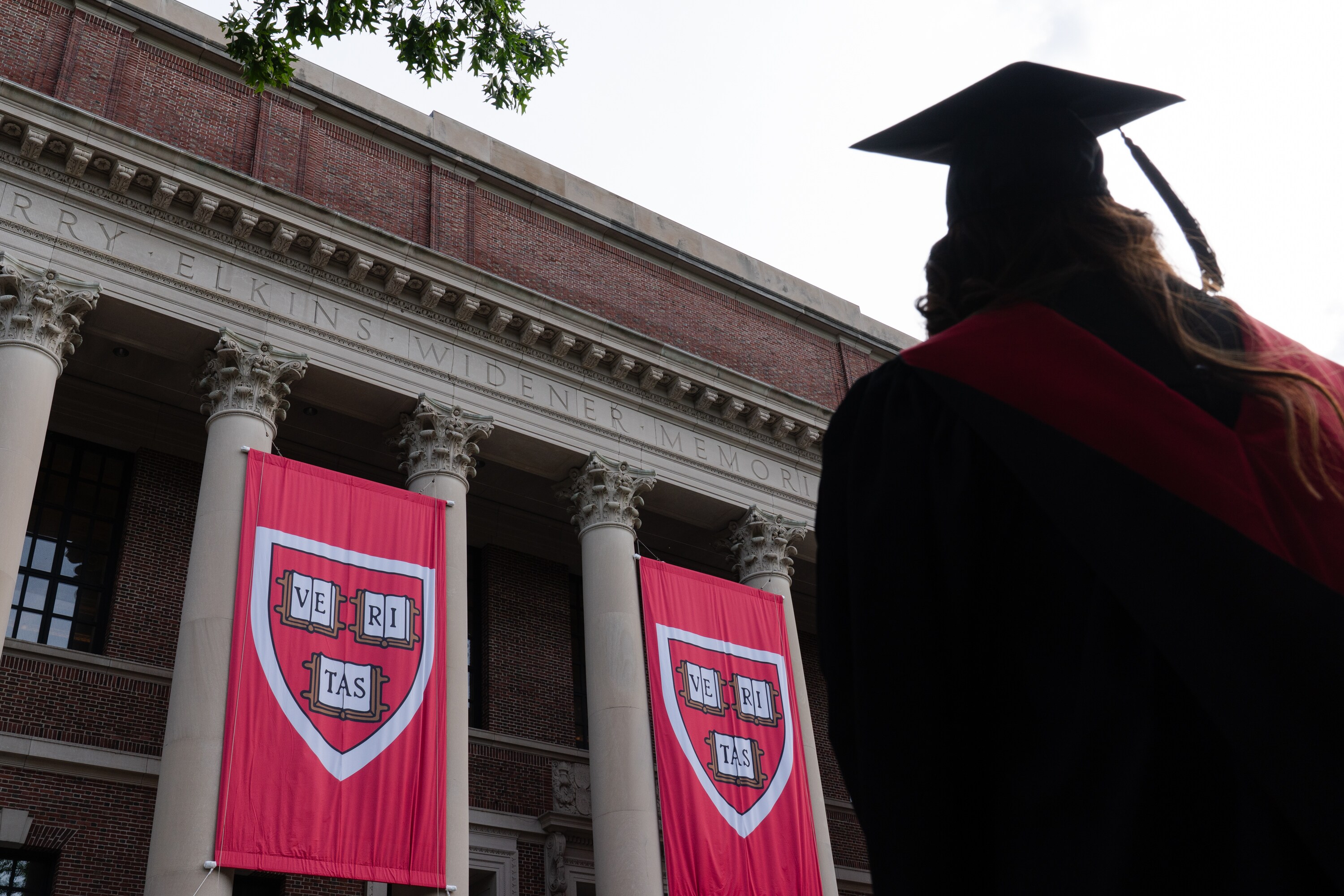
Harvard University's talks with the White House have stalled, according to a person familiar with the matter, threatening a quick resolution to a standoff that's endangering the school's finances and upending foreign student plans.
A potential deal was knocked off course last week although hopes remain for an accord, said the person, who asked not to be named because the discussions are private. Harvard didn't immediately reply to a request for comment.
The difficulties suggest that a wide gap remains between Harvard and the White House less than two weeks after President Donald Trump praised the school as acting “extremely appropriately during these negotiations” and said a deal could be reached soon. Education Secretary Linda McMahon told Bloomberg News earlier this month that the administration would be open to restoring federal grants and contracts if it made satisfactory agreements with universities.
Tension has risen more recently, however. The Trump administration ramped up pressure on Harvard earlier Monday, saying that a federal investigation found that the school violated civil rights law in its treatment of Jewish and Israeli students.
“Failure to institute adequate changes immediately will result in the loss of all federal financial resources,” the government said in a letter to Harvard President Alan Garber.
Read more: Harvard Violated Civil Rights of Jews, Trump Officials Say
The administration has already frozen more than $2.6 billion in federal research funding for Harvard, threatened the school's tax-exempt status and sought to prevent it from enrolling foreign students. The government has additional levers it can pull, including Pell Grants for low-income students and access to the federal student-loan program, which at Harvard is used mostly by graduate students.
As Trump has ramped up his attacks, Harvard has fired back by suing the government for blocking federal grants and trying to ban foreign enrollment.
Garber, who is Jewish, has questioned the administration's interest in working together to confront antisemitism, and Harvard has accused the government of making “unconstitutional demands” that would devastate academic freedom.
The White House has for months made Harvard its primary target in its effort to reshape higher education. While the government initially accused Harvard of fostering antisemitism, the attack has expanded to include accusations of political bias and for promoting diversity initiatives in hiring and admissions.
In a letter sent Monday to Garber, the US said Harvard violated Title VI of the Civil Rights Act, which bars discrimination on the basis of race, color and national origin. It said Jewish and Israeli students were “subject to severe, pervasive and objectively offensive harassment.” Harvard, it said, failed to establish reporting mechanisms about antisemitism, discipline students and faculty, and control harassment during protests.
But in a court filing later Monday in the funding-freeze case, Harvard said that the government failed to follow procedures for terminating funding over alleged violations of Title VI. The US letter sent Monday chose to ignore the proper process “in its rush to inflict pain and punishment upon Harvard,” according to the filing.
The fight with Harvard is part of a broader campaign influenced by Trump adviser and deputy chief of staff of policy Stephen Miller. The administration has also gone after top colleges including Northwestern, Cornell and Columbia.
An agreement with Columbia broke down in March after interim president Katrina Armstrong downplayed the impact of the changes in comments to the faculty. Armstrong resigned and the school is still trying to reach an agreement with the White House.
University of Virginia President James Ryan said last week he quit instead of fighting the US government amid a Trump administration probe of the school's diversity, equity and inclusion efforts.
The case is Harvard v. US Department of Health and Human Services, 25-cv-11048, US District Court, District of Massachusetts (Boston).

-
We May Need Another Tukaram Mundhe To Fight Air Pollution | The Reason Why

Developers may install basic measures such as sprinklers and green nets, resume work, and continue violating rules when this equipment stops working.
-
Extracting Value From Battery Scrap Could Be Challenging For India | The Reason Why
A discarded lithium-ion battery still contains valuable materials such as lithium, nickel and cobalt. These can be recovered and reused. When such batteries are crushed and shredded, they produce a dark powder called black mass.
-
One El Nino, India Can Handle. Two Could Break The Granary
India's grain stocks can absorb one bad year, but a second El Nino could drain the buffer in two to three years, economists say.
-
India's Troika Of Good Luck | Joining The Dots
As Jensen Huang's exit drags Nvidia down, a cooling AI trade and resilient earnings have revived investor interest in India. A likely RBI rate hike looms.
-
Talking Points This Week: Leadership Shock At Nvidia, Earnings Strength, And The Fog Over Hormuz
The Anthropic IPO pricing and first trading day, Nvidia's upcoming earnings, and any fresh signals from Iran will set the tone for the following week.
-
Signature Play: The Classic Cocktail Is Dead. Or Is It?
Classic cocktails are disappearing from India's cocktail menus. But they're still being ordered, taught to bartenders and borrowed from. So, who's really having the last drink?
-
A New Samvat Wishlist: Inclusive Prosperity And Human Development
India has strengthened its economic foundations through infrastructure, digital access and enterprise. Its next growth chapter must deepen productivity, create better livelihoods and widen participation in prosperity.
-
Love, Sex Aur Dhokha: The Audacious Plot To Spy On Jensen Huang
A Taipei dinner, a Singapore chip buyer and a suspected Chinese asset: inside the alleged spy operation that got close to NVIDIA's Jensen Huang.
-
Ten Things I Learnt This Samvat
Patience can be a trap. Cheap stocks can stay cheap. Leverage can wipe you out. What did Samvat 2082 teach us? Niraj Shah writes on 10 lessons from the year gone by.
-
Talking Points This Week: Tech Nerves, FII Buying, And A Faraway Banking Shock
The global markets are not shining this Diwali. The exception in the large markets is, India.









