Two Steps Forward And One Step Back For The Indian Economy
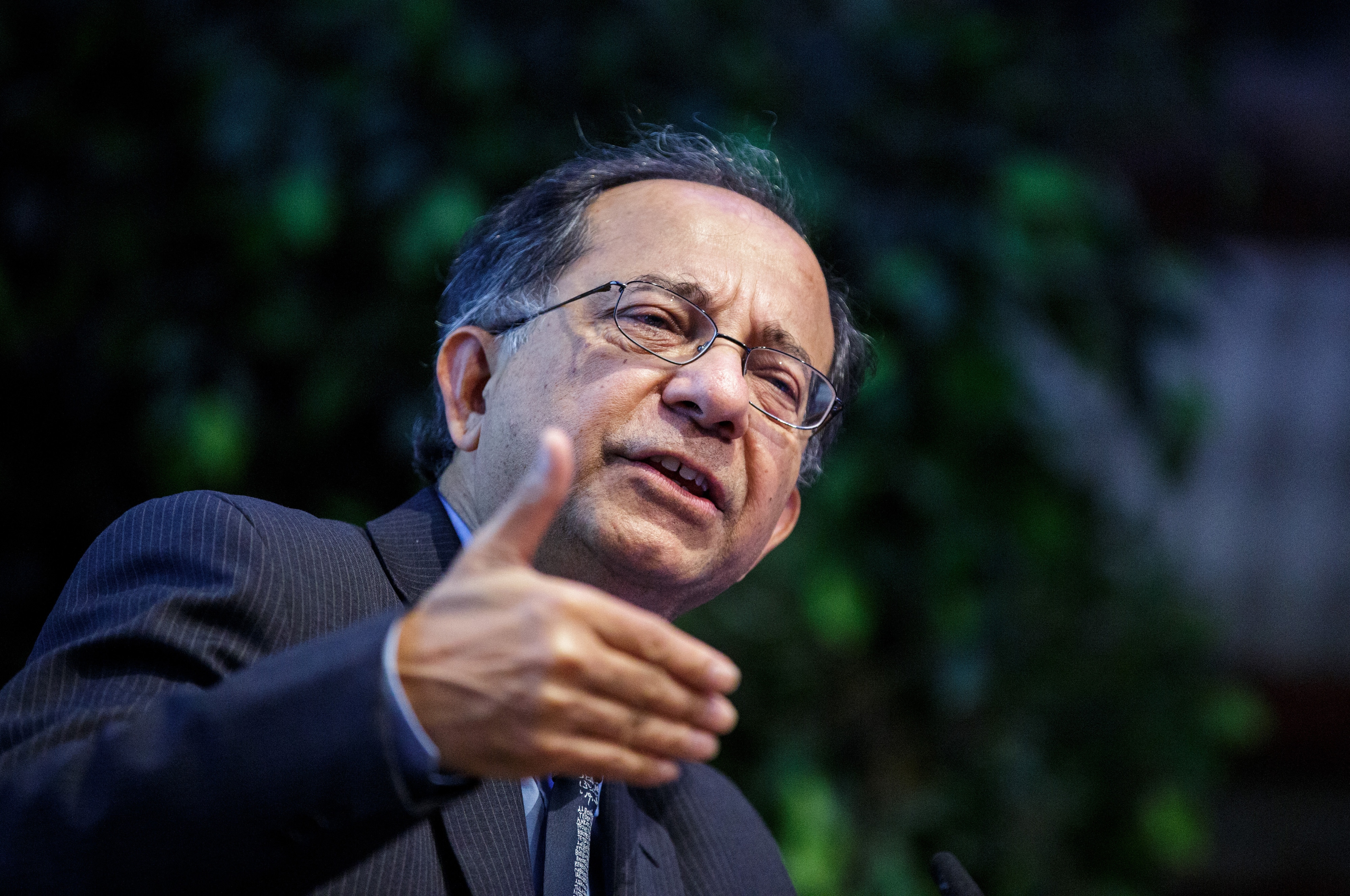
The Indian economy has seen two positive developments and one negative shock over the past twelve months, said Kaushik Basu, India's former chief economic adviser in an interview on Friday.
Basu was referring to the implementation of the Goods and Services Tax (GST) and the introduction of the Insolvency and Bankruptcy Code as the two developments which will be positive for the Indian economy in the long term. In the short term, though, demonetisation has hurt the Indian economy and failed to achieve any of its intended goals, said Basu.
"GST is a wonderful move but there will be teething troubles. As also the bankruptcy law, which doesn't get enough attention. In a country like India where quickening up business processes is extremely important, bankruptcy law plays a role. These two are very good moves," Basu said on the sidelines of the Lalit Doshi Memorial Lecture in Mumbai.
He, however, added that demonetisation was an "unfortunately designed intervention".
It is not going to achieve what it was supposed to achieve. And by slowing down the informal sector, it will have an effect on the economy which we are already seeing.Kaushik Basu, Former Chief Economic Adviser of India
The Indian economy grew at 6.1 percent in the fourth quarter of fiscal 2017 with the effects of demonetisation visible on sectors like real estate and financial services. While the hit to the economy was not as bad as some had feared, Basu feels that India's growth could have accelerated towards 8 percent if it had not been for the demonetisation hit.
The move from paper currency to digital currency has to be a slow move, said Basu referring to the idea that demonetisation would reduce the usage of cash in the economy.
India is not going to leapfrog over Scandinavian countries and become an economy which is digitised. The mistake that demonetisation made was that it tried to hurry this process too much.Kaushik Basu, Former Chief Economic Adviser of India
Even so, India remains one of the stronger economies of the world and the investor enthusiasm around the economy is justified, says Basu who retired as the chief economist of the World Bank in October last year. Basu expects India to return to 8 percent growth over the next one year as the benefits of GST start to play out.
Basu, like many others, says that reviving investment in the economy is an imperative at this stage. To that end, Basu says that lower interest rates could be one enabler. He supports the RBI's decision to cut interest rates earlier this week but wishes the central bank had been bolder. The RBI cut rates by 25 basis points to 6 percent on Wednesday.
"We do not want to get into a sustained super low inflation phase," said Basu while explaining that inflation of around 0-1 percent would be considered too low for India.
In a country like India you want inflation between 2-4 percent and for that reason I was in favour of the rate cut. I would have moved a bit more and taken the risk of a bit more inflation. It would given a boost to investment, infrastructural investment and growth.Kaushik Basu, Former Chief Economic Adviser of India
Retail inflation in India fell to a series low of 1.5 percent in June. The RBI, however, expects inflation to move back towards 4 percent by March 2018.

-
The Economic Imperative: Analysing The Material Driving Force Behind India-Canada Strategic Reset

This economic complementarity is further reinforced by deep institutional investment ties and talent mobility, which form the bedrock of the bilateral framework.
-
Medicine Pricing: Where Must Profit Stop?
India must confront excessive margins, hidden incentives and regulatory gaps that threaten the integrity of medicine.
-
Why Amazon And Flipkart Are Struggling To Beat Meesho In India's Smaller Cities
With 274 million users and lowest-cost logistics, Meesho is defending its value commerce crown against giants like Amazon and Flipkart.
-
High US Salaries, No Green Card Certainty: The Financial Calculation Facing Indian H-1B Families
The suspension of PERM processing at eight technology employers does not cancel existing H-1B visas. What it does is force a question many Indian families have been avoiding: is the US salary worth tying your career and family plans to one employer?
-
Swiggy vs Eternal: Food Delivery's Two Rivals Are No Longer In The Same Race
Eternal is building a private AI assistant, dark.ai. Swiggy is still working out how to make Instamart pay, with an operating loss of Rs 895 crore in the July-September quarter while Blinkit stayed profitable.
-
Where You Live Shapes How You Get To Work | The Reason Why
Two-wheelers are the most popular way to get to work in India, accounting for nearly 43% of workplace commutes.
-
Unhedged Position: Can India See An Indonesia-Style Time Correction?
The Nifty is trading below levels it first clocked in 2024. Is there, then, as I have suggested in the headline, potential that the current time correction drags on painfully for the next three-five, even ten years?
-
Navigating Friction And Energy Realities: An Analysis Of Marco Rubio's October Visit To India
Occurring at a critical juncture marked by stalled trade negotiations and escalating geopolitical pressures over global energy supplies, the visit offers a profound window into modern US-India relations.
-
India Exports Capital. Why Not Export Trusteeship?
The big question, then, is whether India can build an institution that global borrowers, investors, banks, and lawyers can trust, even without an Indian connection.
-
France's Economy & Politics Are In Crisis | The Reason Why
Let's look at how the French economy and politics evolved under Nicolas Sarkozy, Franois Hollande and Emmanuel Macron.










