G20: Expert Group Calls For $3 Trillion Annual Spend By 2030 For Climate Action, Meeting SDGs
The Independent Expert Group formed under the India G20 Presidency, in its latest report, called for additional spending of $3 trillion per year till 2030 towards investments in climate action and attaining sustainable development goals in developing countries.
The report, titled "The Triple Agenda," recommends that the Multilateral Development Banks increase their annual official financing by $260 billion—as part of the $3 trillion figure—and mobilise more private finance. From this, $200 billion, according to the report, must come from non-concessional lending.
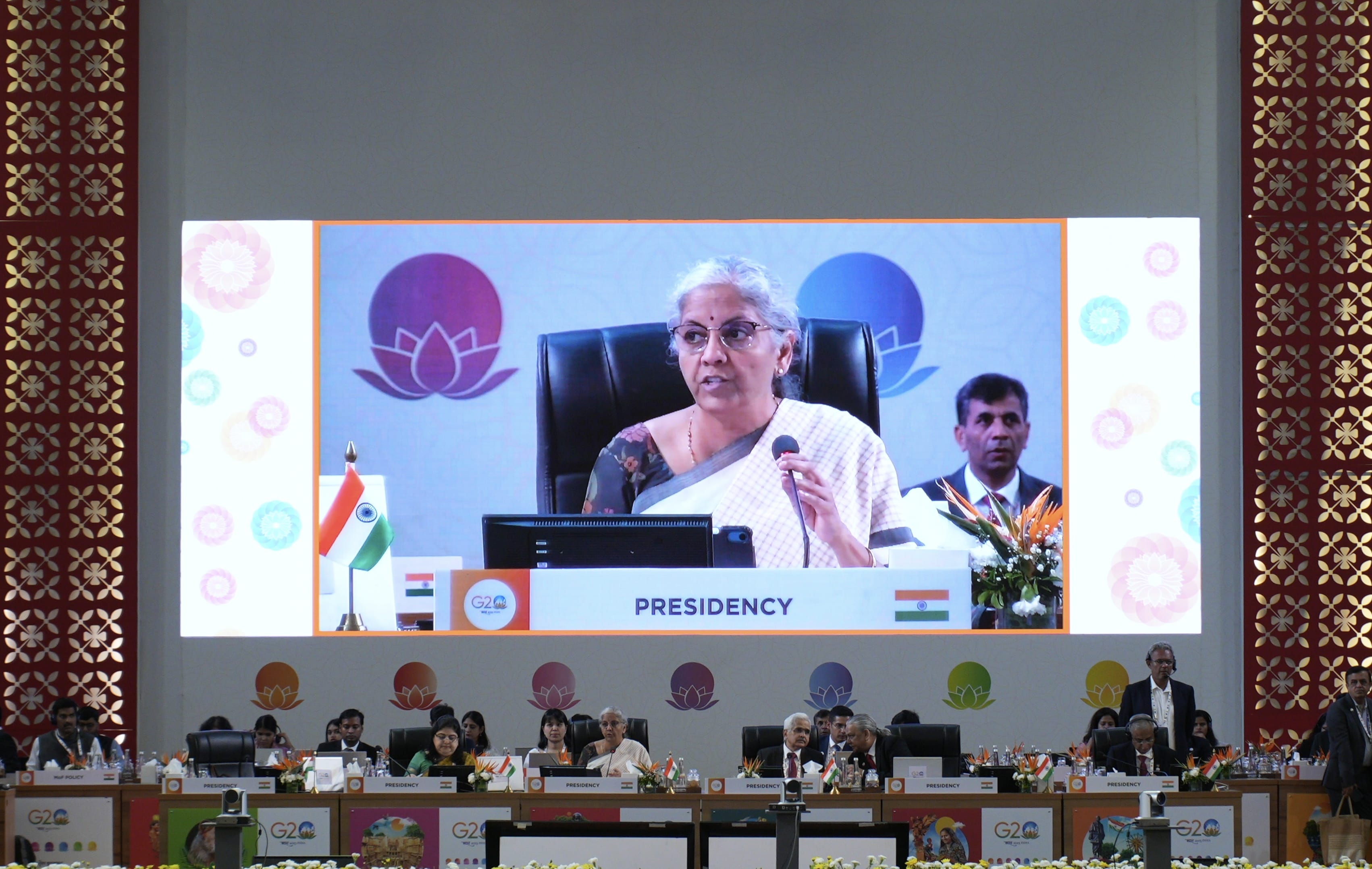
The IEG was co-chaired by 15th Finance Commission head NK Singh and former Secretary of the Treasury, Larry Summers. It laid out the first volume of its recommendations to strengthen MDBs, which was circulated among G20 finance leaders during the FMCBG Meeting in Gujarat on July 17 and 18.
A second volume of the report will be submitted for discussion by the G20 finance ministers prior to the Marrakech meeting in October. The second volume is expected to provide more details on the timing and sequencing of measures beyond the reform roadmap.
The three elements of the agenda include:
Adopting a triple mandate of eliminating extreme poverty, boosting shared prosperity, and contributing to global public goods.
Tripling sustainable lending levels by 2030.
Creating a third funding mechanism which would permit flexible and innovative arrangements for purposefully engaging with investors willing to support elements of the MDB agenda
Here, global public goods would be especially focused on climate change, the preservation of biodiversity and the global water cycle, and pandemic preparedness and response.
$3 Trillion Needed Annually
Additional spending of about $3 trillion per year is required by 2030, of which $1.8 trillion would go towards additional investments in sustainable infrastructure for climate action—a four-fold increase in adaptation, resilience, and mitigation compared to 2019—and $1.2 trillion would go towards additional spending to achieve other SDGs, a 75% increase in health and education, according to the report.
The figure is expected to be sourced from a mix of parties, including private-funded additional external financing packages amounting to $1 trillion and $260 billion from MDBs.
The report also includes a roadmap to 'Strengthening MDBs' and a timeline of the actions that need to be taken. The roadmap calls for MDBs to acknowledge global public goods in their vision statement, take actionable steps in the form of operational models, and start measures to address the scale of funding needed.
In the outcome document of the third FMCBG, the G20 nations appreciated the efforts of the report and agreed to discuss it further in a high-level seminar that will be held on the sidelines of the fourth FMCBG meeting in October on strengthening the financial capacity of MDBs.
G20 members also endorsed the 'Roadmap for Implementation of Recommendations of the G20 Independent Review of MDBs' Capital Adequacy Frameworks, a release on the subject said.
The IEG report also urged implementing the recommendations made in the G20 CAF report, which could further generate headroom to lend $80 billion more each year, helping MDBs optimise their balance sheets.
Why Strengthen MDBs
One of the Indian G20 Presidency's key agenda items includes strengthening the Multilateral Development Banks to make them more responsive to global challenges and current realities.
"The welfare of billions of people and the health of the planet, the foremost examples of a global public good, are under threat. To make matters worse, the problems are getting bigger; the SDGs are badly off track, with over 600 million people still living in extreme poverty...," the report said.
As the nature of MDBs involves working with governments and the private sector to create the conditions for investment, they have been identified as 'the most effective institutions to provide low-cost, long-term financing, to mitigate risks faced by private investors, and to share risks in the most efficient way'.

-
AI Bias In Investing Cannot Be Eliminated, But It Can Be Governed

Framing is a particularly important example as identical financial information presented in terms of gains rather than losses can lead an LLM to reach a different assessment.
-
Joining The Dots | Dark Skies, Steady Diya: Why Hope Holds This Diwali
With war, a weak rupee and foreign outflows weighing on sentiment, policymakers at the NDTV World Summit and market veterans at NDTV Profit Ignite: Diwali Edition offered the same advice: stay invested and filter out the noise.
-
The Curious Case of Equitas Small Finance Bank And A CEO Who Quit For Stock
PN Vasudevan believes persistent investor concerns over a perceived conflict of interest had become a governance overhang on Equitas Small Finance Bank's stock, even as the lender improved profitability and asset quality.
-
Talking Points This Week: AI Cash Burn, A Tiger Comeback And An India That Still Finds Its Own Path
India is not immune to higher oil or tighter global liquidity, yet its earnings base is broader, its domestic policy levers are still available.
-
Foreign Investors Own Half Of HDFC Bank and ICICI Bank. An LTCG Cut Could Matter Most Here
Foreign portfolio investors have US$115 billion parked in HDFC Bank, ICICI Bank. If the government cuts long-term capital gains tax, Jefferies says returning foreign money could land here first.
-
'Never Seen This Level Of Negativity': Sandeep Tandon Says The Next Rally May Be Closer Than You Think
Veteran investor Sandeep Tandon says foreign selling is easing, large-caps are due a comeback and mid-caps are crowded, while he turns positive on gold, power and pharma this Diwali.
-
Indians Stay With Family, Not In Hotels | The Reason Why
India still lacks enough clean, reliable and affordable hotels for budget-conscious travellers.
-
The Economic Imperative: Analysing The Material Driving Force Behind India-Canada Strategic Reset
This economic complementarity is further reinforced by deep institutional investment ties and talent mobility, which form the bedrock of the bilateral framework.
-
Medicine Pricing: Where Must Profit Stop?
India must confront excessive margins, hidden incentives and regulatory gaps that threaten the integrity of medicine.
-
Why Amazon And Flipkart Are Struggling To Beat Meesho In India's Smaller Cities
With 274 million users and lowest-cost logistics, Meesho is defending its value commerce crown against giants like Amazon and Flipkart.










