US Takes Out Fourth Object In Eight Days, Raising New Questions
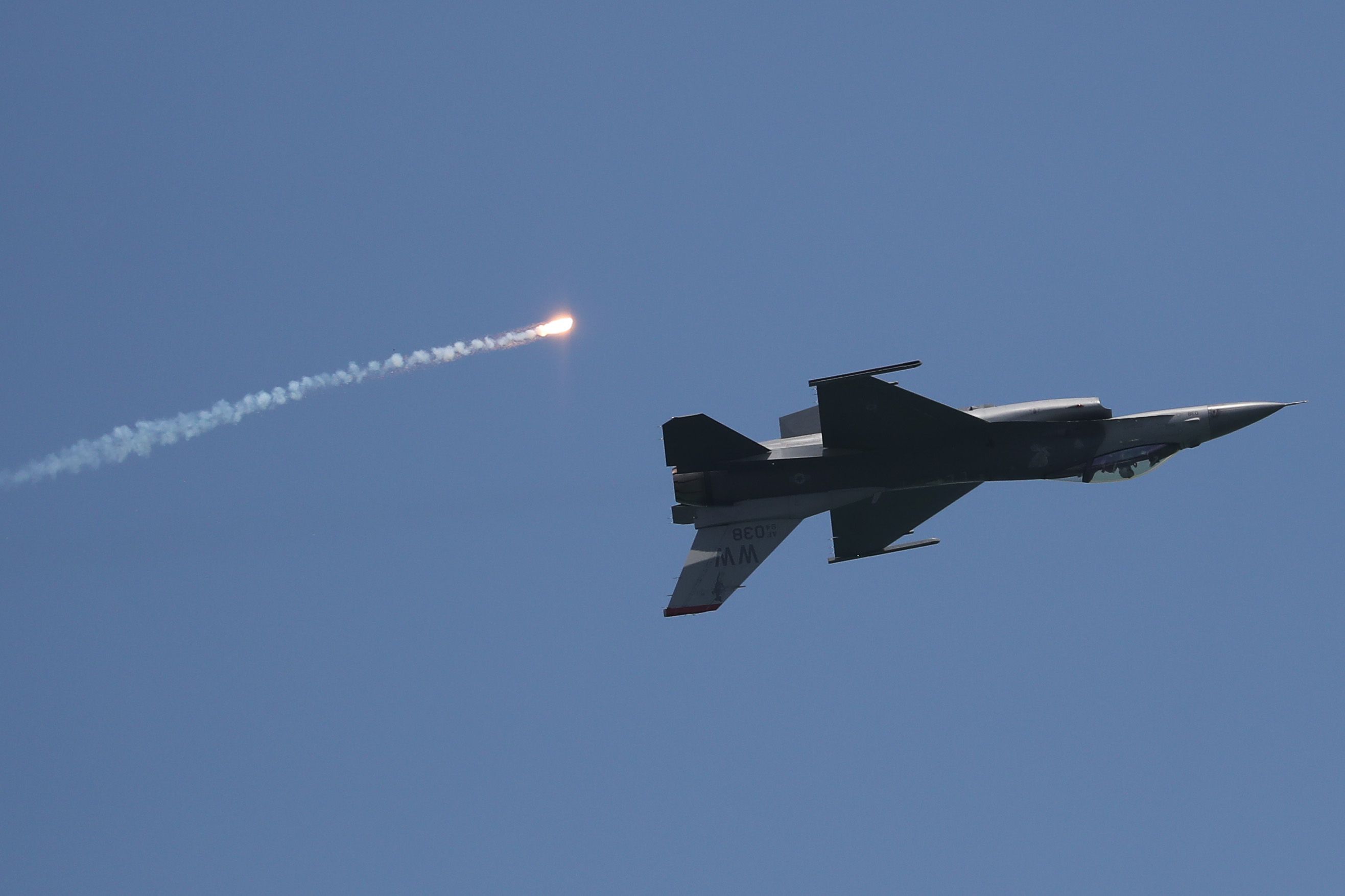
(Bloomberg) -- The US military had never shot down an object in American airspace before taking out a Chinese balloon off South Carolina last week. Now it's becoming a near-daily occurrence.
The sudden spate of US jets blasting unidentified objects of mysterious origin from the skies has provoked so much befuddlement — not to mention panic — that Pentagon officials were forced to field questions about the issue Sunday night, just as Americans were tuning into the second quarter of the Super Bowl. One reporter even asked if it was possible the objects-turned-targets were sent by extraterrestrials.
“I haven't ruled out anything at this point,” said General Glen VanHerck, commander of the North American Aerospace Defense Command.
In reality, the answer is probably more mundane. Officials said they had started watching the skies more closely in the days since the alleged Chinese spy balloon traversed US territory, provoking both a national uproar and a new round of tensions with China. That resulted in shootdowns of smaller objects over Alaska on Friday, northern Canada on Saturday, and Michigan on Sunday.
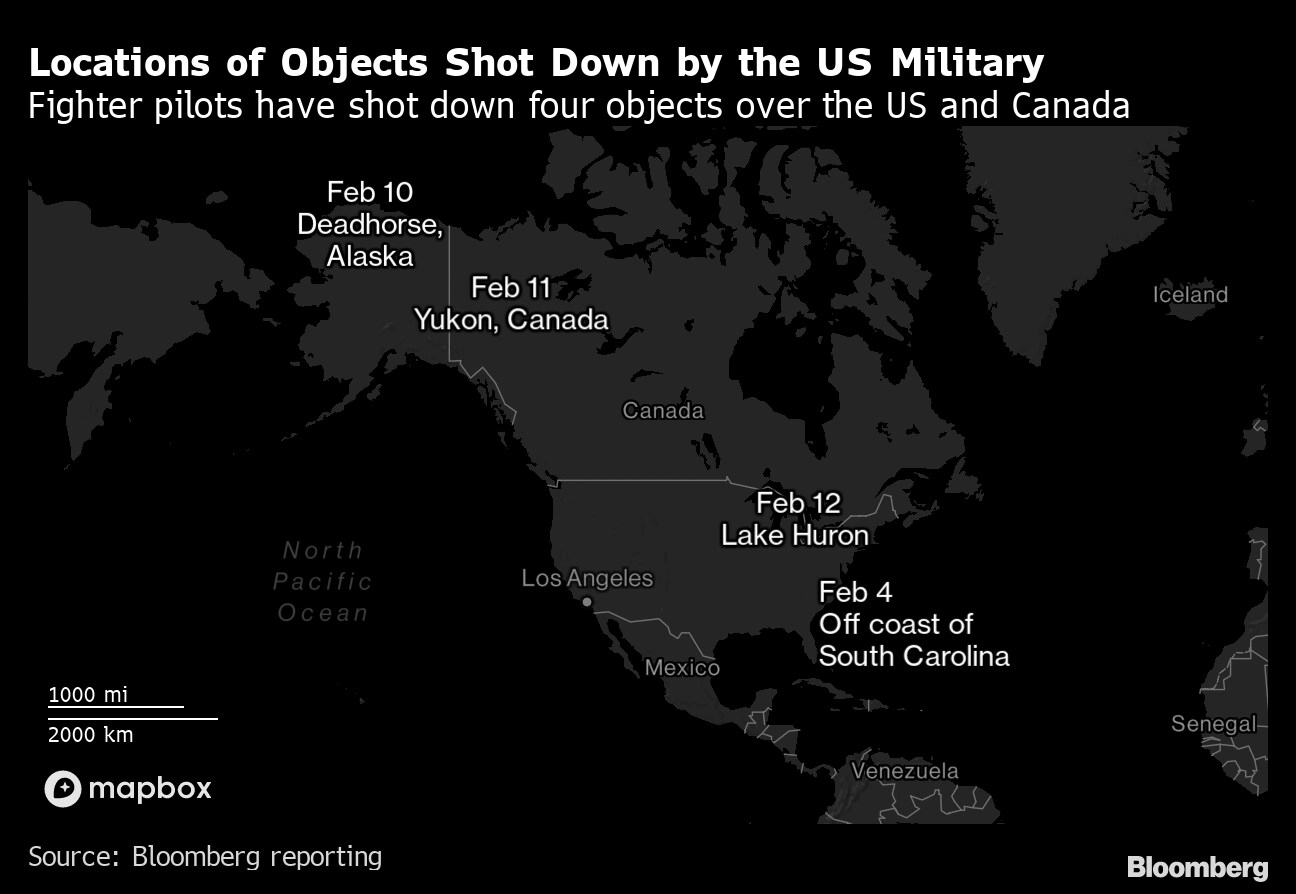
“We have been more closely scrutinizing our airspace at these altitudes, including enhancing our radar, which may at least partly explain the increase in objects that we've detected over the past week,” Assistant Secretary of Defense Melissa Dalton told reporters.
While each incident may have a reasonable explanation, questions persist for the Biden administration. The most immediate: Will the Pentagon scramble fighter jets every time it spots some new object — be it a weather balloon, a hobbyist's craft or a drone — if it potentially threatens civilian aviation or drifts near one of many military sites scattered across the country.
The two officials on the Pentagon conference call with reporters weren't able to answer that question, with VanHerck calling it a “policy decision.” Dalton acknowledged that researchers and companies send up lots of devices “for purposes that are not nefarious, including legitimate research.”
The inability of US officials to say anything about the sources of the latest three downed objects has spawned theories that they could be balloons relaying signals to China or Russia, an alien object or just airborne junk.
“There is a lot of garbage up there,” Representative Jim Himes, a Connecticut Democrat, said on NBC's “Meet the Press” on Sunday.
One possibility is that they were nodes in a larger spying enterprise that went undetected before US radars and other sensors were optimized to detect slow-flying objects above 50,000 to 60,000 feet, said Charlie Moore, a retired lieutenant general and former vice director of operations at Norad who teaches at Vanderbilt University.
“Since we've seen the development of these balloons over the last couple of years, we've had to go back and look at all the sources and methods we might use to detect their launch, monitor their movement and then obviously be able to track them as they approach the United States and Canada,” he said.
The growing number of incidents is raising more questions about the direction of relations between the world's two largest economies, especially now that the Biden administration is hyper-alert about the threat it says is posed by a global Chinese military-backed surveillance program spanning more than 40 countries — a claim Beijing has rejected.
US officials have briefed dozens of foreign diplomats on the matter last week and say they will know more once they recover the wreckage of the Chinese balloon, whose payload has been located — but not retrieved — in about 50 feet (15 meters) of water off Myrtle Beach, South Carolina. US and Canadian search crews are also still looking for the three other objects that were shot down.
The episodes have created a new wave of partisan bickering, with Republicans arguing Biden should've shot down the Chinese balloon when it was first spotted over Alaska instead of letting it drift across the country. That has only contributed to the anxiety in Washington about the potential threat posed by China, which has denounced the US for downing what it says was simply a weather balloon that went astray.
On Sunday, a Chinese news outlet, The Paper, said China was getting ready to take down an unidentified object flying over its waters near the port city of Qingdao. Even though the initial uproar over the Chinese balloon has quieted down, that report raised the possibility that every new phenomenon spotted in the sky would provoke a new round of finger-pointing.
“We have probably reached peak media and political frenzy related to the PRC spy balloon,” said Jacob Stokes, a former Obama administration foreign policy adviser who's now at the Center for a New American Security, referring to the People's Republic of China. “But even when the public attention subsides, the US government will likely be working to respond to this problem for a long time to come.”
--With assistance from and .
More stories like this are available on bloomberg.com
©2023 Bloomberg L.P.

-
Gold Is Rs 22,000 Cheaper Than A Month Ago. Should You Buy Amid The Wedding Season?

Gold's potential slide to $3,500 could save around Rs 4,700 per 10 grams, but a soft inflation print could just as easily push prices back up. One way to split the risk is to buy in parts, some now and the rest after the Fed's Dec. 9 decision.
-
AI Agents Are Gaining Power. Who Governs Them?
Artificial intelligence agents promise to transform productivity by moving machines from assisting decisions to executing them. But as organisations delegate greater authority to these AI-agents, they must first establish who controls that authority and who remains accountable when things go wrong.
-
Why Swapping Your Old Gold Can Trigger A Rs 5 Lakh Tax Bill, And How You Can Avoid It Legally
Swapping old gold for new is taxed as a sale and a fresh purchase. Getting your own gold remade can cut most of that bill, though it has its own costs.
-
The AI Trade is Done. The Real Opportunity for Investors Starts in 2027 | Unhedged Position
As pureplay AI stocks plunge and circular, capex-led financing unwinds, 2027 is set to be a year of reckoning for AI companies. Yet the bust clears the way for a better opportunity for investors in 2027 -- shifting the spotlight from AI builders to the companies using AI.
-
Leadership As Mission: Why The Age Of AI Demands More Human Leadership
Debjani Ghosh examines how AI is changing leadership, arguing that its success must be measured by its impact on people and the accountability of those guiding its use.
-
We May Need Another Tukaram Mundhe To Fight Air Pollution | The Reason Why
Developers may install basic measures such as sprinklers and green nets, resume work, and continue violating rules when this equipment stops working.
-
Extracting Value From Battery Scrap Could Be Challenging For India | The Reason Why
A discarded lithium-ion battery still contains valuable materials such as lithium, nickel and cobalt. These can be recovered and reused. When such batteries are crushed and shredded, they produce a dark powder called black mass.
-
One El Nino, India Can Handle. Two Could Break The Granary
India's grain stocks can absorb one bad year, but a second El Nino could drain the buffer in two to three years, economists say.
-
India's Troika Of Good Luck | Joining The Dots
As Jensen Huang's exit drags Nvidia down, a cooling AI trade and resilient earnings have revived investor interest in India. A likely RBI rate hike looms.
-
Talking Points This Week: Leadership Shock At Nvidia, Earnings Strength, And The Fog Over Hormuz
The Anthropic IPO pricing and first trading day, Nvidia's upcoming earnings, and any fresh signals from Iran will set the tone for the following week.









