Four Asian Banks Get Clearance To Open Branches in India
At least four Asian banks have received government approval to increase their footprint in India.
A senior government official told BloombergQuint the proposals pertained to the banks expanding their operations and opening new branches in India. The government has conveyed to the Reserve Bank of India it has no objection over the same, the official said.
The banks are:
- Iran's Bank Pasargad that wants to open its first Indian branch in Mumbai.
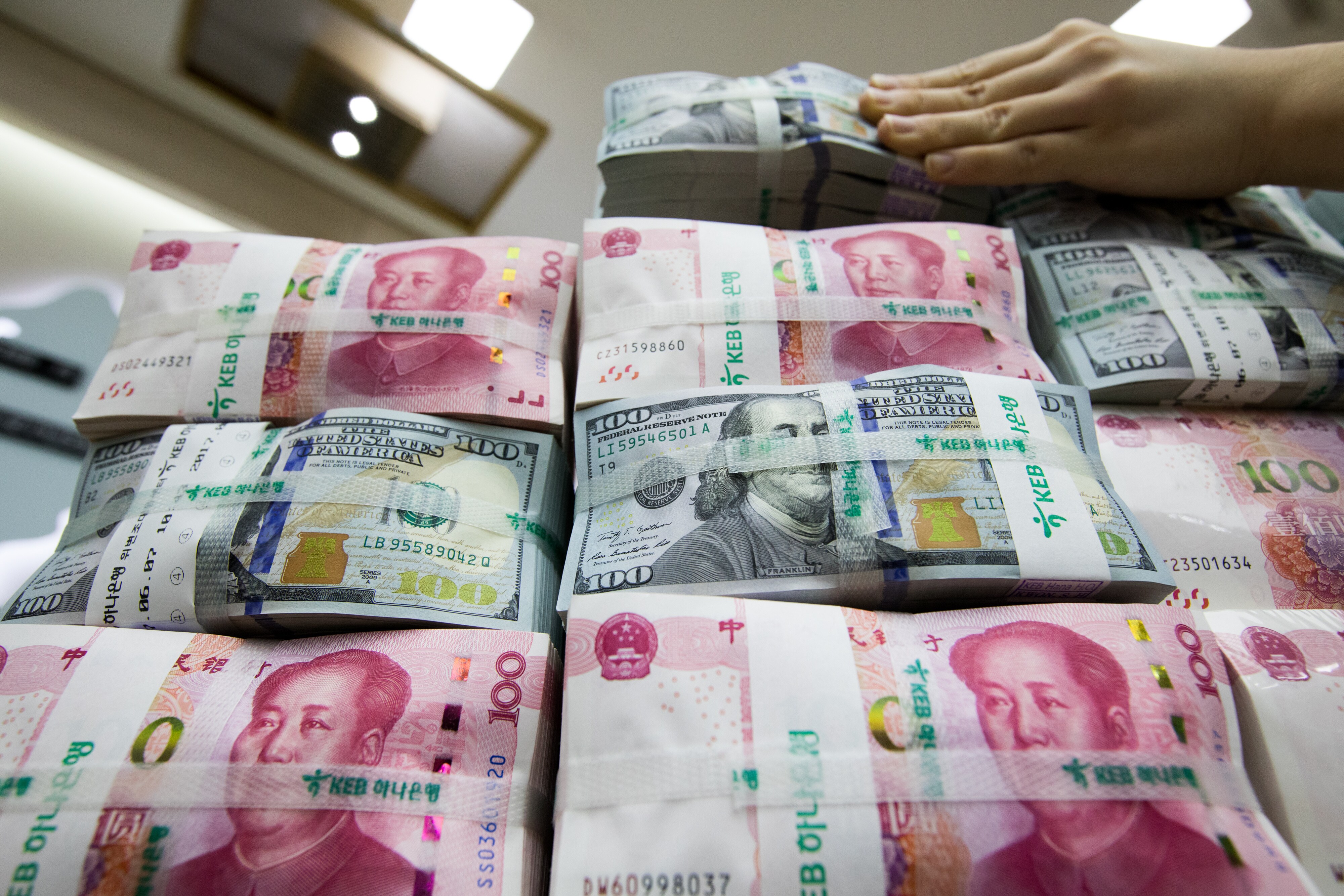
- South Korea's KEB Hana Bank, which wants to open its second branch.
- South Korea's KB Kookmin Bank wants to convert its Gurugram office into a branch.
- Bank of China, which intends to open its first branch in India in Mumbai.
These proposals were considered by an inter-departmental committee comprising the home secretary, the secretaries of the ministries of commerce, financial services, external affairs and the chief general manager of the RBI.
The official quoted above said the committee has deferred the proposals of Industrial and Commercial Bank of China and Cooperative RaboBank for opening their second branches in India. The committee, the official said, raised the following concerns:
Concerns with ICBC:
- The bank has employed 12 officials, but names of only three to four have been registered with the Foreign Regional Registration Office — that deals with registration and stay of foreign nationals in the country — in Mumbai.
- Only three to four nationals are permitted to work in the bank's office.
Concerns with RaboBank:
- The bank was fined $1.1 billion by U.S. and European regulators for rigging benchmark interest rates.
- It pleaded guilty for handling millions of dollars in illicit funds
RaboBank has, however, received all clearances from the authorities and could soon receive final approval to open its second branch in Gurugram.
Banks whose proposals have been deferred:
- NongHyup Bank of South Korea, which wanted to open its first Indian branch in Noida.
- Woori Bank of South Korea, which wanted to set up a wholly-owned subsidiary and convert its offices in Gurugram, Mumbai and Chennai into branches.
The proposal by Malaysia's Malayan Banking Bhd. or Maybank to set up its first branch here has been rejected, the official said.
The government has also given a ‘no-objection' to the RBI permitting State Bank of India to open its representative office in Qatar, a remittance centre in Singapore and a sub-office in Australia.
As many as 45 foreign banks have presence in India of which 19 are Asian. As the economy grows and foreign direct investment norms get eased, banks expand their network and follow their home country clients, said Kalpesh Mehta, partner of financial services at Deloitte. Asian banks have better experience in digital payments and financial inclusion, which could be used in a better way in India, Mehta said.
Barring those from Asia, foreign banks, have been downsizing their Indian operations, realizing they can't compete with domestic banks. The rules governing expansion of foreign banks are nearly the same as that for domestic banks — provided foreign lenders convert their branches into wholly-owned subsidiaries. But that involves large costs.
According to RBI guidelines, foreign banks can function through the branch mode or wholly-owned subsidiary mode, which treats them on a par with domestic banks with caveats. Once foreign banks convert their branches into wholly-owned subsidiaries, their ability to repatriate profits to their home country would be restricted, which isn't so currently, said Mehta.
The branches will be liable to pay dividend distribution tax and the bank will have to dilute its stakes in branches if they are converted into wholly-owned subsidiaries, Mehta added.

-
The Curious Case of Equitas Small Finance Bank And A CEO Who Quit For Stock

PN Vasudevan believes persistent investor concerns over a perceived conflict of interest had become a governance overhang on Equitas Small Finance Bank's stock, even as the lender improved profitability and asset quality.
-
Talking Points This Week: AI Cash Burn, A Tiger Comeback And An India That Still Finds Its Own Path
India is not immune to higher oil or tighter global liquidity, yet its earnings base is broader, its domestic policy levers are still available.
-
Foreign Investors Own Half Of HDFC Bank and ICICI Bank. An LTCG Cut Could Matter Most Here
Foreign portfolio investors have US$115 billion parked in HDFC Bank, ICICI Bank. If the government cuts long-term capital gains tax, Jefferies says returning foreign money could land here first.
-
'Never Seen This Level Of Negativity': Sandeep Tandon Says The Next Rally May Be Closer Than You Think
Veteran investor Sandeep Tandon says foreign selling is easing, large-caps are due a comeback and mid-caps are crowded, while he turns positive on gold, power and pharma this Diwali.
-
Indians Stay With Family, Not In Hotels | The Reason Why
India still lacks enough clean, reliable and affordable hotels for budget-conscious travellers.
-
The Economic Imperative: Analysing The Material Driving Force Behind India-Canada Strategic Reset
This economic complementarity is further reinforced by deep institutional investment ties and talent mobility, which form the bedrock of the bilateral framework.
-
Medicine Pricing: Where Must Profit Stop?
India must confront excessive margins, hidden incentives and regulatory gaps that threaten the integrity of medicine.
-
Why Amazon And Flipkart Are Struggling To Beat Meesho In India's Smaller Cities
With 274 million users and lowest-cost logistics, Meesho is defending its value commerce crown against giants like Amazon and Flipkart.
-
High US Salaries, No Green Card Certainty: The Financial Calculation Facing Indian H-1B Families
The suspension of PERM processing at eight technology employers does not cancel existing H-1B visas. What it does is force a question many Indian families have been avoiding: is the US salary worth tying your career and family plans to one employer?
-
Swiggy vs Eternal: Food Delivery's Two Rivals Are No Longer In The Same Race
Eternal is building a private AI assistant, dark.ai. Swiggy is still working out how to make Instamart pay, with an operating loss of Rs 895 crore in the July-September quarter while Blinkit stayed profitable.










