Fitch Move Spotlights US Debt Risk As Recession Fear Fades
(Bloomberg) -- The move by Fitch Ratings to downgrade US government credit has put a renewed focus on the nation's debt trajectory, just when the world's largest economy is shaking off forecasts for a looming recession.
In the past week, Chairman Jerome Powell said the Federal Reserve is no longer expecting a US downturn, even after the most aggressive interest rate hikes in decades, and economists at Bank of America Corp. also scrapped their recession forecast. Evidence of enduring strength among consumers and businesses keeps coming in: Data released Wednesday showed US companies added more jobs in July than expected.
That's all a stark contrast to 2011, when S&P Global Ratings stripped the US of its AAA rating. Back then, the economy was hauling itself out of the global financial crisis and unemployment was around 9%. It's now at 3.6%, near the lowest level in decades.
The decision by Fitch to lower the US sovereign credit grade one level from AAA to AA+ highlights the debt pile that the US has built up in recent years, largely due to pandemic stimulus as well as tax cuts. More recently, the government has also launched investment programs for infrastructure, technology and clean energy. Meanwhile the cost of borrowing has soared as the Fed pushed interest rates to a 22-year high.
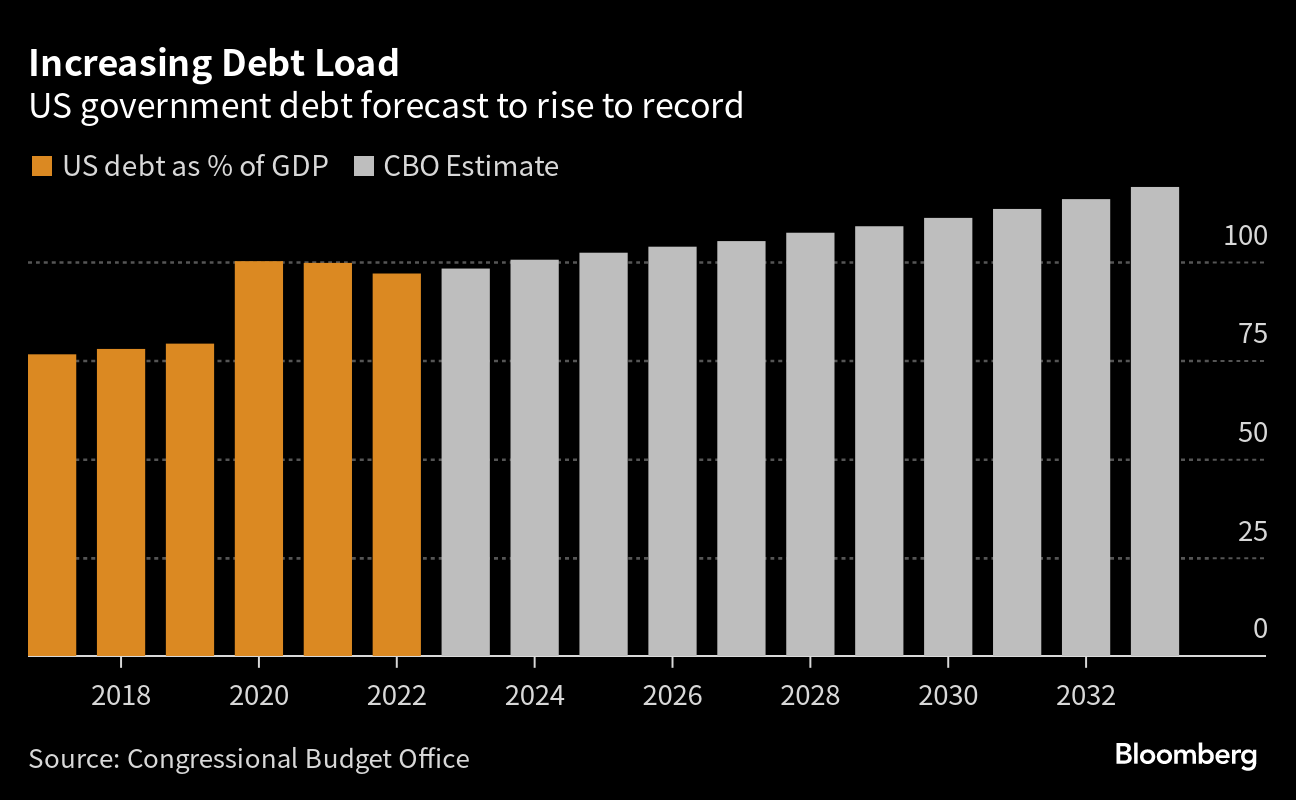
Fitch forecasts US debt to reach 118% of gross domestic product by 2025, about three times higher than the median of 39% among countries awarded the top-of-the-class AAA rating. It projects that the ratio will rise even higher in the longer term. That could set up tough decisions for future administrations in the White House, analysts say.
“Ultimately, if the deficit isn't contained, taxes will be raised to the point that the engine of the US economy — the all-important consumer — will have considerably less discretionary income,” said Quincy Krosby, chief global strategist for LPL Financial.
‘Arbitrary' Downgrade
The US budget deficit surged to record levels when the government spent heavily to support households and businesses as Covid shut down the economy. It shrank last year, but now it's widening again.
The federal deficit hit $1.4 trillion for the first nine months of the current fiscal year, almost triple the year-earlier figure. The US Treasury this week boosted its borrowing forecast for the current quarter to $1 trillion, well above the $733 billion it had predicted in May.
“The daily Treasury data through the month of July showed a pretty weak pattern for receipts,” said Michael Englund, chief economist at Action Economics LLC.
Fitch's downgrade is a signal that the US needs to get its budgetary process in order ahead of what looks like another political fight this fall, and possibly another government shutdown, said Mike Skordeles, head of US economics for Truist Financial Corp. Lawmakers in June struggled to agree on lifting the government's debt ceiling, though they eventually did.
The US deficit has been growing for years, with little progress over multiple presidential administrations, and Fitch is saying to politicians of both parties that “neither one of you has the political will to do it,” Skordeles said.
Treasury Secretary Janet Yellen called the downgrade “arbitrary” and “outdated.” Yellen has argued that rather than looking at debt-to-GDP, a better measure of sustainability is inflation-adjusted interest payments as a share of the economy — and that metric hasn't been flashing warning lights.
Read More: Yellen's Debt Yardstick Belies American Angst Over US Borrowing
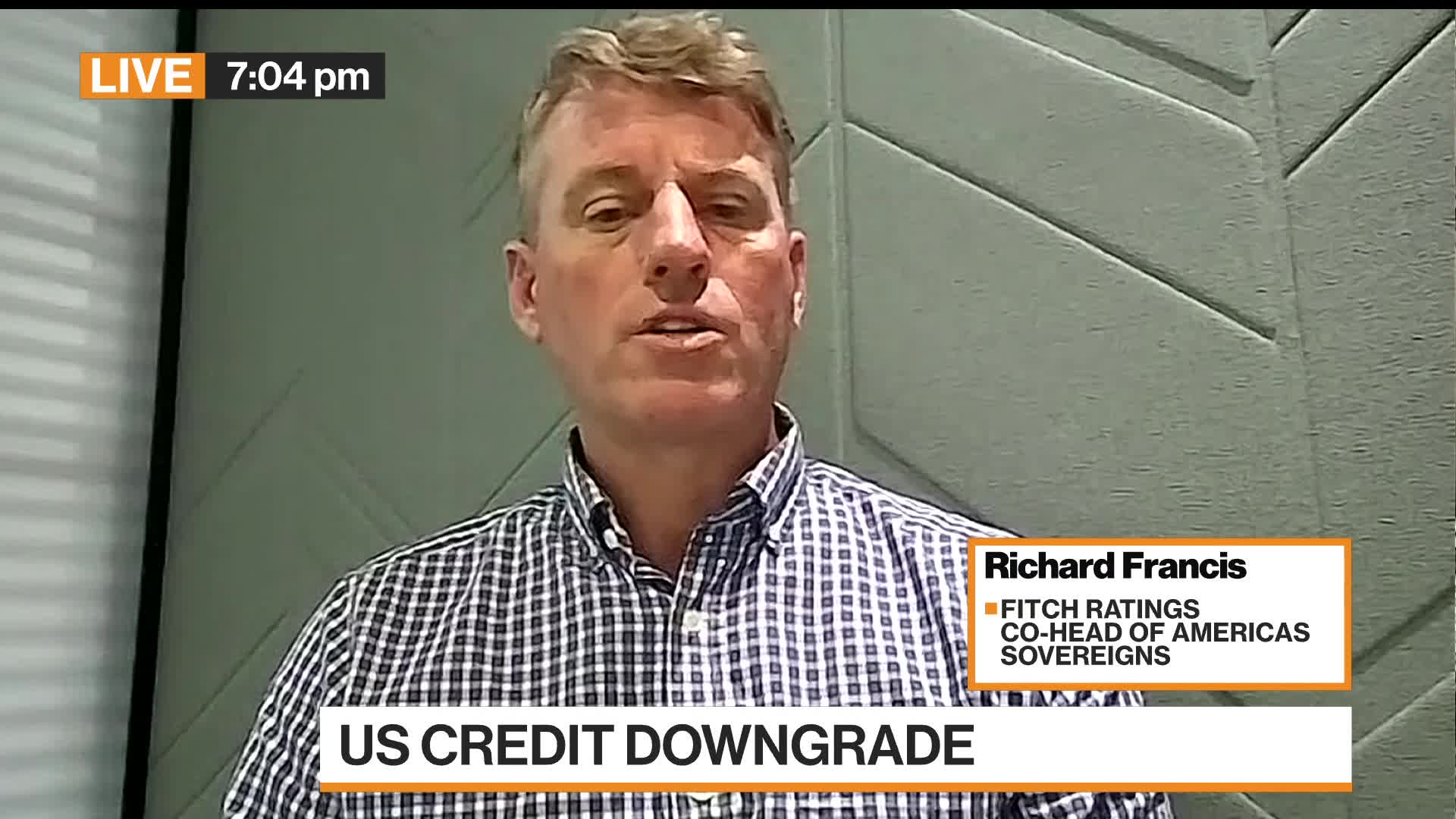
The ratings agency is still forecasting a mild recession in the US in the fourth quarter this year and first quarter of 2024, according to Richard Francis, Fitch co-head of Americas sovereign ratings, who spoke in a Bloomberg TV interview Wednesday.
The downgrade decision looked through the forecasts for a recession. James McCormack, global head of sovereign and supranational ratings for Fitch Ratings, said in an emailed response to questions that the downgrade was based on the medium-term fiscal outlook, “which is characterized by rising deficits and government debt,” rather than predictions of a potential recession.
He added that Fitch is “not confident in policy measures being agreed and implemented to address the fiscal deterioration.”
Many market participants share that view. UBS Group AG strategists say the underlying conditions that led to Fitch's decision are worse than the ones that underlay S&P's similar move more than a decade ago.
“The 2011 downgrade was primarily caused by debt ceiling posturing,” strategists led by Michael Cloherty wrote in a note Tuesday. “This downgrade was caused by both debt ceiling risks and by very large budget deficits.”
--With assistance from Augusta Saraiva, Reade Pickert, Mark Niquette, Michael Sasso and Sonali Basak.
(Updates with Fitch comment in 13th paragraph.)
More stories like this are available on bloomberg.com
©2023 Bloomberg L.P.

-
Signature Play: The Classic Cocktail Is Dead. Or Is It?

Classic cocktails are disappearing from India's cocktail menus. But they're still being ordered, taught to bartenders and borrowed from. So, who's really having the last drink?
-
A New Samvat Wishlist: Inclusive Prosperity And Human Development
India has strengthened its economic foundations through infrastructure, digital access and enterprise. Its next growth chapter must deepen productivity, create better livelihoods and widen participation in prosperity.
-
Love, Sex Aur Dhokha: The Audacious Plot To Spy On Jensen Huang
A Taipei dinner, a Singapore chip buyer and a suspected Chinese asset: inside the alleged spy operation that got close to NVIDIA's Jensen Huang.
-
Ten Things I Learnt This Samvat
Patience can be a trap. Cheap stocks can stay cheap. Leverage can wipe you out. What did Samvat 2082 teach us? Niraj Shah writes on 10 lessons from the year gone by.
-
Talking Points This Week: Tech Nerves, FII Buying, And A Faraway Banking Shock
The global markets are not shining this Diwali. The exception in the large markets is, India.
-
Midterm Rally Lasted A Day. The Hard Reality Of A Divided US May Last Two Years | Opinion
Between a contested AI boom, a debt ceiling that arrives in 2027 and a president with every incentive to act alone, the next two years may prove more volatile than the first day's rally suggests.
-
Blue Wave Will Derail the AI Trade but Won't Dismantle the AI Era | Unhedged Position
The Democrats' sweep of the US Congress will see politics collide with economic forces both over the long and short term.
-
It's Time To Take The GST Council's Bet On Trust Global
Payment records can prove India's services exports, and clear, proportionate rules can bring foreign digital sellers into the tax net.
-
Opinion | India at 38: From Innovation Overperformer to Innovation Powerhouse
India now has 453 VC-backed deep science startups, 18 of them late-stage, after 117 percent growth since 2020. Laurus Labs, at USD 9.3 billion, is the most valuable deep science company in any middle-income economy outside China.









