Fed To Shrink Balance Sheet At Slower Pace Until Debt-Ceiling Deal Reached
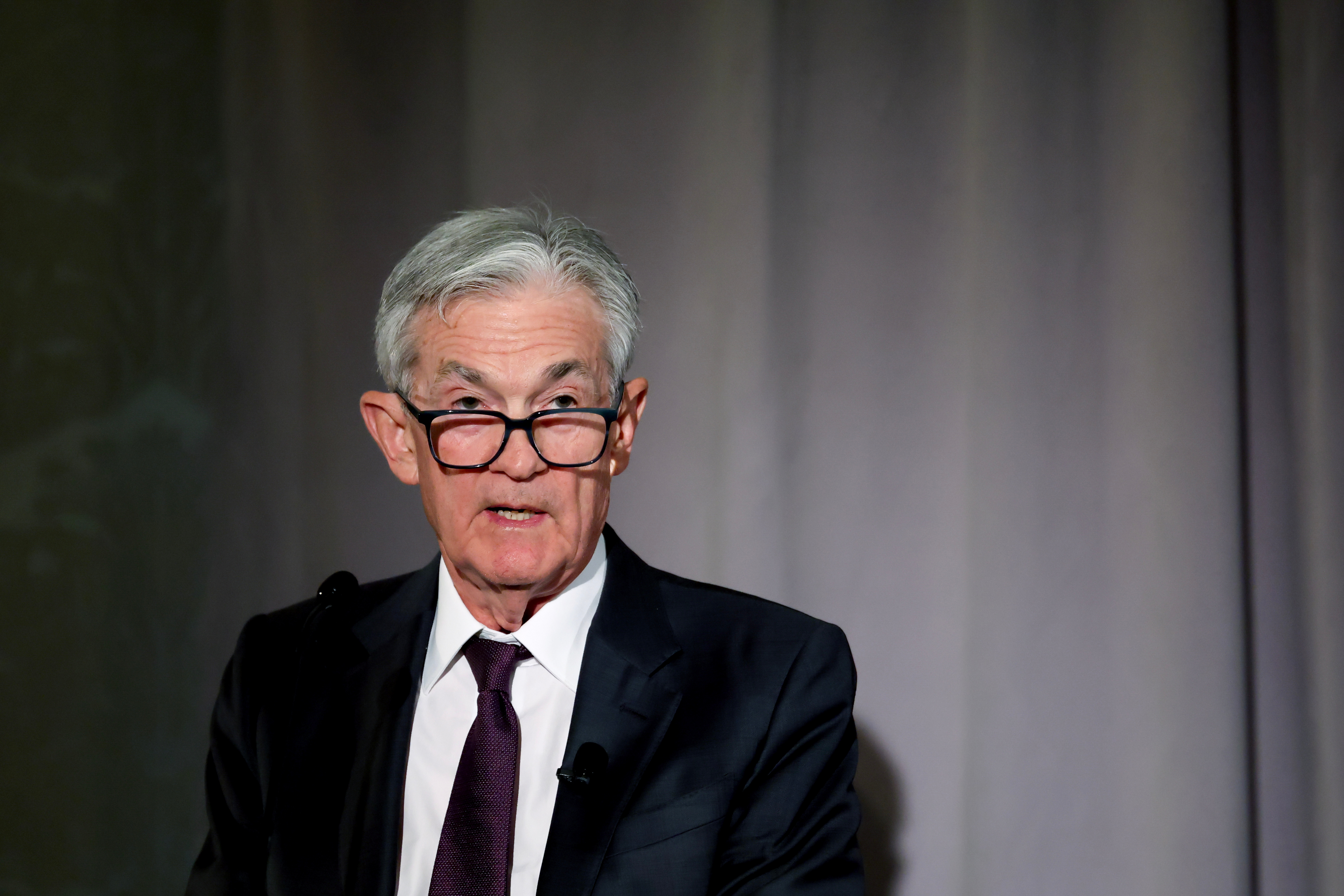
The Federal Reserve said it will shrink its balance sheet at a slower pace beginning April 1 until the federal government can strike a deal on the debt ceiling.
Officials, who left interest rates unchanged on Wednesday, said they'll lower the cap on how much in Treasuries is allowed to mature without being reinvested to $5 billion from $25 billion. It will leave the cap on mortgage-backed securities unchanged at $35 billion.
The central bank has been winding down its holdings since June 2022 — a process known as quantitative tightening, or QT — by gradually increasing the combined amount of Treasuries and mortgage bonds it allowed to run off without being reinvested. It last lowered its monthly cap in June 2024 to $25 billion from $60 billion.
The latest move comes as lawmakers look to strike a deal on the debt ceiling, the statutory limit for outstanding Treasury debt. The US hit that limit in January.
The longer it takes Congress to either suspend or lift the limit, the more cash that will make its way back into the financial system. That has the potential to artificially boost reserves — currently $3.46 trillion — masking money-market signals that could indicate when is the right time to stop QT.
It's those money-market signals that will dictate just how much more the Fed would be able to shrink its $6.8 trillion portfolio of assets before worrisome cracks start to appear, as they did in 2019 ahead of an acute funding squeeze.
For months, officials had said very little publicly about when they might stop reducing the their balance sheet. Minutes of their January meeting, however, revealed policymakers had discussed the potential need to pause or slow the process until lawmakers can strike a deal over the government's debt ceiling.
The New York Fed's Roberto Perli, who oversees the central bank's securities portfolio, reiterated these concerns during remarks earlier this month.

-
Signature Play: The Classic Cocktail Is Dead. Or Is It?

Classic cocktails are disappearing from India's cocktail menus. But they're still being ordered, taught to bartenders and borrowed from. So, who's really having the last drink?
-
A New Samvat Wishlist: Inclusive Prosperity And Human Development
India has strengthened its economic foundations through infrastructure, digital access and enterprise. Its next growth chapter must deepen productivity, create better livelihoods and widen participation in prosperity.
-
Love, Sex Aur Dhokha: The Audacious Plot To Spy On Jensen Huang
A Taipei dinner, a Singapore chip buyer and a suspected Chinese asset: inside the alleged spy operation that got close to NVIDIA's Jensen Huang.
-
Ten Things I Learnt This Samvat
Patience can be a trap. Cheap stocks can stay cheap. Leverage can wipe you out. What did Samvat 2082 teach us? Niraj Shah writes on 10 lessons from the year gone by.
-
Talking Points This Week: Tech Nerves, FII Buying, And A Faraway Banking Shock
The global markets are not shining this Diwali. The exception in the large markets is, India.
-
Midterm Rally Lasted A Day. The Hard Reality Of A Divided US May Last Two Years | Opinion
Between a contested AI boom, a debt ceiling that arrives in 2027 and a president with every incentive to act alone, the next two years may prove more volatile than the first day's rally suggests.
-
Blue Wave Will Derail the AI Trade but Won't Dismantle the AI Era | Unhedged Position
The Democrats' sweep of the US Congress will see politics collide with economic forces both over the long and short term.
-
It's Time To Take The GST Council's Bet On Trust Global
Payment records can prove India's services exports, and clear, proportionate rules can bring foreign digital sellers into the tax net.
-
Opinion | India at 38: From Innovation Overperformer to Innovation Powerhouse
India now has 453 VC-backed deep science startups, 18 of them late-stage, after 117 percent growth since 2020. Laurus Labs, at USD 9.3 billion, is the most valuable deep science company in any middle-income economy outside China.









