U.S. Fed’s Lorie Logan Says ‘Much Too Soon’ To Think About Cutting Rates
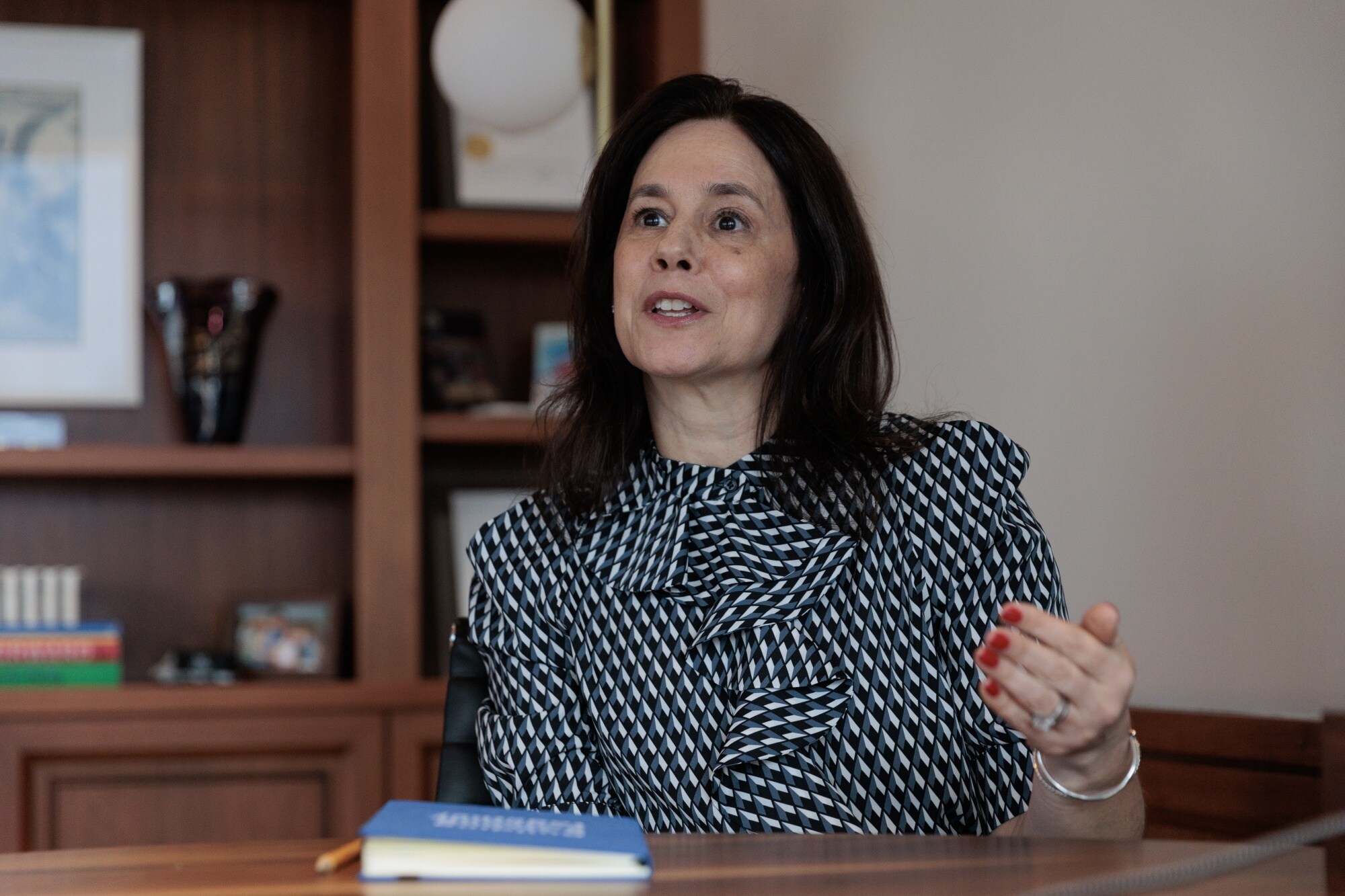
(Bloomberg) -- Federal Reserve Bank of Dallas President Lorie Logan said it's too soon to consider cutting interest rates, citing recent high inflation readings and signs that borrowing costs may not be holding back the economy as much as previously thought.
Logan, whose remarks are closely watched by investors given her prior role managing the central bank's asset portfolio at the New York Fed, said she's increasingly concerned that inflation progress could stall out.

“In light of these risks, I believe it's much too soon to think about cutting interest rates,” the Dallas chief said Friday in prepared remarks for an event at Duke University. “I will need to see more of the uncertainty resolved about which economic path we're on.”
Fed officials “should remain prepared to respond appropriately if inflation stops falling,” she added.
Fed Governor Michelle Bowman also expressed her concern about potential upside risks to inflation on Friday. She continues to expect price pressures will cool further with interest rates held at current levels, but reiterated that it's “still not yet” time to lower borrowing costs.
Read More: Fed's Bowman Says It's ‘Still Not Yet' Time for Rate Cuts
Logan's remarks suggest she is among a sizable contingent of policymakers who expect two or fewer rate cuts in 2024. She spoke hours after government data showed US payrolls rose in March by the most in nearly a year and the unemployment rate declined.
“There's no urgency right now,” Logan said in a question-and-answer session with Duke professor and former Fed board senior adviser Ellen Meade following her speech. “We have time to wait and to see the incoming data and see how financial conditions are evolving.”
Moving Sideways
Fed officials left interest rates unchanged in a range of 5.25% to 5.5%, a more than two-decade high, at their March meeting. Most policymakers have said they want to see more data to be confident that inflation is sustainably returning to their 2% goal.
“To be clear, the key risk is not that inflation might rise — though monetary policymakers must always remain on guard against that outcome — but rather that inflation will stall out and fail to follow the forecast path all the way back to 2% in a timely way,” Logan said.
Prices rose faster than hoped in January and February, increasing concern among some officials that progress on inflation is petering out. While the median of 19 policymakers still penciled in three rate cuts for this year in economic estimates released following the Fed's meeting last month, nine participants saw two or fewer reductions.
Atlanta Fed President Raphael Bostic said Wednesday he expects just one rate cut this year in the fourth quarter, and Minneapolis Fed President Neel Kashkari said it may not be necessary to lower borrowing costs if inflation stops cooling and the economy remains robust.
“If we continue to see inflation moving sideways, then that would make me question whether we needed to do those rate cuts at all,” Kashkari said Thursday.
Neutral Rate
Beyond the inflation data, Logan said she's concerned that monetary policy may not be holding back the economy as much as most forecasts assume. That could mean the so-called neutral rate of interest — one that neither slows nor stimulates the economy — is higher.
“Economic and financial evidence is accumulating that the long-run neutral rate has likely moved up,” she said.
Bowman also flagged that it's “quite possible” the neutral rate will be higher than before the pandemic.
“If that is the case, fewer rate cuts will eventually be appropriate to return our monetary policy stance to a neutral level,” Bowman said.
Uncertainties in measuring things like the neutral rate and other economic developments, including a surge in immigration that's likely contributing the country's output, mean it's more useful to focus on inflation data right now than jobs figures, Logan added.
Payrolls swelled by 303,000 in March, topping all estimates, government data showed Friday. The unemployment rate edged lower to 3.8%, wages grew at a solid clip, and workforce participation rose, underscoring the enduring strength of the labor market.
Read More: Blowout Jobs Data Raise Chance of Delayed, Fewer Fed Rate Cuts
Balance Sheet
Logan also repeated that it may be appropriate for the central bank to soon start slowing down the pace at which it lets assets mature off its balance sheet. Policymakers discussed the potential slowdown at their March meeting and some Fed watchers expect that process to begin in the coming months.
Logan said the Fed would likely lower the cap for how much in Treasury securities it rolls off the balance sheet every month, while leaving the cap for mortgage-backed securities unchanged.
“I don't think we should really move the mortgage cap because keeping it there sends that signal that we are headed toward a primarily Treasury portfolio,” Logan said. “So my sense is that what we're talking about is reducing the Treasury cap and slowing the pace of the Treasury runoff.”
--With assistance from Alexandra Harris.
(Adds additional comments from Logan and Fed Governor Michelle Bowman.)
More stories like this are available on bloomberg.com
©2024 Bloomberg L.P.

-
Talking Points This Week: Leadership Shock At Nvidia, Earnings Strength, And The Fog Over Hormuz

The Anthropic IPO pricing and first trading day, Nvidia's upcoming earnings, and any fresh signals from Iran will set the tone for the following week.
-
Signature Play: The Classic Cocktail Is Dead. Or Is It?
Classic cocktails are disappearing from India's cocktail menus. But they're still being ordered, taught to bartenders and borrowed from. So, who's really having the last drink?
-
A New Samvat Wishlist: Inclusive Prosperity And Human Development
India has strengthened its economic foundations through infrastructure, digital access and enterprise. Its next growth chapter must deepen productivity, create better livelihoods and widen participation in prosperity.
-
Love, Sex Aur Dhokha: The Audacious Plot To Spy On Jensen Huang
A Taipei dinner, a Singapore chip buyer and a suspected Chinese asset: inside the alleged spy operation that got close to NVIDIA's Jensen Huang.
-
Ten Things I Learnt This Samvat
Patience can be a trap. Cheap stocks can stay cheap. Leverage can wipe you out. What did Samvat 2082 teach us? Niraj Shah writes on 10 lessons from the year gone by.
-
Talking Points This Week: Tech Nerves, FII Buying, And A Faraway Banking Shock
The global markets are not shining this Diwali. The exception in the large markets is, India.
-
Midterm Rally Lasted A Day. The Hard Reality Of A Divided US May Last Two Years | Opinion
Between a contested AI boom, a debt ceiling that arrives in 2027 and a president with every incentive to act alone, the next two years may prove more volatile than the first day's rally suggests.
-
Blue Wave Will Derail the AI Trade but Won't Dismantle the AI Era | Unhedged Position
The Democrats' sweep of the US Congress will see politics collide with economic forces both over the long and short term.
-
It's Time To Take The GST Council's Bet On Trust Global
Payment records can prove India's services exports, and clear, proportionate rules can bring foreign digital sellers into the tax net.
-
Opinion | India at 38: From Innovation Overperformer to Innovation Powerhouse
India now has 453 VC-backed deep science startups, 18 of them late-stage, after 117 percent growth since 2020. Laurus Labs, at USD 9.3 billion, is the most valuable deep science company in any middle-income economy outside China.









