Deutsche Bank Drops In Selloff Citi Describes As Irrational
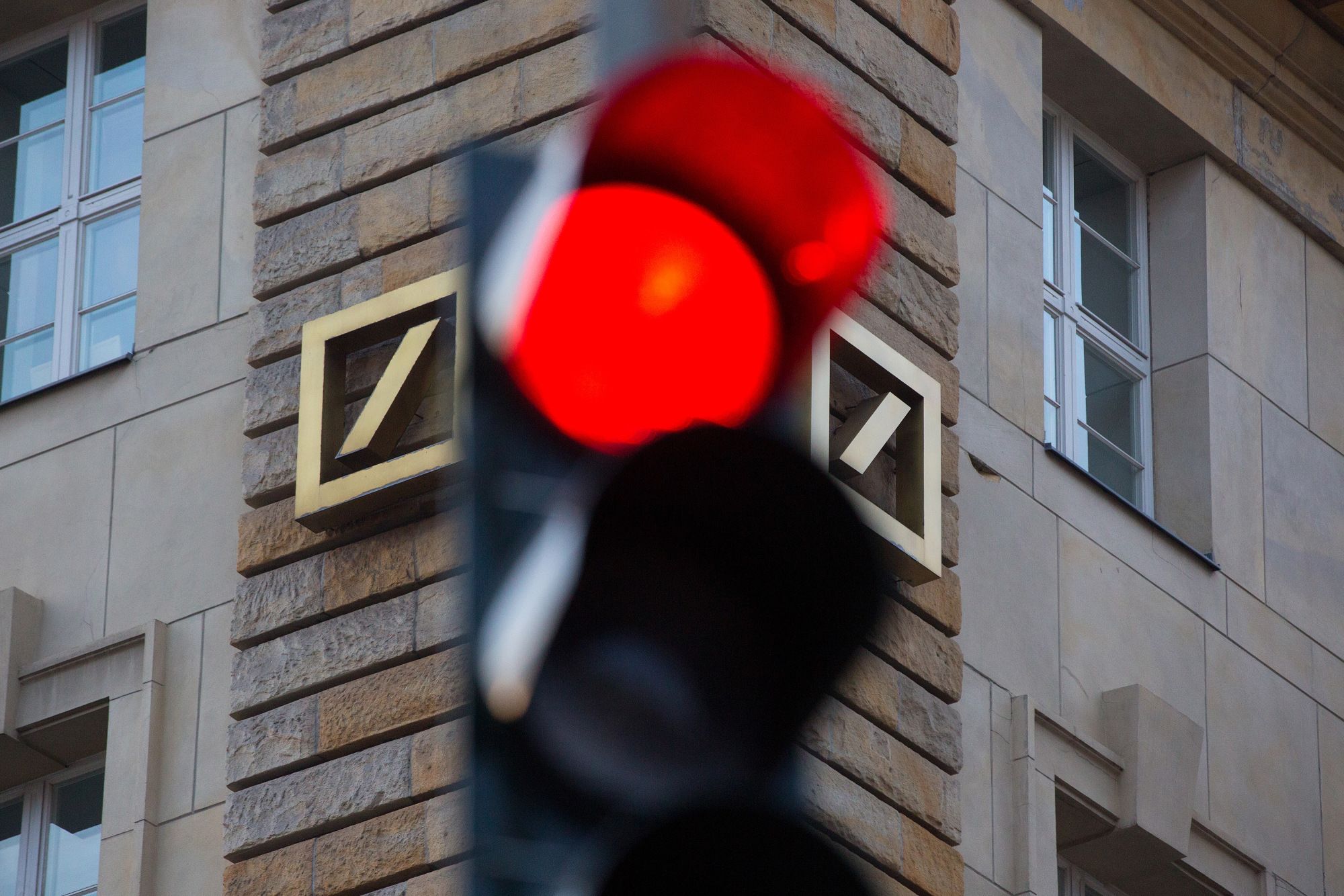
(Bloomberg) -- Deutsche Bank AG fell by the most in three years and the cost of insuring its debt against default rose, in a selloff that Citigroup Inc. analysts described as irrational.
The bank, which has staged a recovery in recent years after a series of crises, was the biggest loser among large European bank stocks Friday after announcing a plan to repurchase debt, a move normally seen as a sign of strength. Analysts struggled to explain the selloff, which prompted German Chancellor Olaf Scholz to publicly back the lender.
“We view this as an irrational market,” Citigroup Inc. analysts including Andrew Coombs wrote in a note. “The risk is if there is a knock on impact from various media headlines on depositors psychologically, regardless of whether the initial reasoning behind this was correct or not.”
Deutsche Bank slumped as much as 15%, the biggest decline since the early days of the pandemic in March 2020, before paring losses. Crosstown rival Commerzbank AG, Spain's Banco de Sabadell SA and France's Societe Generale SA also saw steep drops.
The latest turmoil for Europe's banks follows a selloff in US lenders, which tumbled Thursday even after Treasury Secretary Janet Yellen said regulators would be prepared for further steps to protect deposits if needed. Banks also slumped as Bloomberg reported that Credit Suisse and UBS Group AG are among lenders under scrutiny in a US Justice Department probe into whether financial professionals helped Russian oligarchs evade sanctions.
The widespread declines undermine hopes among authorities that the government-brokered rescue of Credit Suisse Group AG last weekend would stabilize the broader sector. Regulators and executives sought all week to reassure traders about the health of the banking industry.
Central banks from the Federal Reserve to the Bank of England this week raised interest rates once again, keeping their focus on inflation amid hopes that the worst of the financial turmoil was past.
On Wednesday, the head of Germany's banking regulator BaFin said while there was no direct risk to Europe's banking markets from the recent turmoil, there was the danger of a “contagion via psychology of markets.”
“It is a clear case of the market selling first and asking questions later,” said Paul de la Baume, senior market strategist at FlowBank SA.
With markets in a state of heightened anxiety, displays of strength fell flat as investors looked at them as signs of weakness instead. Deutsche Bank's announcement Friday to repurchase a subordinated bond came on the very first day that the lender had the right to announce it. But instead of shoring up confidence, its credit default swaps jumped.
The cost of insuring Deutsche Bank's five year senior bonds was quoted at around 200 basis points on Friday afternoon, after reaching 220 basis points earlier in the day. While those levels were elevated for a major European bank, it's still a long way off the highs of Credit Suisse last week. The Swiss bank's 1-year CDS blew out past 3000 basis points at the height of the turmoil.
Senior European officials on Friday emphasized the strength of the region's banking sector.
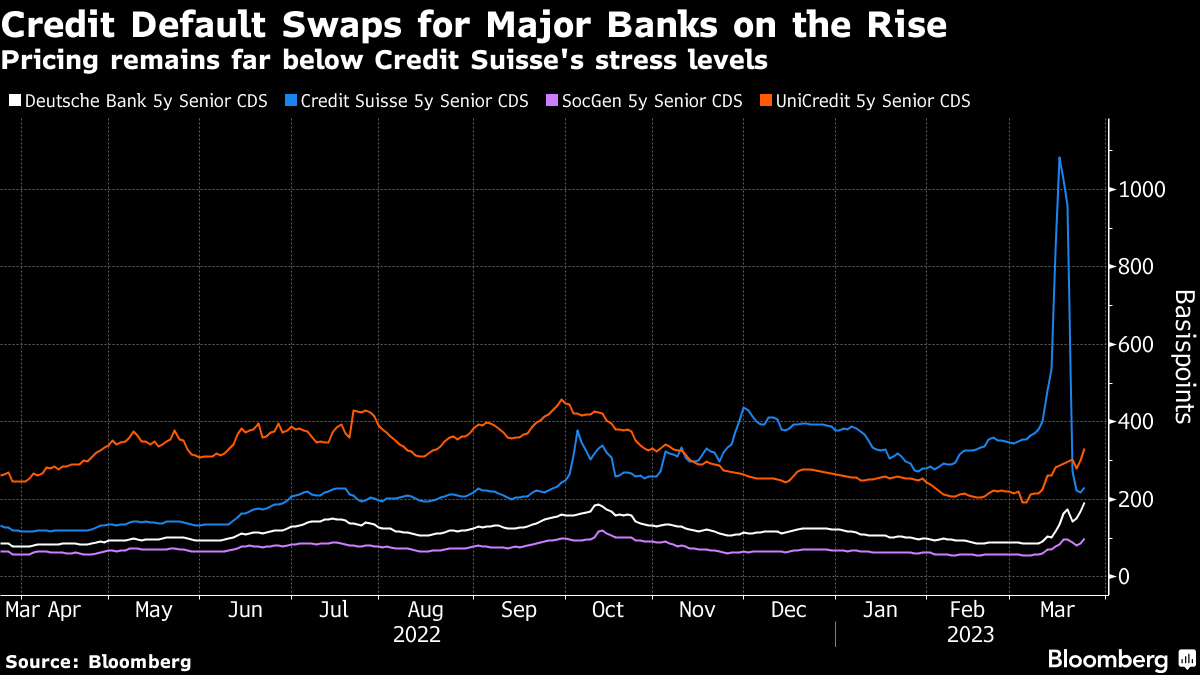
Earlier this week, UBS offered to buy back bonds that were issued days before it agreed to take over troubled rival Credit Suisse, a deal that sent a gauge of its credit risk soaring. While shareholders have cheered UBS picking up its rival at a very cheap price, its bond prices had dropped in recent days and credit ratings companies have lowered their outlook on the bank's debt.
Deutsche Bank fell 6.7% at 4:58 p.m. in Frankfurt trading. Investors were concerned about its exposure to US commercial real estate and its large derivatives book, according to Stuart Graham, an analyst at Autonomous Research. Yet both are “well known” and “just not very scary,” he added in a note.
“Deutsche Bank has fundamentally modernized and reorganized its business model and is a very profitable bank,” Chancellor Scholz said Friday at a news conference in Brussels when asked about the lender's situation. “There is no need to worry about anything.”
The lender recently emerged from a four-year turnaround plan that included thousands of job cuts and an exit from large parts of the investment bank. CEO Christian Sewing, who took over in 2018, even explored a deal with German rival Commerzbank in 2019 at the urging of the government, before deciding against it.
“We have no concerns about Deutsche's viability or asset marks,” Graham wrote. “To be crystal clear - Deutsche is NOT the next Credit Suisse.”
--With assistance from and .
(Updates with CDS declines in 11th paragraph)
More stories like this are available on bloomberg.com
©2023 Bloomberg L.P.

-
One Battle After Another: India's Corporate Dynasties Battle For Control

2026 could go down as Corporate India's year of succession wars, governance battles and family fault lines.
-
Rs 50-Lakh Gold In Bank Locker, Rs 3 Lakh Of Protection: The Gap Most Families Don't Know About
The RBI ties a bank's liability to the annual locker rent and families who want to insure their jewellery face a separate question about how to prove what was inside.
-
The More Food Turns Into Fuel, The Harder It Is To Read Agricultural Markets | The Reason Why
A policy designed to reduce dependence on imported fuel can create new pressures elsewhere in the food economy.
-
Your iPhone Costs 12 Grams Of Gold, A Car About 100. What Does Your Life Weigh?
Measured in rupees, almost everything looks more expensive than it did a generation ago. Measured in grams of gold, a lot of it has become cheaper.
-
Gold Is Rs 22,000 Cheaper Than A Month Ago. Should You Buy Amid The Wedding Season?
Gold's potential slide to $3,500 could save around Rs 4,700 per 10 grams, but a soft inflation print could just as easily push prices back up. One way to split the risk is to buy in parts, some now and the rest after the Fed's Dec. 9 decision.
-
AI Agents Are Gaining Power. Who Governs Them?
Artificial intelligence agents promise to transform productivity by moving machines from assisting decisions to executing them. But as organisations delegate greater authority to these AI-agents, they must first establish who controls that authority and who remains accountable when things go wrong.
-
Why Swapping Your Old Gold Can Trigger A Rs 5 Lakh Tax Bill, And How You Can Avoid It Legally
Swapping old gold for new is taxed as a sale and a fresh purchase. Getting your own gold remade can cut most of that bill, though it has its own costs.
-
The AI Trade is Done. The Real Opportunity for Investors Starts in 2027 | Unhedged Position
As pureplay AI stocks plunge and circular, capex-led financing unwinds, 2027 is set to be a year of reckoning for AI companies. Yet the bust clears the way for a better opportunity for investors in 2027 -- shifting the spotlight from AI builders to the companies using AI.
-
Leadership As Mission: Why The Age Of AI Demands More Human Leadership
Debjani Ghosh examines how AI is changing leadership, arguing that its success must be measured by its impact on people and the accountability of those guiding its use.
-
We May Need Another Tukaram Mundhe To Fight Air Pollution | The Reason Why
Developers may install basic measures such as sprinklers and green nets, resume work, and continue violating rules when this equipment stops working.









