Emerging Markets Rattled as Trump Dials Up Tariff Threats
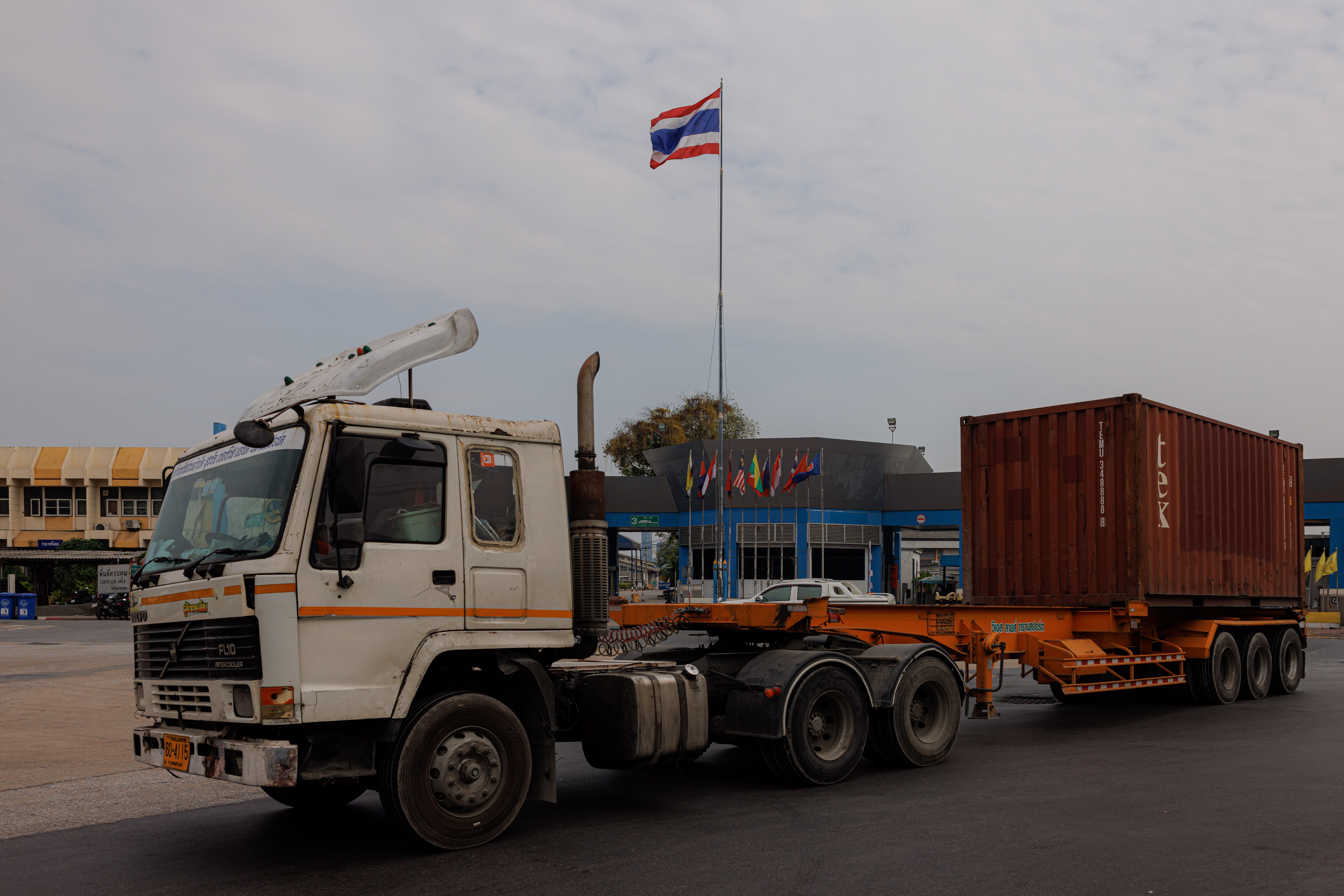
Emerging markets were swept up in the global equities storm Friday, with Asian stocks taking the heaviest beating after President Donald Trump's latest tariff threats.
The equities market in Jakarta entered bear territory, with the nation's central bank pledging strong intervention after the rupiah hit a five-year low. Thailand's benchmark equity index also closed near a bear market. An index of mainland Chinese shares listed in Hong Kong slid 3.6%, the most since October, while an onshore benchmark dropped 2%.
“Trump tariffs threats are obviously on everyone's mind and sentiments are fragile throughout, with the rebound in the dollar,” said Kok Hoong Wong, head of institutional equities sale trading at Maybank Securities Pte.

Emerging-market investors are grappling with uncertainty around Trump's trade policies and the Federal Reserve's rate path. The prospect of higher tariffs and sluggish global demand is weighing heavily on export-driven economies like Thailand, while Indonesia — despite net bond inflows — faces growing capital flight.
MSCI Inc.'s benchmark EM equities gauge fell 2.2% by 10:30 a.m. in London, the most since October, while the equivalent for currencies was down 0.3%.
Eastern European stock markets also fell, though currencies in the region rebounded. The Polish zloty, which briefly hit a 10-year high against the euro in the previous session, advanced again on Friday.
Trade-War Fears
Friday's turmoil follows Trump's declaration of further tariffs on China, along with plans for levies on Mexico and Canada in the coming week. The fresh duties on Chinese goods are stoking fears of an escalating trade war between the world's two biggest economies, while economists warn that tariffs could push Mexico and Canada toward recession.
“Unfortunately, Trump pushing hard on tariff against China, Canada, Mexico and likely more to come, raises inflationary pressure in US and thus rates-higher-for-longer, thus we see the dollar spike,” said Xin-Yao Ng, a fund manager at abrdn. That's “putting pressure on markets with more vulnerable currencies including several countries in Asean like Indonesia especially.”
The Bloomberg Dollar Spot Index has gained 0.8% this week while a gauge of Asian currencies is set for the worst week in more than three months.
“There is still time for deals to be struck, but FX markets have fully switched to defensive mode,” ING Bank said in a note.

As trade tensions ripple through emerging economies, investors are pulling out, leaving a trail of losses. Emerging markets have dominated the world's worst-performing major stock benchmarks this year, with South Korea's Kospi Index also tumbling more than 3% on Friday alone.
Global funds have continued to sell Thai stocks, making the nation Asia's worst performing equity market in 2025, with nearly $10 billion in outflows over the last two years. They've sold $934 million of Indonesian shares net in February, putting the country on track for a fifth straight month of outflows, according to data compiled by Bloomberg.

-
The Curious Case of Equitas Small Finance Bank And A CEO Who Quit For Stock

PN Vasudevan believes persistent investor concerns over a perceived conflict of interest had become a governance overhang on Equitas Small Finance Bank's stock, even as the lender improved profitability and asset quality.
-
Talking Points This Week: AI Cash Burn, A Tiger Comeback And An India That Still Finds Its Own Path
India is not immune to higher oil or tighter global liquidity, yet its earnings base is broader, its domestic policy levers are still available.
-
Foreign Investors Own Half Of HDFC Bank and ICICI Bank. An LTCG Cut Could Matter Most Here
Foreign portfolio investors have US$115 billion parked in HDFC Bank, ICICI Bank. If the government cuts long-term capital gains tax, Jefferies says returning foreign money could land here first.
-
'Never Seen This Level Of Negativity': Sandeep Tandon Says The Next Rally May Be Closer Than You Think
Veteran investor Sandeep Tandon says foreign selling is easing, large-caps are due a comeback and mid-caps are crowded, while he turns positive on gold, power and pharma this Diwali.
-
Indians Stay With Family, Not In Hotels | The Reason Why
India still lacks enough clean, reliable and affordable hotels for budget-conscious travellers.
-
The Economic Imperative: Analysing The Material Driving Force Behind India-Canada Strategic Reset
This economic complementarity is further reinforced by deep institutional investment ties and talent mobility, which form the bedrock of the bilateral framework.
-
Medicine Pricing: Where Must Profit Stop?
India must confront excessive margins, hidden incentives and regulatory gaps that threaten the integrity of medicine.
-
Why Amazon And Flipkart Are Struggling To Beat Meesho In India's Smaller Cities
With 274 million users and lowest-cost logistics, Meesho is defending its value commerce crown against giants like Amazon and Flipkart.
-
High US Salaries, No Green Card Certainty: The Financial Calculation Facing Indian H-1B Families
The suspension of PERM processing at eight technology employers does not cancel existing H-1B visas. What it does is force a question many Indian families have been avoiding: is the US salary worth tying your career and family plans to one employer?
-
Swiggy vs Eternal: Food Delivery's Two Rivals Are No Longer In The Same Race
Eternal is building a private AI assistant, dark.ai. Swiggy is still working out how to make Instamart pay, with an operating loss of Rs 895 crore in the July-September quarter while Blinkit stayed profitable.










