Can Elon Musk’s America Party Disrupt The US Two-Party System?
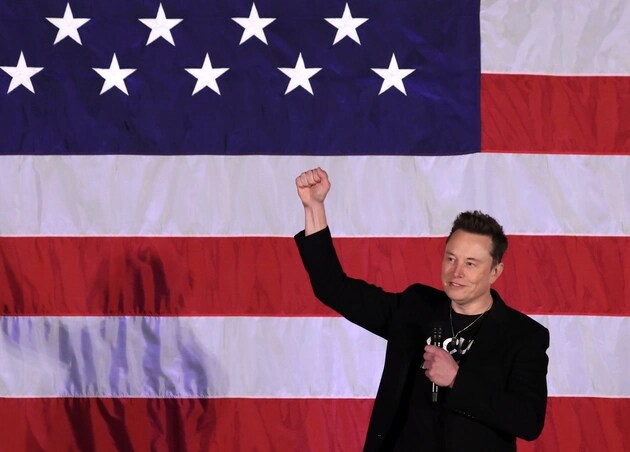
Billionaire Elon Musk has launched a new third party in the United States called the “America Party.” If it gains traction, it could challenge the country's long-standing two-party system, which has remained unchanged for over a century. Despite being the world's largest democracy, the US has not sustained a major third party since the early 1900s.
This article explains the institutional challenges that have kept third parties from succeeding, the advantages Musk brings to the political field, and the growing public dissatisfaction with the current two-party structure.
Ballot Access Hurdles
The US political framework makes it difficult for third parties to appear on the ballot. Unlike India, where registering a political party involves a Rs 10,000 fee and paperwork at the Election Commission office, US laws require third parties to gather signatures from registered voters under tight deadlines. California demands over 200,000 signatures in 105 days, and Texas requires more than 100,000 in 70 days. This process requires thousands of volunteers and substantial funds before a party can even secure a logo or official recognition.
Major parties have better access to funds. By March 2024, presidential candidates had raised over $570 million. Of this, around 60% went to Republicans, over 32% to Democrats, and only 6.6% to third-party candidates. The funding gap limits third-party efforts to campaign, advertise, and build awareness across platforms, including digital and physical media.
Limited Media Access
Third-party candidates are rarely included in presidential debates. The last major third-party candidate to participate was Ross Perot in 1992. Debate rules require candidates to poll at least 15% in five national surveys and qualify for the Electoral College by gaining ballot access in enough states to win 270 votes.
These criteria have kept candidates like Jill Stein, who ran with the Green Party in 2012, 2016, and 2024, out of the national debates. She has repeatedly called for broader debate participation. But without media exposure, raising funds becomes harder, and without funds, campaigns fail to generate the visibility needed to attract voters.
Structural Disadvantage
The US uses a winner-take-all system. This means a candidate who secures the most votes in a state wins all its electoral votes. In contrast, systems like India's allow multiple parties to win seats even with regional or minority support. In the US, even a strong third-party performance in a large state like California would still result in zero representation if it falls short of the majority.
This structure has shaped voter behaviour. Many voters choose between the two main parties to avoid “wasting” their vote, which further marginalises third-party candidates.
Musk's Resources And Reach
Elon Musk has access to large-scale capital. With a net worth of around $400 billion, he can self-finance a campaign and fund ballot access efforts. In 2024 alone, he spent over $277 million backing Donald Trump and other Republican candidates. Musk can channel similar amounts into his own party's advertising, ground operations, and outreach.
He also controls X, a platform with an estimated 586 million monthly active users. Through X, Musk can bypass traditional media and directly communicate with voters. This gives him an advantage most third-party candidates have never had—unfiltered and immediate access to a vast audience.
Established Public Image
Musk's public profile as the founder of companies like Tesla and SpaceX gives him broad name recognition. This visibility could attract voters who feel disconnected from the two main parties. Ross Perot used a similar outsider image in 1992 to build support, although he did not win the presidency.
Rising Demand For Alternatives
There is also growing public interest in a third-party option. According to a 2024 Gallup poll, 63% of voters said the country needs a major new party. Many Americans feel the current political system does not represent their interests or reflect the country's diverse views.
Although Musk cannot run for president himself due to the constitutional requirement of being a natural-born citizen, his newly announced America Party could still reshape political dynamics. By combining capital, reach, and a visible brand, the party could force a re-evaluation of America's two-party structure.

-
Gold Is Rs 22,000 Cheaper Than A Month Ago. Should You Buy Amid The Wedding Season?

Gold's potential slide to $3,500 could save around Rs 4,700 per 10 grams, but a soft inflation print could just as easily push prices back up. One way to split the risk is to buy in parts, some now and the rest after the Fed's Dec. 9 decision.
-
AI Agents Are Gaining Power. Who Governs Them?
Artificial intelligence agents promise to transform productivity by moving machines from assisting decisions to executing them. But as organisations delegate greater authority to these AI-agents, they must first establish who controls that authority and who remains accountable when things go wrong.
-
Why Swapping Your Old Gold Can Trigger A Rs 5 Lakh Tax Bill, And How You Can Avoid It Legally
Swapping old gold for new is taxed as a sale and a fresh purchase. Getting your own gold remade can cut most of that bill, though it has its own costs.
-
The AI Trade is Done. The Real Opportunity for Investors Starts in 2027 | Unhedged Position
As pureplay AI stocks plunge and circular, capex-led financing unwinds, 2027 is set to be a year of reckoning for AI companies. Yet the bust clears the way for a better opportunity for investors in 2027 -- shifting the spotlight from AI builders to the companies using AI.
-
Leadership As Mission: Why The Age Of AI Demands More Human Leadership
Debjani Ghosh examines how AI is changing leadership, arguing that its success must be measured by its impact on people and the accountability of those guiding its use.
-
We May Need Another Tukaram Mundhe To Fight Air Pollution | The Reason Why
Developers may install basic measures such as sprinklers and green nets, resume work, and continue violating rules when this equipment stops working.
-
Extracting Value From Battery Scrap Could Be Challenging For India | The Reason Why
A discarded lithium-ion battery still contains valuable materials such as lithium, nickel and cobalt. These can be recovered and reused. When such batteries are crushed and shredded, they produce a dark powder called black mass.
-
One El Nino, India Can Handle. Two Could Break The Granary
India's grain stocks can absorb one bad year, but a second El Nino could drain the buffer in two to three years, economists say.
-
India's Troika Of Good Luck | Joining The Dots
As Jensen Huang's exit drags Nvidia down, a cooling AI trade and resilient earnings have revived investor interest in India. A likely RBI rate hike looms.
-
Talking Points This Week: Leadership Shock At Nvidia, Earnings Strength, And The Fog Over Hormuz
The Anthropic IPO pricing and first trading day, Nvidia's upcoming earnings, and any fresh signals from Iran will set the tone for the following week.









