ECB Cuts Interest Rates Again, Signals Easing Phase Is Nearing Its End
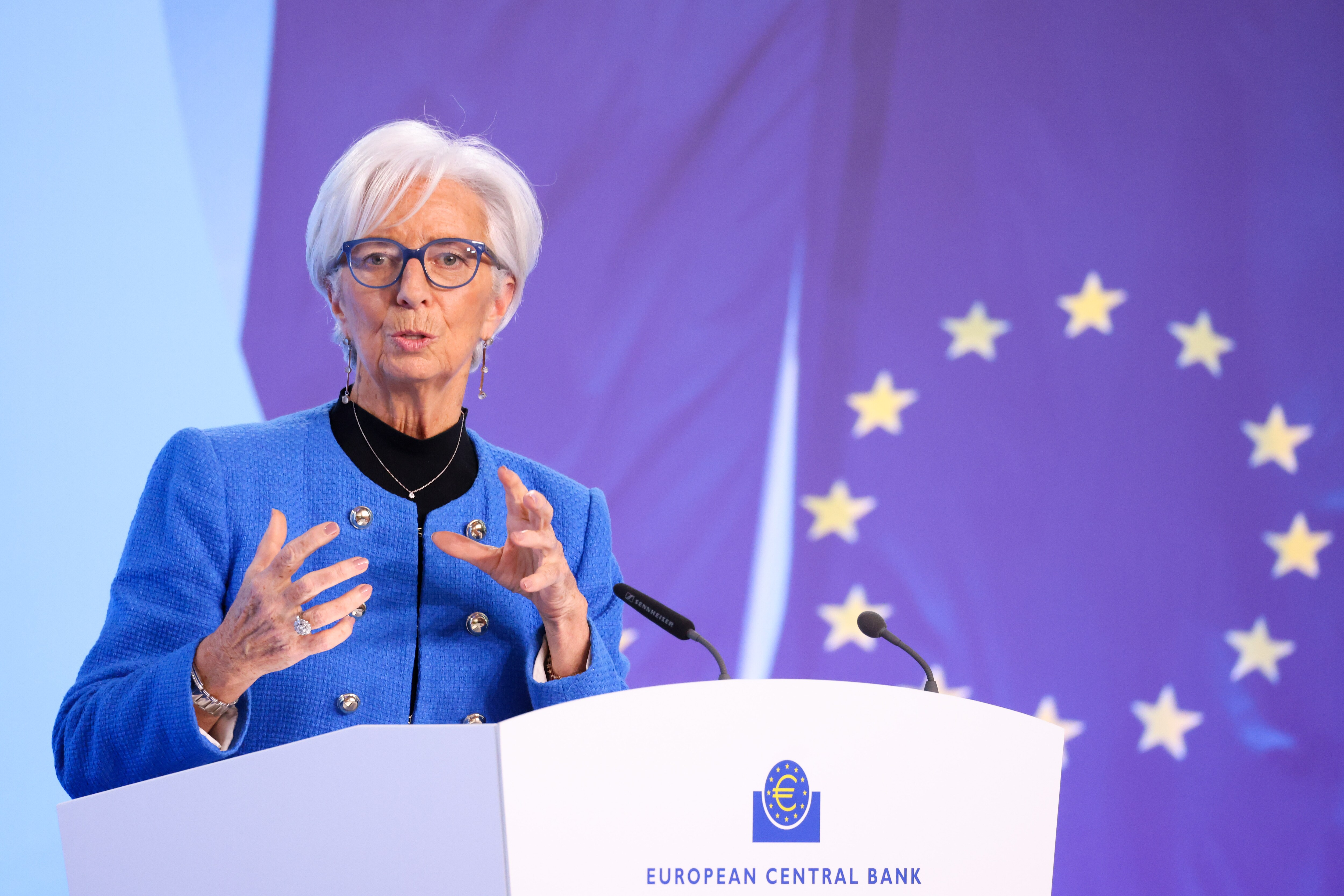
The European Central Bank is about to lower interest rates for the sixth time since June, though a volatile economic backdrop is sowing divisions over where to take borrowing costs from here.
Analysts polled by Bloomberg almost unanimously predict a quarter-point decrease in the deposit rate, to 2.5%, on Thursday. Beyond that, opinions vary greatly: One sees no more reductions while others reckon the benchmark will go all the way to 1% in early 2026.
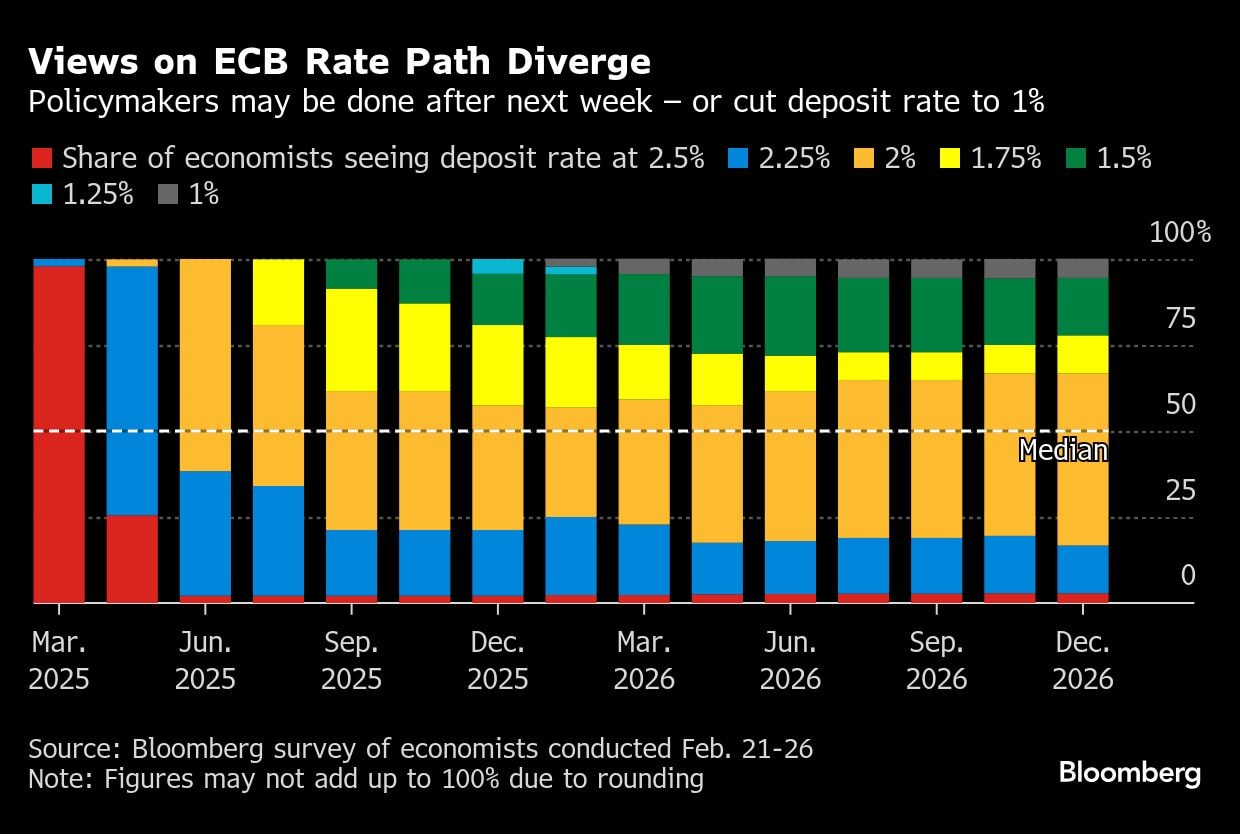
Such stark differences reflect fraying unity among officials themselves. While there's been little major disagreement over the monetary loosening to date, views are diverging on whether inflation is in more danger of over- or undershooting, and how much support should be offered to the region's misfiring economy.
Muddying the waters further are the implications of the US's sudden decision to pull back military support for Ukraine and Europe, sparking a rush to rearm that will bring hundreds of billions of euros in spending across the region in the years ahead. European leaders are set to further discuss the issue at a summit Thursday in Brussels, with markets now favoring just two more ECB rate cuts this year.
Traders price 62 basis points of easing — including a quarter point reduction today — down from 65 basis points on Wednesday and 85 basis points last week.
“The decision this Thursday should be straightforward, but the discussions within the Governing Council are undoubtedly going to become more heated,” said Sonja Marten, head of research currencies and monetary policy at DZ Bank. “This may be the last ‘clear-cut' decision from the ECB this year.”
The rate announcement is due at 2:15 p.m. in Frankfurt. President Christine Lagarde will host a press conference 30 minutes later.
Interest rates
While policymakers including Executive Board member Isabel Schnabel have urged the ECB to begin discussing a pause in rate cuts — or halting them altogether — no one appears to object strongly to this week's move.
Should it transpire, easing since June would reach 150 basis points — twice what the Bank of England has so far managed during its cutting cycle and also more than the Federal Reserve's 100 basis points.
Discord at the ECB is intensifying in part over how much monetary policy is restraining the economy. Schnabel is “no longer sure whether it is still restrictive.” Greece's Yannis Stournaras thinks “we are definitely still in restrictive territory.”
Officials concur that rates should be brought to levels that no longer constrain activity, known as neutral. Only a few, though, have floated the idea of pushing even lower to stimulate demand. While a recent study by ECB staff put neutral at 1.75% to 2.25%, some hawks say it may be higher.
Communication
Analysts and investors will focus on whether the ECB continues to describe policy as “restrictive.” Removing that wording from this month's statement was already seen as an option after January's meeting.
Sticking to this language would signal rates will be reduced further — the next time probably coming in April. Omitting it would set the stage for a pause, maybe as soon as next month, but could also be interpreted by some as an end to cuts.
Perhaps the likeliest outcome is a compromise. That would see the language modified without being removed entirely, as the ECB and Lagarde are expected to steer clear of giving firm guidance given the unpredictable global picture.
“Macro indicators can quickly become outdated with the currently very fast-paced and sometimes erratic political environment,“ said Carsten Brzeski, head of macro research at ING. “The ECB's best approach therefore is to run on sight.”
Geopolitics
Complicating the ECB's task is the rapidly shifting geopolitical environment. President Donald Trump's escalating trade war and the knock-on effects of his decision to recalibrate US security alliances are the main challenges for policymakers.
While tariffs are generally seen as negative for Europe's economic outlook, the implications for inflation are less clear. There may be growth benefits from the continent ramping up defense spending and from Chancellor-in-waiting Friedrich Merz pushing for huge infrastructure outlays in Germany.
EU leaders are meeting Thursday in Brussels to discuss more military aid for Ukraine, as well as plans to bolster the capabilities of their own armed forces. Greece's Stournaras said last week that “if there's going to be a common objective of the EU to boost defense spending, we can discuss what the ECB can do to support that goal.”
Economists at Allianz warned that if heftier budget deficits threaten debt sustainability and trigger widening government bond spreads, the ECB may have to restart large-scale bond purchases through its Transmission Protection Instrument.
Forecasts
Analysts expect only marginal changes to quarterly projections for economic growth and inflation — supporting the ECB's overall assessment that consumer-price growth is on track to hit 2% and conditions for a euro-area recovery are in place.
Average inflation for 2025, though, could be revised up from December's 2.1% forecast — mainly due to higher energy costs.
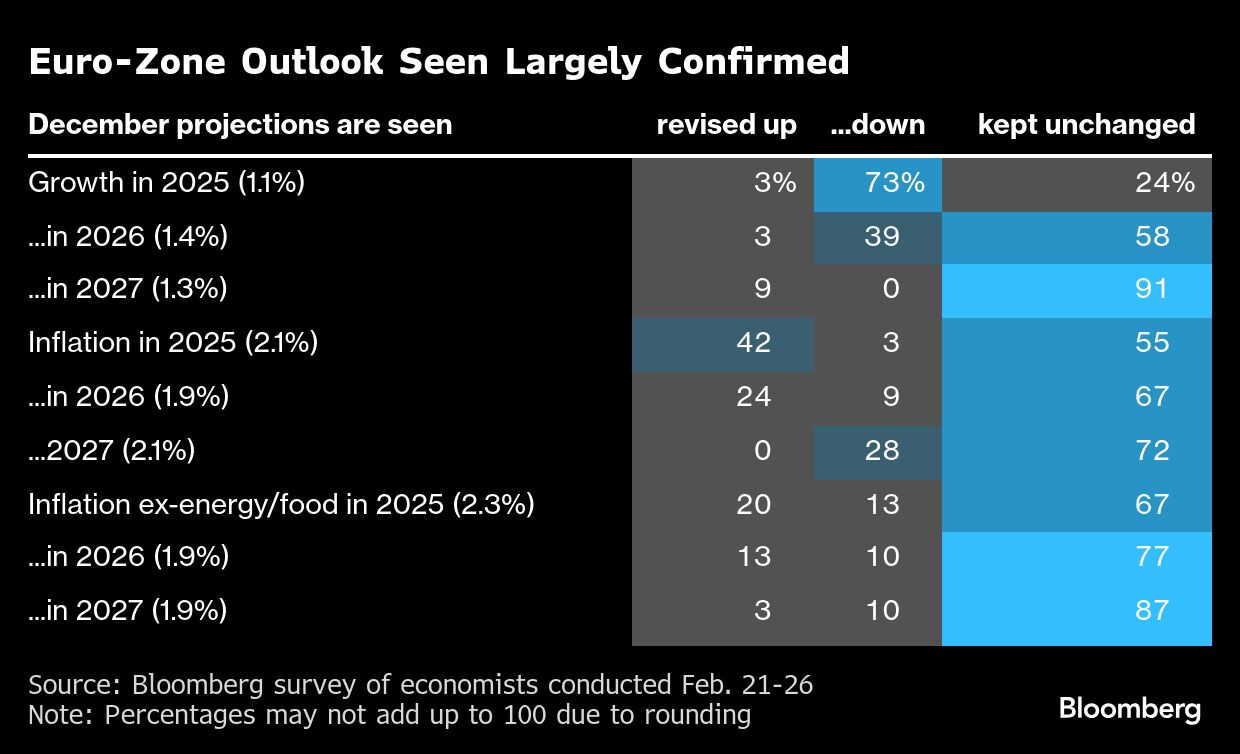
Morgan Stanley's Jens Eisenschmidt, a former ECB economist, expects the updated outlook to show price growth only returning to target in the first three months of 2026, instead of this year as envisaged before.
While coming in just above analyst expectations, inflation cooled to 2.4% in February from 2.5% the previous month, with the closely watched services gauge sinking to 3.7%.

-
Gold Is Rs 22,000 Cheaper Than A Month Ago. Should You Buy Amid The Wedding Season?

Gold's potential slide to $3,500 could save around Rs 4,700 per 10 grams, but a soft inflation print could just as easily push prices back up. One way to split the risk is to buy in parts, some now and the rest after the Fed's Dec. 9 decision.
-
AI Agents Are Gaining Power. Who Governs Them?
Artificial intelligence agents promise to transform productivity by moving machines from assisting decisions to executing them. But as organisations delegate greater authority to these AI-agents, they must first establish who controls that authority and who remains accountable when things go wrong.
-
Why Swapping Your Old Gold Can Trigger A Rs 5 Lakh Tax Bill, And How You Can Avoid It Legally
Swapping old gold for new is taxed as a sale and a fresh purchase. Getting your own gold remade can cut most of that bill, though it has its own costs.
-
The AI Trade is Done. The Real Opportunity for Investors Starts in 2027 | Unhedged Position
As pureplay AI stocks plunge and circular, capex-led financing unwinds, 2027 is set to be a year of reckoning for AI companies. Yet the bust clears the way for a better opportunity for investors in 2027 -- shifting the spotlight from AI builders to the companies using AI.
-
Leadership As Mission: Why The Age Of AI Demands More Human Leadership
Debjani Ghosh examines how AI is changing leadership, arguing that its success must be measured by its impact on people and the accountability of those guiding its use.
-
We May Need Another Tukaram Mundhe To Fight Air Pollution | The Reason Why
Developers may install basic measures such as sprinklers and green nets, resume work, and continue violating rules when this equipment stops working.
-
Extracting Value From Battery Scrap Could Be Challenging For India | The Reason Why
A discarded lithium-ion battery still contains valuable materials such as lithium, nickel and cobalt. These can be recovered and reused. When such batteries are crushed and shredded, they produce a dark powder called black mass.
-
One El Nino, India Can Handle. Two Could Break The Granary
India's grain stocks can absorb one bad year, but a second El Nino could drain the buffer in two to three years, economists say.
-
India's Troika Of Good Luck | Joining The Dots
As Jensen Huang's exit drags Nvidia down, a cooling AI trade and resilient earnings have revived investor interest in India. A likely RBI rate hike looms.
-
Talking Points This Week: Leadership Shock At Nvidia, Earnings Strength, And The Fog Over Hormuz
The Anthropic IPO pricing and first trading day, Nvidia's upcoming earnings, and any fresh signals from Iran will set the tone for the following week.









