Earthquake Raises Hurdle For BOJ To End Negative Interest Rates

(Bloomberg) -- The yen is coming under renewed pressure as a powerful earthquake that hit Japan on New Year's Day makes it harder for the Bank of Japan to abolish negative interest rates.
Morgan Stanley MUFG Securities Co. changed its call for the BOJ rate decision this month and now sees it leaving current policy in place, partly as the central bank has to assess the adverse impact from the Noto Peninsula disaster on the economy. Any move may not come until April at the earliest, according to Mitsubishi UFJ Morgan Stanley Securities Co.
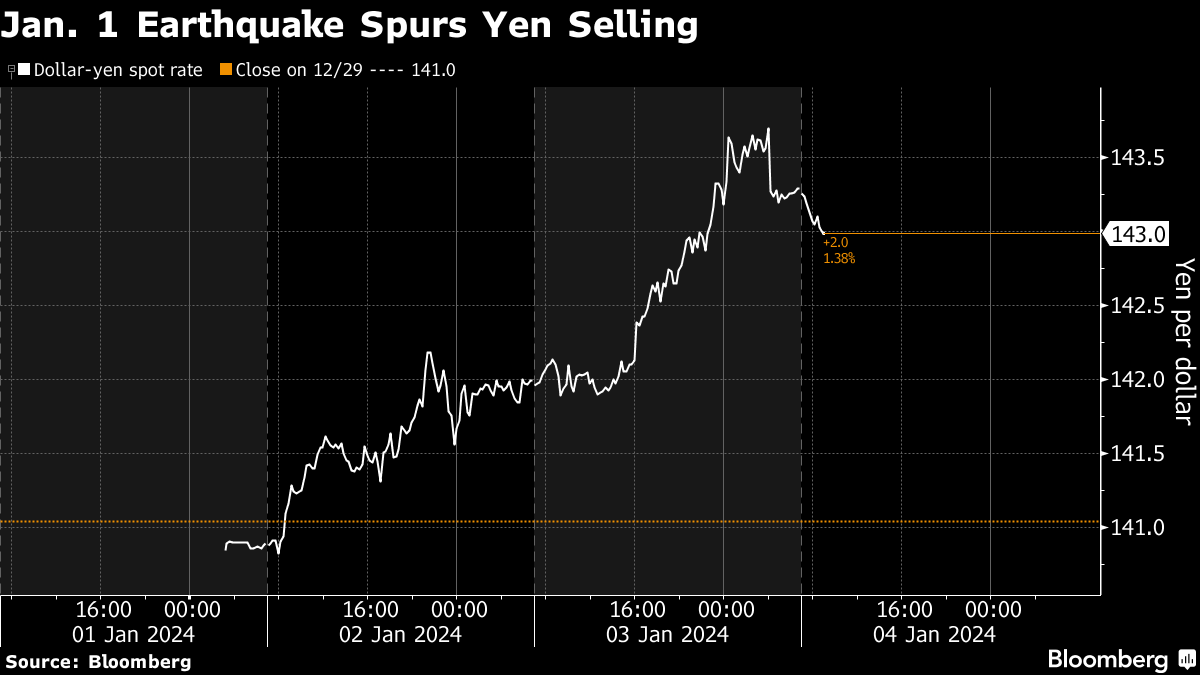
The yen weakened to 143.39 per dollar in Tokyo on Thursday morning, from 141.04 at the end of 2023 in New York trading. The Japanese currency had been widely expected to strengthen in 2024 on speculation the Federal Reserve would start cutting interest rates in the first half of the year, while at the same time normalization of ultra-easy monetary policy in Japan would narrow the yield gap between the two economies.
“Although there must be quite a few foreign investors who have been anticipating the end of negative rates in January, under these circumstances, the BOJ will almost certainly not move this month,” said Daisuke Karakama, chief market economist at Mizuho Bank Ltd. “Should negative rates not be lifted in January, ending it in the first half of 2024 will also become doubtful.”
Mari Iwashita, chief market economist at Daiwa Securities Co., removed her forecast for an end to negative rates in January following Governor Kazuo Ueda's speech on Dec. 25 and his interview with NHK on Dec. 27.
“The January move seems even more impossible,” Iwashita said. The earthquake is likely to depress production activity while the government may have to set up a supplementary budget for recovery measures, she said. Iwashita now expects an exit from negative rates in April.
Ueda said Thursday in a speech that the BOJ will be fully prepared to support the financial system after the earthquake, and he hopes wages and inflation will rise in a balanced manner this year.
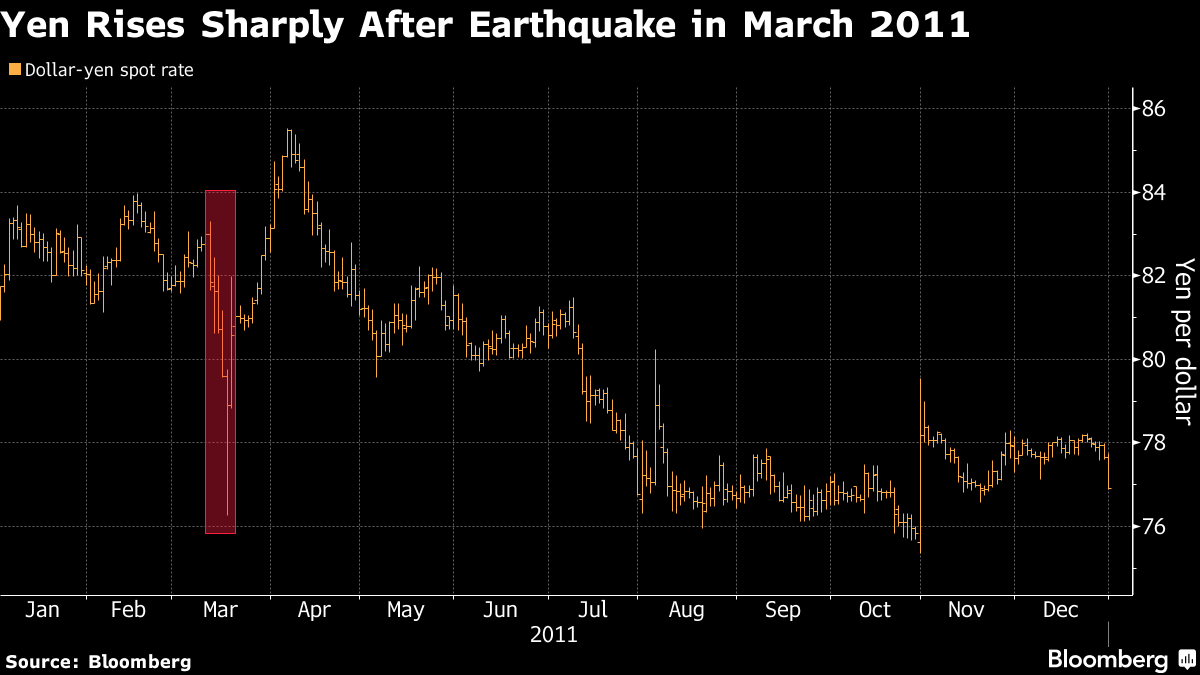
The yen's decline following the major tremor is contrary to what happened in March 2011, when a deadly earthquake and tsunami triggered coordinated intervention to sell the yen by Japan, the US and Europe. That move aimed to halt a sharp rally in the yen on the back of repatriation of assets held overseas by Japanese companies.
The Japanese currency subsequently hit an all-time high of 75.35 in October that year.
The situation is “different now,” said Mizuho's Karakama. Japan had accumulated trade surpluses over many years at that time and corporate demand for the yen supported the currency's appreciation. It now has a deficit. “It's unreasonable to expect the same reaction in the yen to the earthquake,” he said.
--With assistance from Yumi Teso, Masaki Kondo and Hidenori Yamanaka.
More stories like this are available on bloomberg.com
©2024 Bloomberg L.P.

-
Getting To Work Costs Women More | The Reason Why

It is not just about women paying more than men. It is about women paying much more in cities than in villages.
-
AI Bias In Investing Cannot Be Eliminated, But It Can Be Governed
Framing is a particularly important example as identical financial information presented in terms of gains rather than losses can lead an LLM to reach a different assessment.
-
Joining The Dots | Dark Skies, Steady Diya: Why Hope Holds This Diwali
With war, a weak rupee and foreign outflows weighing on sentiment, policymakers at the NDTV World Summit and market veterans at NDTV Profit Ignite: Diwali Edition offered the same advice: stay invested and filter out the noise.
-
The Curious Case of Equitas Small Finance Bank And A CEO Who Quit For Stock
PN Vasudevan believes persistent investor concerns over a perceived conflict of interest had become a governance overhang on Equitas Small Finance Bank's stock, even as the lender improved profitability and asset quality.
-
Talking Points This Week: AI Cash Burn, A Tiger Comeback And An India That Still Finds Its Own Path
India is not immune to higher oil or tighter global liquidity, yet its earnings base is broader, its domestic policy levers are still available.
-
Foreign Investors Own Half Of HDFC Bank and ICICI Bank. An LTCG Cut Could Matter Most Here
Foreign portfolio investors have US$115 billion parked in HDFC Bank, ICICI Bank. If the government cuts long-term capital gains tax, Jefferies says returning foreign money could land here first.
-
'Never Seen This Level Of Negativity': Sandeep Tandon Says The Next Rally May Be Closer Than You Think
Veteran investor Sandeep Tandon says foreign selling is easing, large-caps are due a comeback and mid-caps are crowded, while he turns positive on gold, power and pharma this Diwali.
-
Indians Stay With Family, Not In Hotels | The Reason Why
India still lacks enough clean, reliable and affordable hotels for budget-conscious travellers.
-
The Economic Imperative: Analysing The Material Driving Force Behind India-Canada Strategic Reset
This economic complementarity is further reinforced by deep institutional investment ties and talent mobility, which form the bedrock of the bilateral framework.
-
Medicine Pricing: Where Must Profit Stop?
India must confront excessive margins, hidden incentives and regulatory gaps that threaten the integrity of medicine.










