Davos 2025: Andhra Pradesh Unveils AI-Driven Vision For Governance, Education And Healthcare
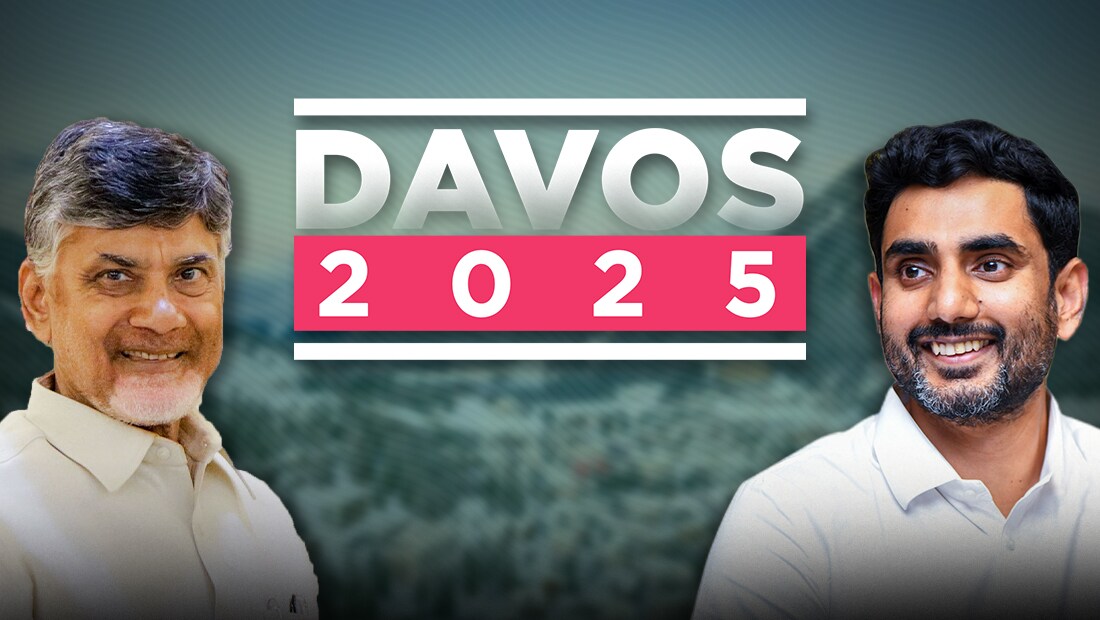
In a panel at the World Economic Forum in Davos, Nara Lokesh, the information technology and human resource development minister of Andhra Pradesh, outlined the state's plans to utilise artificial intelligence for governance, education and healthcare.
Positioning Andhra Pradesh as a tech trailblazer, Lokesh said AI would be a game-changer in empowering students, women and farmers while setting the tone for inclusive development.
"Andhra Pradesh is known to be at the cutting edge of technology," Lokesh said, emphasising on the state's real-time governance model.
By integrating AI into decision-making, Andhra Pradesh aims to address citizen needs more effectively. Lokesh described projects where AI processes huge datasets to optimise government services, ensuring timely delivery and providing innovative solutions across the state.
The panel spotlighted Andhra Pradesh's shift from output-based to outcome-based education. AI-powered adaptive learning tools are transforming passive classrooms into hubs of active engagement. A notable example is the use of two-minute explainer videos and interactive assessments that enhance student understanding while empowering teachers to improve their curricula.
Highlighting healthcare advancements, Lokesh painted a picture of AI's potential in preventive medicine. A simple facial scan powered by AI can now capture key health parameters, a tool currently undergoing the FDA reviews. This innovation, he said, paves the way for widespread access to preventive care.
Matt Renner, president of Global Revenue at Google Cloud, added more compelling use cases. AI has reduced mammogram analysis times from five days to five minutes, significantly improving diagnosis rates and patient outcomes.
Lokesh stressed the importance of democratising AI tools for marginalised groups. From doubling farmers' incomes through AI-driven climate and disaster advisories to equipping women and students with basic AI skills, the goal is clear: inclusion and empowerment.
"Every industrial revolution has created more jobs than it replaced. AI will be no different," assured Lokesh. The focus is not on job reduction but on equipping individuals with skills for the future.
Archna Vyas of the Bill & Melinda Gates Foundation commended Andhra Pradesh's efforts to integrate AI for social work. She highlighted the importance of inclusivity in technology design, ensuring the benefits of AI reach underserved communities.
Emily Sfeile from the Tony Blair Institute echoed this sentiment, pointing to global examples of public-private partnerships driving innovation in crisis response and disaster management. Satellite imagery, weather data and AI-powered assessments, she noted, are already reshaping how governments address natural disasters.
As Emily mentioned how AI will be a disrupting force, and it is up to the people whether we want to be the disrupted or the disruptors — Lokesh made it clear: Andhra Pradesh chooses the latter.

-
India Exports Capital. Why Not Export Trusteeship?

The big question, then, is whether India can build an institution that global borrowers, investors, banks, and lawyers can trust, even without an Indian connection.
-
France's Economy & Politics Are In Crisis | The Reason Why
Let's look at how the French economy and politics evolved under Nicolas Sarkozy, Franois Hollande and Emmanuel Macron.
-
You May Inherit The Business. You Must Earn Its Credibility.
Succession tests the founder's ability to share authority as much as it tests the next generation's readiness to assume it.
-
Signing Deals Is One Thing; Making Them Work Is Another | The Week In Whys
Sometimes, things don't turn out as planned. Indian companies have lost some bids to rivals, some projects won't produce until 2030.
-
FOMC Wall, PERM Suspension, Hospital Stocks | Talking Points This Week
A PERM suspension would directly affect green-card sponsorship rather than H-1B visas, so the near-term earnings impact could remain relatively limited. The key question is whether this marks a new phase in US scrutiny of Indian IT.
-
Everything, Everywhere, All At Once: Dalal Street's Week To Forget | Joining The Dots
Visa curbs, a Starlink spat and cancer drug caps: what connects this week's shocks for Indian markets
-
India Is Going Abroad For Critical Minerals. But It May Take Years To Pay Off | The Reason Why
Although India's steps are in the right direction, they remain modest compared with India's growing dependence.
-
When Everyone Has AI, What Gives You An Edge?
India's young workforce is entering an uncertain world of work where powerful AI tools are becoming widely accessible. The advantage will belong to those who combine deep expertise with digital fluency, and the distinctly human capabilities that technology cannot manufacture.
-
Wrong Labels, High Pesticide Residues Holding Back Agri Exports | The Reason Why
India needs stronger domestic food-safety and labelling standards, with best practices becoming part of everyday business for farmers, traders and food companies.
-
India Is Easy To Enter, Harder To Attract | The Week In Whys
The question is no longer just whether India can attract companies and capital. It is how much value they create here, how deeply they invest, and whether India remains relatively attractive when they have plenty of other options.