Davos 2019: Satya Nadella Calls For Regulation Of Facial Recognition Technology
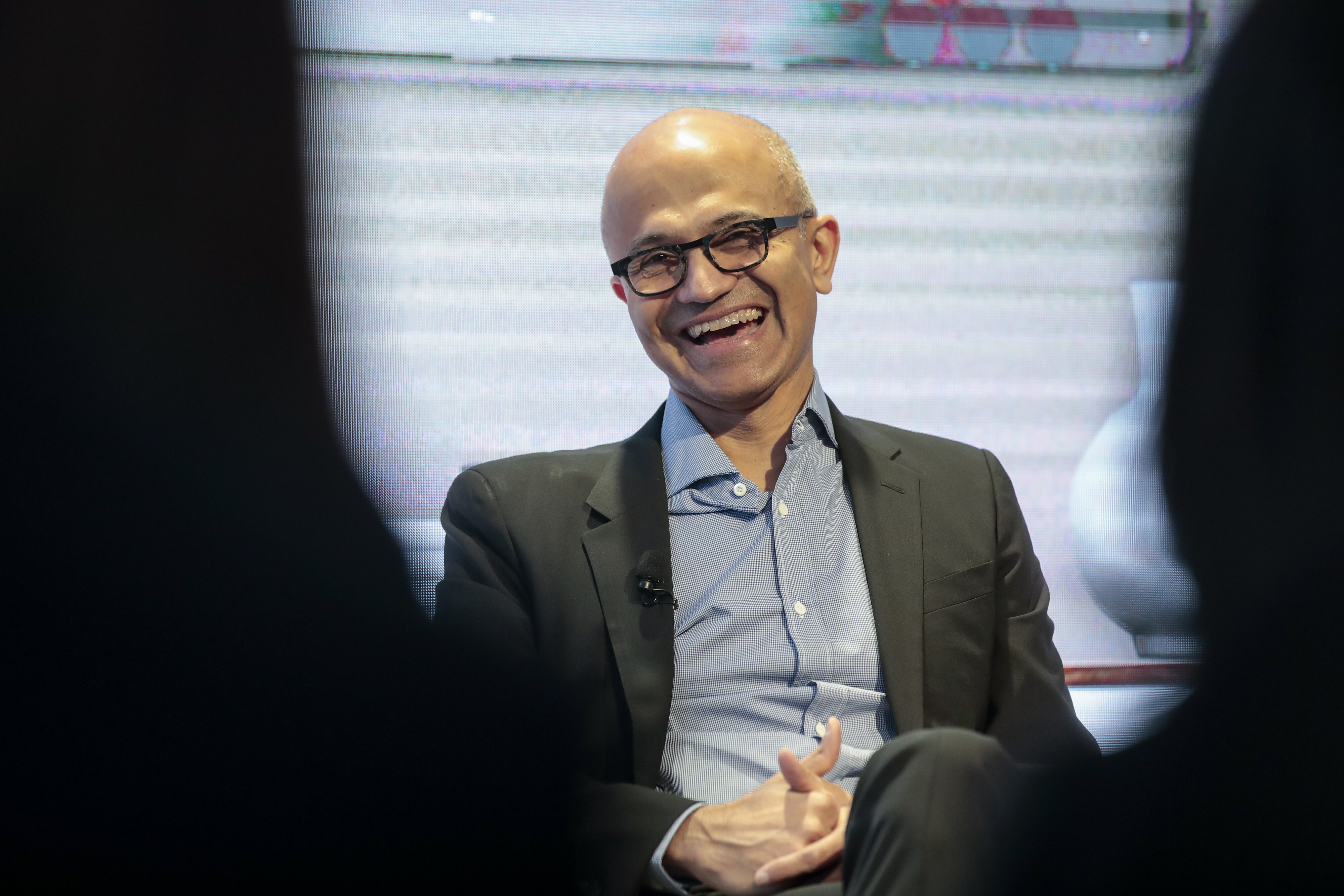
There's no discrimination between the right use and the wrong use of facial recognition, said Microsoft Chief Executive Officer Satya Nadella, welcoming regulation of the facial recognition technology.
“We have self-regulation when it comes to issues like facial recognition, but at the same time, we also welcome any regulation,” said Nadella during a panel discussion at the World Economic Forum in Davos.
While acknowledging the importance of self-regulation to ensure “fair and robust” use of facial recognition, Nadella said that government rules may also be needed. “If you turn it just to private enterprise, what happens is many times, we will have a race to the bottom, and then we will have to come back to deal with the bad consequences with even more heavy-handed regimes.”
Also read: Davos 2019: It's Been Survival Of The Fittest For Private Equities, Says IFC's Mehta
Calling the General Data Protection Regulation a fantastic start on treating privacy as a human right, Nadella said there are growing concerns around the ethics of data protection. “We need to start from the core principle that the user is in control of his/her data.” He also hoped for a framework like the GDPR in the United States.
I would hope that the world over, we all converge on a common standard, because one of the things that we do not want to do is to fragment the world, and increase transaction costs, because ultimately, it's going to be borne in our economic figure.Satya Nadella, chief executive officer, Microsoft
Just like electricity was democratised in the previous industrial revolution, the same thing needs to happen with data, said Nadella, calling it the next factor of production.
Also read: Stricter Emission Norms A Y2K Moment For Automakers, Says Pawan Goenka
Globalisation 4.0
The last phase of globalisation, he said, achieved some real rules and framework and global norms. “So, this next phase of globalisation should not be ‘let's return to a world where there are no global norms', but there needs to be a revised list of global norms, realising that there are real differences.”
Sometimes, I think in the digital world, we have made naïve assumptions that there is uniformity, not recognising, I think, the legitimate needs people have for their cultural identities, their different approaches, their different priorities.
The real challenge, Nadella said, will be to achieve inclusive growth, because even if there is economic and productivity growth, there might be a decoupling of wages and jobs, and these are the challenges that will need to be addressed.
What I've come to realise is that every country is going to put their country's interest first. They should. No country should be hollered out in the middle. If every country puts its interest first, guess what. We live in one globe.
He said that instead of narrowly viewing what is digital, we should go back to the comparative advantage that has always existed in different parts of the world, to add value and drive economic growth.
Also read: NBFCs Are Not Shadow But Real Banking, Sanjiv Bajaj Says
Watch the full interview here.

-
Signature Play: The Classic Cocktail Is Dead. Or Is It?

Classic cocktails are disappearing from India's cocktail menus. But they're still being ordered, taught to bartenders and borrowed from. So, who's really having the last drink?
-
A New Samvat Wishlist: Inclusive Prosperity And Human Development
India has strengthened its economic foundations through infrastructure, digital access and enterprise. Its next growth chapter must deepen productivity, create better livelihoods and widen participation in prosperity.
-
Love, Sex Aur Dhokha: The Audacious Plot To Spy On Jensen Huang
A Taipei dinner, a Singapore chip buyer and a suspected Chinese asset: inside the alleged spy operation that got close to NVIDIA's Jensen Huang.
-
Ten Things I Learnt This Samvat
Patience can be a trap. Cheap stocks can stay cheap. Leverage can wipe you out. What did Samvat 2082 teach us? Niraj Shah writes on 10 lessons from the year gone by.
-
Talking Points This Week: Tech Nerves, FII Buying, And A Faraway Banking Shock
The global markets are not shining this Diwali. The exception in the large markets is, India.
-
Midterm Rally Lasted A Day. The Hard Reality Of A Divided US May Last Two Years | Opinion
Between a contested AI boom, a debt ceiling that arrives in 2027 and a president with every incentive to act alone, the next two years may prove more volatile than the first day's rally suggests.
-
Blue Wave Will Derail the AI Trade but Won't Dismantle the AI Era | Unhedged Position
The Democrats' sweep of the US Congress will see politics collide with economic forces both over the long and short term.
-
It's Time To Take The GST Council's Bet On Trust Global
Payment records can prove India's services exports, and clear, proportionate rules can bring foreign digital sellers into the tax net.
-
Opinion | India at 38: From Innovation Overperformer to Innovation Powerhouse
India now has 453 VC-backed deep science startups, 18 of them late-stage, after 117 percent growth since 2020. Laurus Labs, at USD 9.3 billion, is the most valuable deep science company in any middle-income economy outside China.









