Currency Angst Is Going Global As Strong Dollar Vexes Officials
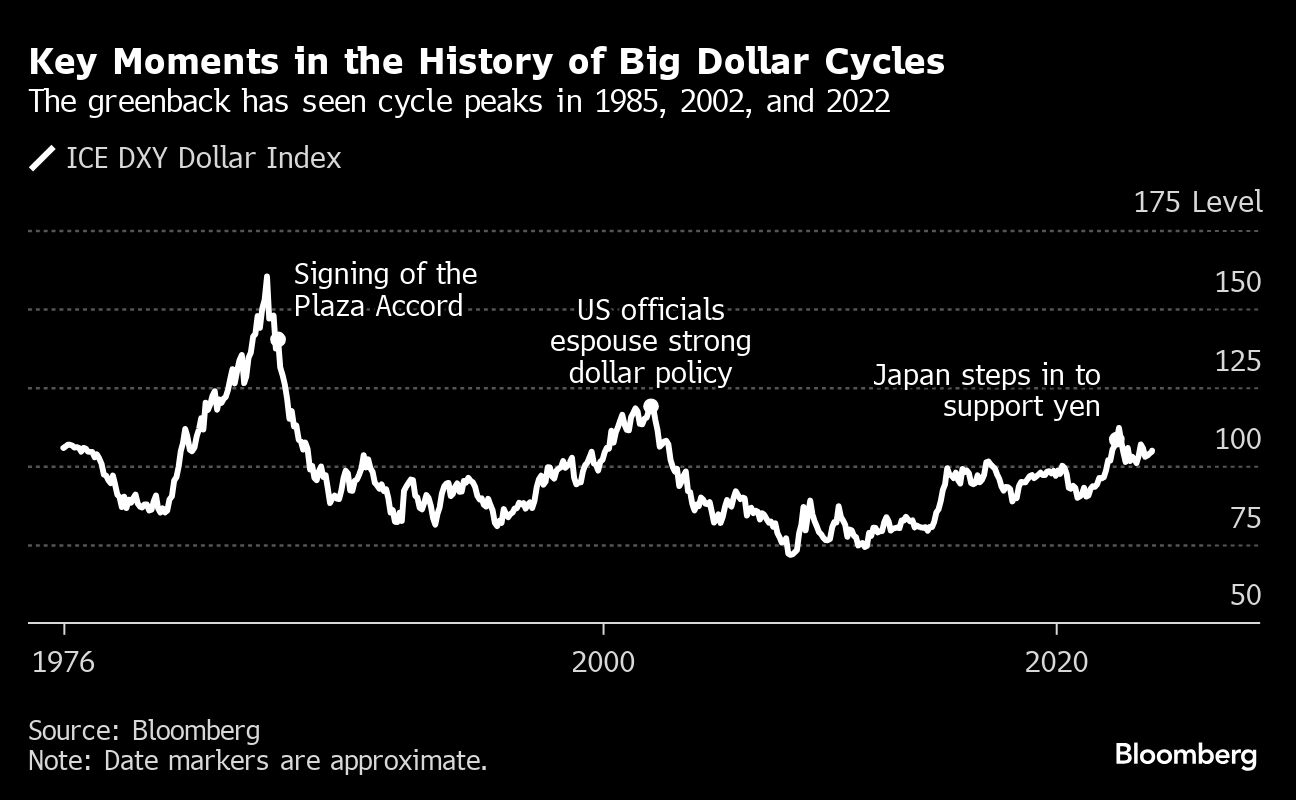
(Bloomberg) -- A resurgent US dollar is exasperating central bankers and governments around the world, forcing them into action to relieve the pressure on their own currencies.
From Tokyo to Istanbul, policymakers are stepping in to defend exchange rates with both words and deeds as a resilient American economy conspires to keep the greenback strong by pushing back expectations for lower US interest rates.
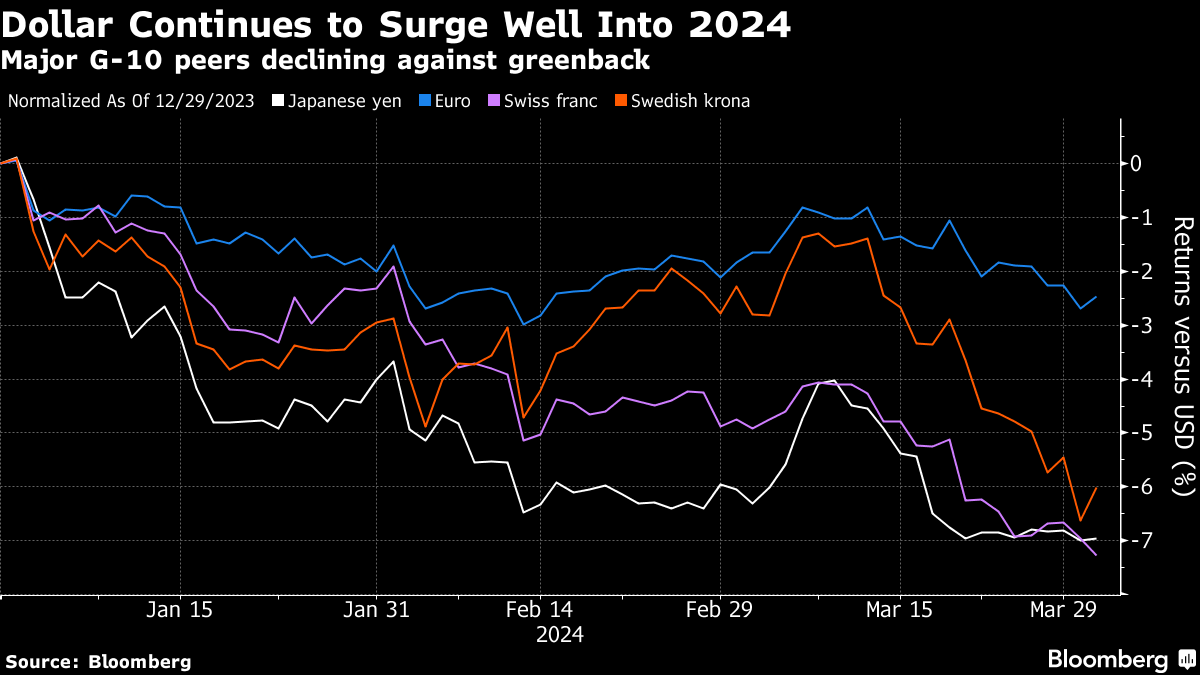
The greenback has gained against virtually every major peer in 2024, defying many on Wall Street who came into the year predicting a dollar selloff. That's prompted escalating warnings from Japan on its readiness to intervene to buoy the yen from near a 34-year low. Turkey blindsided markets with a rate hike to boost the lira, China and Indonesia have moved to steady their currencies, while Sweden and India are also under pressure.
Those intensifying efforts are reminiscent of 2022 when officials in Switzerland and Canada lamented their weakening exchange rates amid a surge in inflation and the strong dollar ripped through emerging economies, contributing to Sri Lanka's historic default. Today, countries burdened by foreign debt remain at risk, with the Maldives and Bolivia particularly vulnerable if dollar strength persists.
“The US dollar keeps turning up the heat on other central banks,” said Helen Given, a foreign-exchange trader at Monex. “Given the current global environment where central banks appear to be looking to end their tightening cycles, there doesn't seem to be a safe way out from the dollar's continued dominance.”
Just months ago, a recession in the US seemed all but inevitable. Instead, data show the nation benefiting from a tight labor market, upbeat consumer mood and government subsidies for manufacturing, prompting investors to rapidly reassess their expectations for interest-rate cuts by the Federal Reserve.
Traders are now pricing under three quarter-point cuts in 2024, down from wagers for over 150 basis points of easing at the start of the year, helping lift a Bloomberg gauge of the dollar more than 2% this year — and pummeling everything from the Indian rupee to the Nigerian naira, which both fell to record lows.
“This is a story of pure US exceptionalism,” said Stephen Miller, a four-decade markets veteran and consultant at Grant Samuel Funds Management Pty in Sydney. “Buying the dollar remains the number one trade.”
What Bloomberg Strategists Say ...
As the US dollar continues to hold up relatively well, the yuan and yen will remain in the spotlight. Excessive moves will keep the authorities vigilant, but with messaging to limit currency weakness, volatility will likely stay subdued.
Mary Nicola, Markets Live strategist
That has the world's central banks playing defense.
Japan last week warned of “bold action” to bolster the yen, which remains on the cusp of 152 per dollar — a level that many traders view as a line in the sand. Indonesia has repeatedly intervened in interbank, forwards and bond markets to lift its rupiah. And with China's yuan at the bottom of its permitted trading band against the dollar, investors are on watch for more forceful pushback, following tweaks to the currency's daily reference rate. The yuan has acted as a drag on other Asian currencies, including India's rupee.
Other nations are looking to monetary policy to support their currencies. Turkey unexpectedly hiked interest rates last month, while Swedish officials have said a weaker krona could delay its first move to ease.
Exchange rates matter because depreciating currencies increase the cost of imported goods, stoking inflation as those expenses feed through to prices in grocery stores and factories. Meanwhile, there's a higher likelihood that money will pour out of a nation with a weak currency in search of higher yields elsewhere — so-called capital flight — harming domestic investment and growth.
The irony, of course, is that unilaterally intervening in currency markets — where $7.5 trillion changes hands every day — can only temporarily alter an exchange rate.
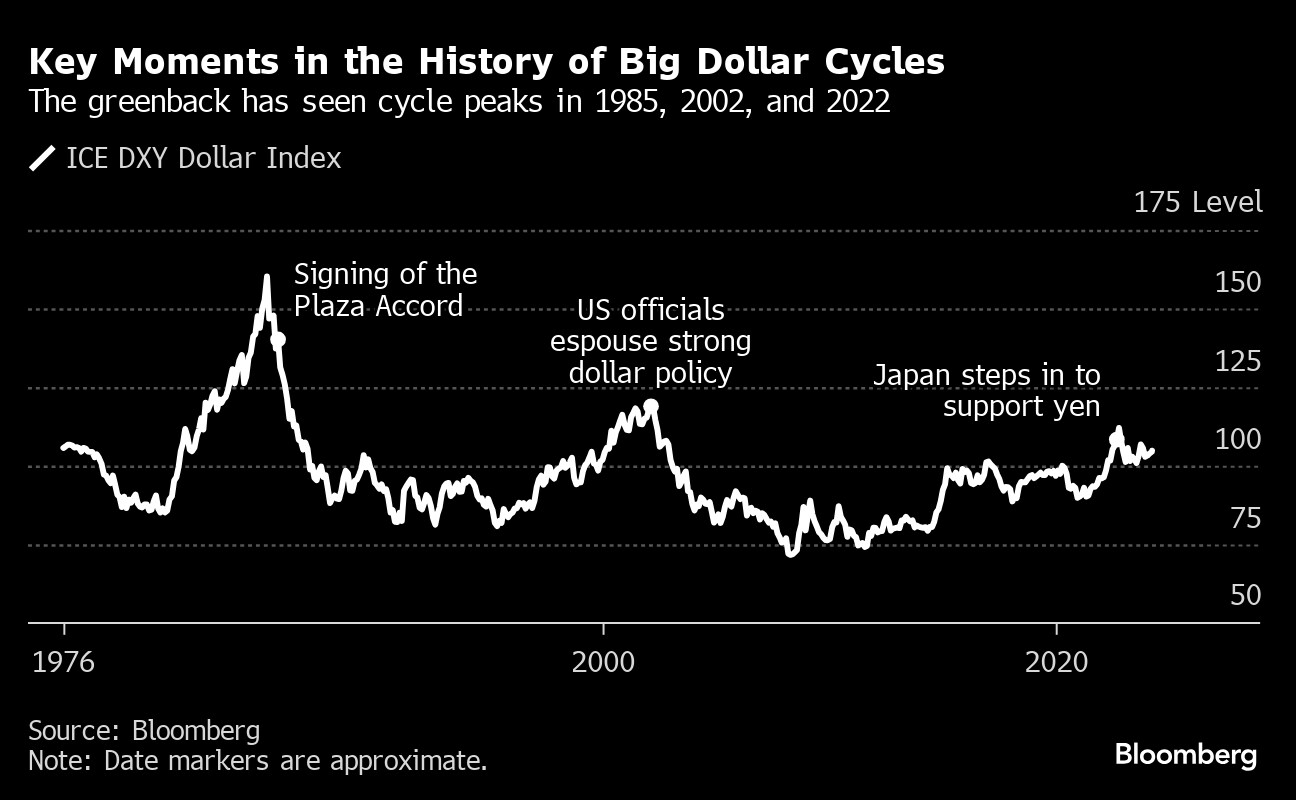
“They're trying to buy time,” Rajeev De Mello, global macro portfolio manager at Gama Asset Management SA, said of central banks and government intervention in currency markets. “If we start having more doubts about rate cuts by the Fed, then there's no point in intervening — volatility will go up and the intent will be meaningless.”
While markets still expect the Fed to ease policy this year, not everyone is convinced even that will bring relief in currency markets.
Central banks are about to embark on their most synchronized rate-cutting cycle since 2008, and such a scenario bodes well for the dollar, as the US policy rate is set to remain one of the highest among major developed economies this year.
“The other thing besides intervention that we will see, and we're already seeing, is a willingness to get ahead of the Fed in terms of easing,” said Carmen Reinhart, professor at Harvard Kennedy School and former World Bank chief economist. “I think they'll be more shy about doing that if they're worried about the currency.”
With all the jawboning from global policymakers, “we are seeing acknowledgment from central banks that the Fed cuts are not necessarily going to provide a relief, at least from the currency side of things,” said Michael Cahill, a foreign-exchange analyst at Goldman Sachs Group Inc.
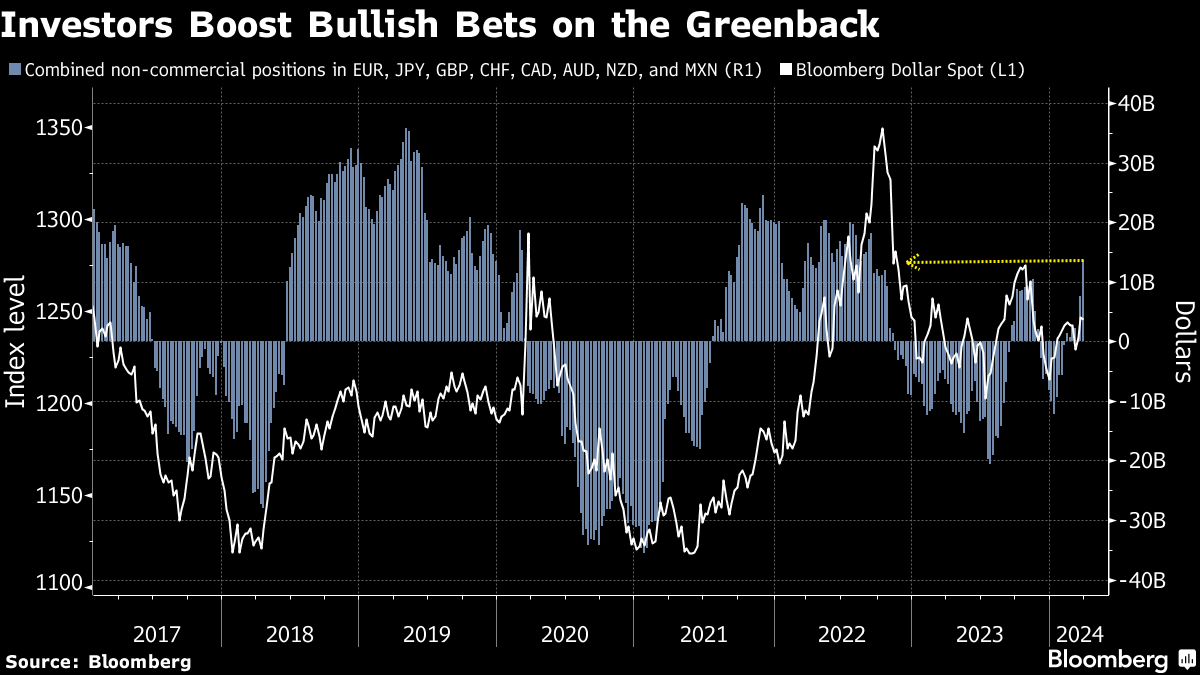
Investors are also buying into that new reality, adding to bets on dollar strength in recent weeks. A gauge of non-commercial trader positions — a group that includes asset managers as well as hedge funds and other speculative market players — is now the most long since 2022, data from the Commodity Futures Trading Commission through March 26 show.
For Ed Al-Hussainy, it's all a sign that the strong greenback is here to stay.
“There's only one developed currency trade to rule them all,” the rates strategist at Columbia Threadneedle Investment said. “Long the dollar.”
--With assistance from Tania Chen and Selcuk Gokoluk.
More stories like this are available on bloomberg.com
©2024 Bloomberg L.P.

-
The More Food Turns Into Fuel, The Harder It Is To Read Agricultural Markets | The Reason Why

A policy designed to reduce dependence on imported fuel can create new pressures elsewhere in the food economy.
-
Your iPhone Costs 12 Grams Of Gold, A Car About 100. What Does Your Life Weigh?
Measured in rupees, almost everything looks more expensive than it did a generation ago. Measured in grams of gold, a lot of it has become cheaper.
-
Gold Is Rs 22,000 Cheaper Than A Month Ago. Should You Buy Amid The Wedding Season?
Gold's potential slide to $3,500 could save around Rs 4,700 per 10 grams, but a soft inflation print could just as easily push prices back up. One way to split the risk is to buy in parts, some now and the rest after the Fed's Dec. 9 decision.
-
AI Agents Are Gaining Power. Who Governs Them?
Artificial intelligence agents promise to transform productivity by moving machines from assisting decisions to executing them. But as organisations delegate greater authority to these AI-agents, they must first establish who controls that authority and who remains accountable when things go wrong.
-
Why Swapping Your Old Gold Can Trigger A Rs 5 Lakh Tax Bill, And How You Can Avoid It Legally
Swapping old gold for new is taxed as a sale and a fresh purchase. Getting your own gold remade can cut most of that bill, though it has its own costs.
-
The AI Trade is Done. The Real Opportunity for Investors Starts in 2027 | Unhedged Position
As pureplay AI stocks plunge and circular, capex-led financing unwinds, 2027 is set to be a year of reckoning for AI companies. Yet the bust clears the way for a better opportunity for investors in 2027 -- shifting the spotlight from AI builders to the companies using AI.
-
Leadership As Mission: Why The Age Of AI Demands More Human Leadership
Debjani Ghosh examines how AI is changing leadership, arguing that its success must be measured by its impact on people and the accountability of those guiding its use.
-
We May Need Another Tukaram Mundhe To Fight Air Pollution | The Reason Why
Developers may install basic measures such as sprinklers and green nets, resume work, and continue violating rules when this equipment stops working.
-
Extracting Value From Battery Scrap Could Be Challenging For India | The Reason Why
A discarded lithium-ion battery still contains valuable materials such as lithium, nickel and cobalt. These can be recovered and reused. When such batteries are crushed and shredded, they produce a dark powder called black mass.
-
One El Nino, India Can Handle. Two Could Break The Granary
India's grain stocks can absorb one bad year, but a second El Nino could drain the buffer in two to three years, economists say.









