Chris Wood On RBI’s Next Rate Cut, The U.S. Dollar And ‘The Donald’
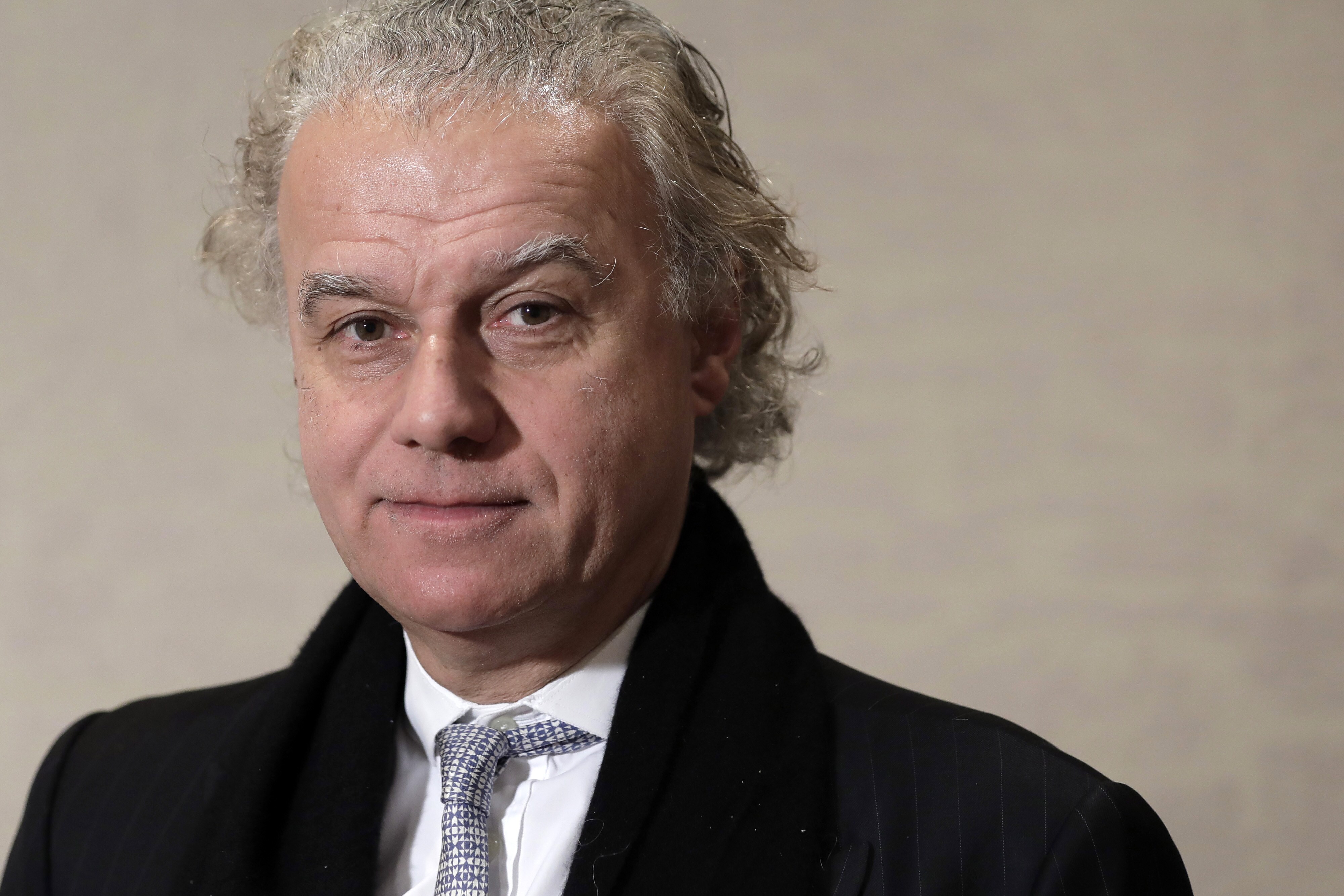
The Reserve Bank of India is likely to cut interest rate one more time before the end of this year, said Christopher Wood, long-term equity strategist at CLSA.
While Wednesday's 25 basis-point-cut in the repo rate was no surprise, Woods said the central bank choosing to maintain its neutral stance was a mistake.
The shift to a neutral stance in the previous bi-monthly policy in June had confused the market at the time, he said. This mistake has been further compounded this week with the RBI maintaining its neutral stance, Wood said in his Fear & Greed report.
Also Read: Patel Placates With Rate Cut, Focus on Modi Investment Push
The high real interest rates was also largely responsible for the rupee's strong performance this year, Wood said.
More so, the rupee strengthened “despite obvious negatives such as the $15 billion farm loan waivers agreed by the four state governments so far this year,” he said.
The rupee appreciated 6.8 percent against the U.S. dollar in the first seven months of 2017.
Also Read: RBI Cut Seen Adding Fuel to Rupee Rally as Two-Year High Reached
On Indian Equities
Along with high real interest rates, India is also witnessing a range of record highs, primarily due to continuing inflow into the country's equity mutual funds.
The benchmark S&P BSE Sensex has risen more than 21 percent in the current year while the NSE Nifty 50 breached the 10,000 mark in July.
If the Indian market corrects, it is likely to be due to global factors instead of domestic ones, said CLSA's Indian strategist Mahesh Nandurkar, citing robust fund flows.
The long-awaited earnings rebound will occur towards the end of 2017 as the effects of demonetisation and the Goods and Services Tax rollout subside, the report said.
Also Read: These Five Charts Show July Was An Eventful Month For The Market
On The U.S. Dollar
While the obvious call on the currency would be a “retracement” as it tests its downside resistance, Wood said political uncertainty in the U.S. has kept the greenback lower.
The dollar is currently hovering near its lowest level in more than a year, driven by firming economies in Asia and Europe, dovish overtones from some Federal Reserve officials and lingering concerns about the Donald Trump administration.
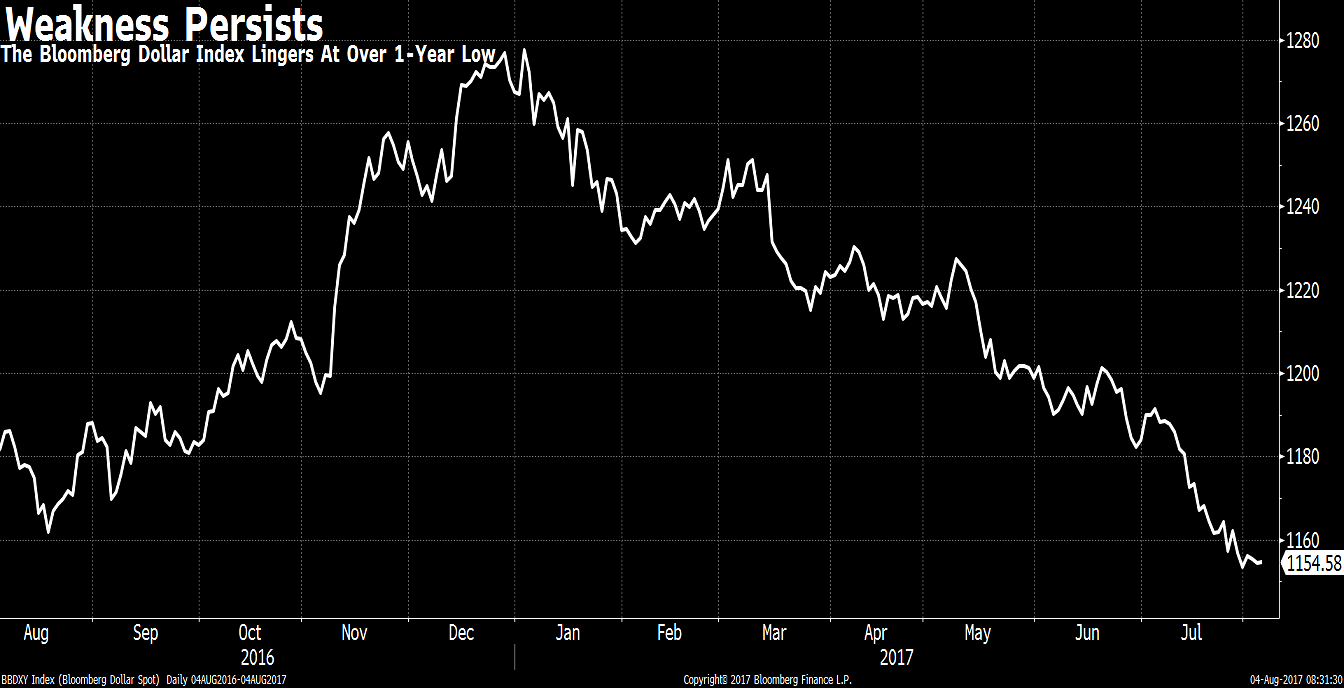
That being said, Wood expects the currency is likely to break the barrier – upwards or downwards – in the month of August, he said. A deflationary rally led by another slump in oil prices (“certainly a possibility”) and the Federal Reserve beginning to trim its $4.5 trillion balance sheet will make the outcome more likely.
On the other hand, the Fed deciding to “U-turn” its monetary tightening path could trigger the U.S. dollar to fall below the current levels.
Also Read: How the Prolonged Dollar Slide Reshapes the Investment Landscape
On Donald Trump
Wood partly blames the dollar's weakness on the escalating chaos in the White House. Apart from the constant change in key positions in the Trump administration, his commentary around the tax and trade reforms have also led to worries. These worries, however, may be misplaced.
The reality is that the continuing self-destructive behavior of the 45th American president makes it ever harder to believe he can deliver real reform.Christopher Wood, Long-Term Equity Strategist, CLSA
While Trump's Presidential campaign was a success, his ability to run the executive arm of the government is lacking, Wood said.
“He clearly failed to get into the details of healthcare reform while most of his energies, when not watching cable TV, seem to be consumed by addressing the Russian probe. This resulted in the gratuitous attack on Attorney General Jeff Sessions last week which, like the sacking of former FBI director James Comey, GREED & fear views as an “own goal”.

-
The Economic Imperative: Analysing The Material Driving Force Behind India-Canada Strategic Reset

This economic complementarity is further reinforced by deep institutional investment ties and talent mobility, which form the bedrock of the bilateral framework.
-
Medicine Pricing: Where Must Profit Stop?
India must confront excessive margins, hidden incentives and regulatory gaps that threaten the integrity of medicine.
-
Why Amazon And Flipkart Are Struggling To Beat Meesho In India's Smaller Cities
With 274 million users and lowest-cost logistics, Meesho is defending its value commerce crown against giants like Amazon and Flipkart.
-
High US Salaries, No Green Card Certainty: The Financial Calculation Facing Indian H-1B Families
The suspension of PERM processing at eight technology employers does not cancel existing H-1B visas. What it does is force a question many Indian families have been avoiding: is the US salary worth tying your career and family plans to one employer?
-
Swiggy vs Eternal: Food Delivery's Two Rivals Are No Longer In The Same Race
Eternal is building a private AI assistant, dark.ai. Swiggy is still working out how to make Instamart pay, with an operating loss of Rs 895 crore in the July-September quarter while Blinkit stayed profitable.
-
Where You Live Shapes How You Get To Work | The Reason Why
Two-wheelers are the most popular way to get to work in India, accounting for nearly 43% of workplace commutes.
-
Unhedged Position: Can India See An Indonesia-Style Time Correction?
The Nifty is trading below levels it first clocked in 2024. Is there, then, as I have suggested in the headline, potential that the current time correction drags on painfully for the next three-five, even ten years?
-
Navigating Friction And Energy Realities: An Analysis Of Marco Rubio's October Visit To India
Occurring at a critical juncture marked by stalled trade negotiations and escalating geopolitical pressures over global energy supplies, the visit offers a profound window into modern US-India relations.
-
India Exports Capital. Why Not Export Trusteeship?
The big question, then, is whether India can build an institution that global borrowers, investors, banks, and lawyers can trust, even without an Indian connection.
-
France's Economy & Politics Are In Crisis | The Reason Why
Let's look at how the French economy and politics evolved under Nicolas Sarkozy, Franois Hollande and Emmanuel Macron.










