China’s Steel Output Recovers As Market Responds To Stimulus
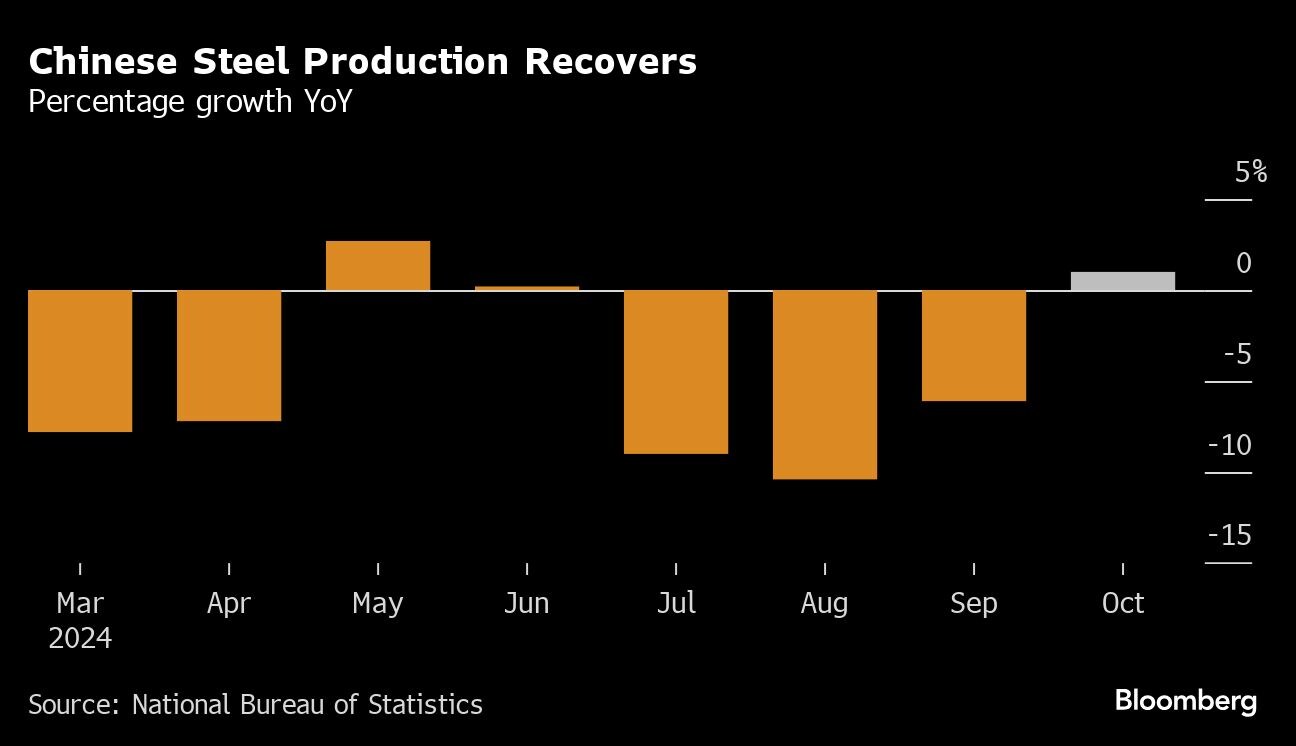
(Bloomberg) --Chinese steel output recovered in October, snapping four months of declines, as sentiment brightens following Beijing's efforts to rekindle economic growth.
Healthier margins allowed steelmakers to churn out more metal on a monthly basis for the first time since May, with production rising to 81.88 million tons, an increase of 6.2% on September and 2.9% higher than last year, according to the statistics bureau on Friday.
The increase means that the cumulative drop in output over the first 10 months compared to 2023 has now narrowed to 3%, suggesting the industry is still on track to surpass 1 billion tons for a fifth consecutive year at current operating rates.
Although a lot of mills are still losing money and the property sector continues to drag on demand, analysts cited a pick-up in orders from manufacturing and state-backed construction activity as well as a spike in exports. However, the industry's long-term prospects remain gloomy.
The main steel association called on mills last month to maintain their production discipline after the rebound in prices, warning that conditions haven't really changed. While the government has indicated it has the headroom for more stimulus next year, future measures are unlikely to revive the market's traditional wellsprings of demand — new housing starts and scaled-up, steel-intensive infrastructure.
Among other materials, aluminum output rose 1.6% on year to 3.72 million tons, close to the record set in August, as seasonal consumption of the lightweight metal increased. Smelters have restored some idled capacity while new plants have also come online to meet the extra demand, according to Shanghai Metals Market.
Output of power fuels also rose — coal by 4.6% and natural gas by 8.4% — as China kept supplies elevated ahead of peak winter demand. But feeble margins saw crude oil refiners cut runs, with production dropping 4.6%.

-
India's Troika Of Good Luck | Joining The Dots

A weaker Trump, a cooling AI trade and resilient earnings have put Indian markets back in favour. Rising inflation could spoil the party.
-
Talking Points This Week: Leadership Shock At Nvidia, Earnings Strength, And The Fog Over Hormuz
The Anthropic IPO pricing and first trading day, Nvidia's upcoming earnings, and any fresh signals from Iran will set the tone for the following week.
-
Signature Play: The Classic Cocktail Is Dead. Or Is It?
Classic cocktails are disappearing from India's cocktail menus. But they're still being ordered, taught to bartenders and borrowed from. So, who's really having the last drink?
-
A New Samvat Wishlist: Inclusive Prosperity And Human Development
India has strengthened its economic foundations through infrastructure, digital access and enterprise. Its next growth chapter must deepen productivity, create better livelihoods and widen participation in prosperity.
-
Love, Sex Aur Dhokha: The Audacious Plot To Spy On Jensen Huang
A Taipei dinner, a Singapore chip buyer and a suspected Chinese asset: inside the alleged spy operation that got close to NVIDIA's Jensen Huang.
-
Ten Things I Learnt This Samvat
Patience can be a trap. Cheap stocks can stay cheap. Leverage can wipe you out. What did Samvat 2082 teach us? Niraj Shah writes on 10 lessons from the year gone by.
-
Talking Points This Week: Tech Nerves, FII Buying, And A Faraway Banking Shock
The global markets are not shining this Diwali. The exception in the large markets is, India.
-
Midterm Rally Lasted A Day. The Hard Reality Of A Divided US May Last Two Years | Opinion
Between a contested AI boom, a debt ceiling that arrives in 2027 and a president with every incentive to act alone, the next two years may prove more volatile than the first day's rally suggests.
-
Blue Wave Will Derail the AI Trade but Won't Dismantle the AI Era | Unhedged Position
The Democrats' sweep of the US Congress will see politics collide with economic forces both over the long and short term.
-
It's Time To Take The GST Council's Bet On Trust Global
Payment records can prove India's services exports, and clear, proportionate rules can bring foreign digital sellers into the tax net.









