China Weighs Cutting Mortgage Rates In Two Steps To Shield Banks
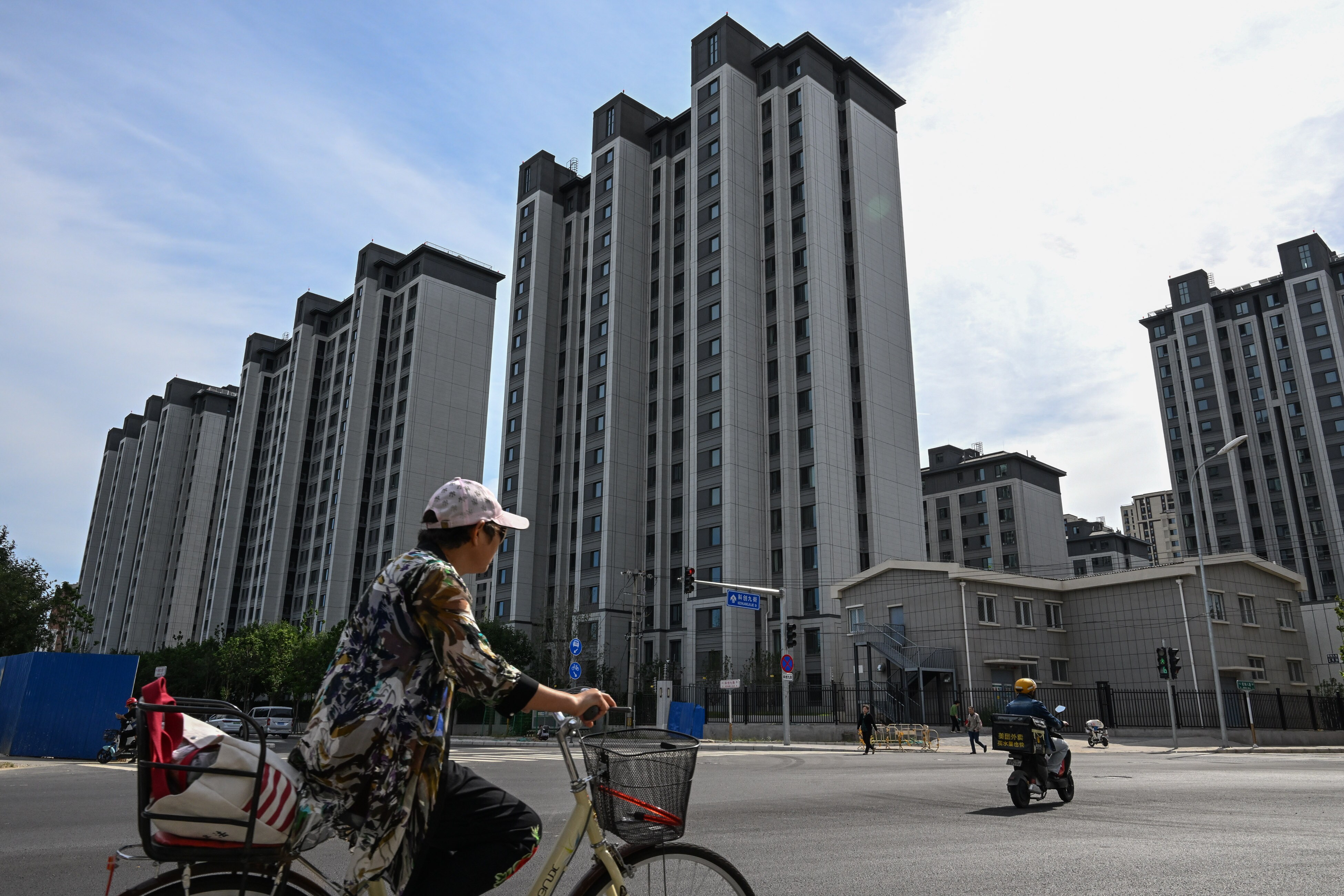
(Bloomberg) -- China is considering cutting interest rates on as much as $5.3 trillion of mortgages in two steps to lower borrowing costs for millions of families while mitigating the profit squeeze on its banking system.
Financial regulators have proposed reducing rates on outstanding mortgages nationwide by a total of about 80 basis points, part of a package that includes an accelerated timeline for when mortgages become eligible for refinancing, according to people familiar with the matter. The first cut may come in the next few weeks while the second move would take effect at the beginning of next year, said the people, asking not to be identified discussing a private matter.
The yet-to-be-finalized plan is likely to apply to first and second homes, pending approval from the top leadership, two of the people said. In China, regulators set benchmarks for mortgage rates that are followed closely by banks. The National Financial Regulatory Administration didn't respond to a request for comment.
Chinese regulators are walking a fine line as they attempt to shore up the battered property market and economy while safeguarding the nation's $66 trillion financial system. Lowering rates too aggressively would pile pressure on the banks, which have already seen their margin tumble to a record low of 1.54% as of end-June, well below the 1.8% threshold regarded as necessary to maintain reasonable profitability.
Bloomberg News reported last week authorities are mulling a plan to allow homeowners to renegotiate terms with their current lenders before January, when banks typically reprice mortgages. They would also be allowed to refinance with a different bank for the first time since the global financial crisis, people familiar with the matter said.
Analysts at China International Capital Corp. and Jefferies Financial Group earlier expected that home owners at some cities would see up to 100 basis points of decline in their mortgage rates.

Concerns about the Chinese economy have intensified after weak earnings reports from major consumer companies and as major global banks downgraded their growth forecasts, suggesting the country may struggle to meet its official target of around 5% this year. The real estate downturn has heavily impacted household wealth and spending.
“In essence, it's a transfer of wealth from banks to households, so positive for consumption,” Larry Hu, head of China economics at Macquarie Group Ltd., wrote in an Aug. 31 note. If all existing mortgages are to be refinanced, borrowers can save about 300 billion yuan ($42 billion) in interest payments annually, equivalent to 0.6% of the nation's retail sales or 0.2% of its gross domestic product, he estimated.
For banks, Citigroup Inc. estimated the worse-than-expected potential cut could lead to an average 8 basis point margin contraction next year and hurt their earnings by 6.4%. Lenders with higher mortgage exposure like the big four state-run banks could be more vulnerable to the reduction, analysts led by Judy Zhang wrote in a note last week.
Existing mortgages carried an average interest rate of about 4.27% as of end-2023, compared with a record low of 3.45% on newly-issued home loans.
Cutting rates in tranches may help smooth out the blow for lenders, which are struggling with falling earnings as Beijing has enlisted them to help revive the flagging economy with cheap loans to consumers and corporates including cash-strapped developers. Banks had resorted to multiple deposit rate cuts over the past year or so to mitigate the impact of lower loan yields.

The proposal is also aimed at narrowing the disparity between rates for new property buyers and existing home owners, which has driven a wave of early mortgage repayments and strained lenders in recent years. Homeowners have taken advantage of cheap consumer loans to prepay mortgages, a practice that is banned by regulators.
China's outstanding amount of home mortgages, which count as prime assets at Chinese lenders, stood at 37.79 trillion yuan at the end of June, the lowest level in nearly three years. Policymakers have taken some forceful steps to lower borrowing costs this year including scrapping a central government-guided mortgage rate floor for first and second home purchases.
The moves, however, have mostly benefited new property buyers.
China's real estate crisis is now extending into its fourth year with no signs of letting up. The sector continues to be a drag on the world's second-largest economy with the fallout spilling over to everything from job market to consumption and household wealth.

-
Signature Play: The Classic Cocktail Is Dead. Or Is It?

Classic cocktails are disappearing from India's cocktail menus. But they're still being ordered, taught to bartenders and borrowed from. So, who's really having the last drink?
-
A New Samvat Wishlist: Inclusive Prosperity And Human Development
India has strengthened its economic foundations through infrastructure, digital access and enterprise. Its next growth chapter must deepen productivity, create better livelihoods and widen participation in prosperity.
-
Love, Sex Aur Dhokha: The Audacious Plot To Spy On Jensen Huang
A Taipei dinner, a Singapore chip buyer and a suspected Chinese asset: inside the alleged spy operation that got close to NVIDIA's Jensen Huang.
-
Ten Things I Learnt This Samvat
Patience can be a trap. Cheap stocks can stay cheap. Leverage can wipe you out. What did Samvat 2082 teach us? Niraj Shah writes on 10 lessons from the year gone by.
-
Talking Points This Week: Tech Nerves, FII Buying, And A Faraway Banking Shock
The global markets are not shining this Diwali. The exception in the large markets is, India.
-
Midterm Rally Lasted A Day. The Hard Reality Of A Divided US May Last Two Years | Opinion
Between a contested AI boom, a debt ceiling that arrives in 2027 and a president with every incentive to act alone, the next two years may prove more volatile than the first day's rally suggests.
-
Blue Wave Will Derail the AI Trade but Won't Dismantle the AI Era | Unhedged Position
The Democrats' sweep of the US Congress will see politics collide with economic forces both over the long and short term.
-
It's Time To Take The GST Council's Bet On Trust Global
Payment records can prove India's services exports, and clear, proportionate rules can bring foreign digital sellers into the tax net.
-
Opinion | India at 38: From Innovation Overperformer to Innovation Powerhouse
India now has 453 VC-backed deep science startups, 18 of them late-stage, after 117 percent growth since 2020. Laurus Labs, at USD 9.3 billion, is the most valuable deep science company in any middle-income economy outside China.









