China Braces for Worse Flooding As Deaths In Beijing Hit 11
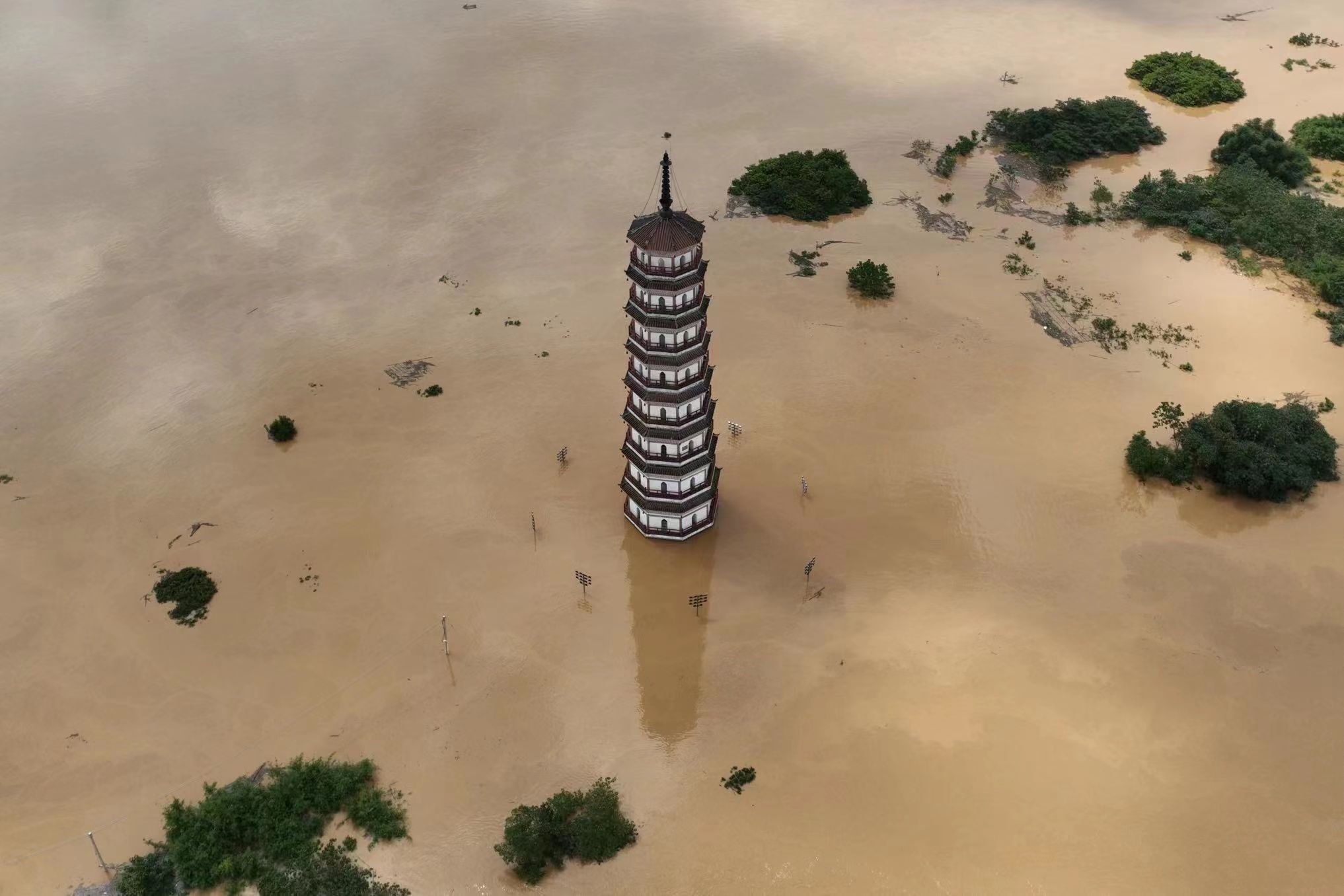
(Bloomberg) -- China warned of intensified flooding across northern regions as the death toll from days of torrential rain in Beijing grew to 11 in the wake of Typhoon Doksuri.
Flooding in areas including Beijing, Tianjin and Hebei province could get worse due to heavy downpours, the nation's emergency management ministry warned late Monday. Heavy rains hit the west suburban parts of the capital most severely. The deaths include at least one rescue worker and a local official, according to state media. 27 people were reported missing.
Beijing authorities in the capital evacuated more than 50,000 people, state media reported earlier. Scenic areas and some subway and bus lines were shuttered.
Remnants of Doksuri have battered northern China since Saturday evening, threatening damage to power lines and farmland. In Beijing, two people were killed on Monday, and the capital again issued the highest red alert on Tuesday for flooding disasters in the southwestern suburbs of Mentougou and Fangshan.
Read More: Climate Change Is Raising the Threat Level on Rain
Doksuri was one of the strongest typhoons to hit China this year. It landed in the southeastern province of Fujian on Friday, forcing local authorities to close schools and suspend public transport. Power lines were disrupted and the weather bureau reported “serious damage” to coastal fisheries.
The disruptions from extreme weather add another headwind to China's faltering economic recovery. The Caixin manufacturing purchasing managers index for July slid below the key 50 level that marks a contraction, adding to signs that a turnaround is not imminent.
The impact on financial markets from flooding “is likely to be limited,” said Tommy Xie, an economist at Oversea-Chinese Banking Corp. in Singapore. “Nevertheless, if we look at this together with the July PMI data, the extreme weather will have a negative impact on economic activities.”
Authorities have dispatched aid, personnel and food supply to flood-hit districts. Almost 2,000 passengers on two trains stranded earlier have been taken to safety. Another train carrying 800 passengers remains stuck near western Beijing.
Officials also announced plans to release some water from the Hai River to parts of Hebei and Tianjin to slow the rapidly increasing flow. The water release starts early Tuesday to Hebei areas and is expected to reach Tianjin around Aug. 9, according to local newspaper Tianjin Daily.
China and other Asian countries are watching the progress of another storm. Typhoon Khanun is forecast to bring torrential rains and high winds to Japan's Okinawa and Amami regions, before moving into the East China Sea on Wednesday morning, according to national weather bureaus. It will then move toward the coastal area of central Zhejiang to northern Fujian in China.
All Nippon Airways Co. has canceled almost 200 flights to and from Okinawa on Monday and Tuesday, affecting about 29,200 people, the Japanese airline said in a statement. ANA also plans to cancel 129 flights on Wednesday and Thursday, a move that may affect 27,950 passengers.
--With assistance from Luz Ding, Ken Wang, Yanping Li, Supriya Singh, Shoko Oda, Jing Li and Heesu Lee.
(Updates death toll.)
More stories like this are available on bloomberg.com
©2023 Bloomberg L.P.

-
Signature Play: The Classic Cocktail Is Dead. Or Is It?

Classic cocktails are disappearing from India's cocktail menus. But they're still being ordered, taught to bartenders and borrowed from. So, who's really having the last drink?
-
A New Samvat Wishlist: Inclusive Prosperity And Human Development
India has strengthened its economic foundations through infrastructure, digital access and enterprise. Its next growth chapter must deepen productivity, create better livelihoods and widen participation in prosperity.
-
Love, Sex Aur Dhokha: The Audacious Plot To Spy On Jensen Huang
A Taipei dinner, a Singapore chip buyer and a suspected Chinese asset: inside the alleged spy operation that got close to NVIDIA's Jensen Huang.
-
Ten Things I Learnt This Samvat
Patience can be a trap. Cheap stocks can stay cheap. Leverage can wipe you out. What did Samvat 2082 teach us? Niraj Shah writes on 10 lessons from the year gone by.
-
Talking Points This Week: Tech Nerves, FII Buying, And A Faraway Banking Shock
The global markets are not shining this Diwali. The exception in the large markets is, India.
-
Midterm Rally Lasted A Day. The Hard Reality Of A Divided US May Last Two Years | Opinion
Between a contested AI boom, a debt ceiling that arrives in 2027 and a president with every incentive to act alone, the next two years may prove more volatile than the first day's rally suggests.
-
Blue Wave Will Derail the AI Trade but Won't Dismantle the AI Era | Unhedged Position
The Democrats' sweep of the US Congress will see politics collide with economic forces both over the long and short term.
-
It's Time To Take The GST Council's Bet On Trust Global
Payment records can prove India's services exports, and clear, proportionate rules can bring foreign digital sellers into the tax net.
-
Opinion | India at 38: From Innovation Overperformer to Innovation Powerhouse
India now has 453 VC-backed deep science startups, 18 of them late-stage, after 117 percent growth since 2020. Laurus Labs, at USD 9.3 billion, is the most valuable deep science company in any middle-income economy outside China.









