Canada To Hit China With Tariffs On Electric Vehicles, Steel
(Bloomberg) -- Canada will impose new tariffs on Chinese-made electric vehicles, aluminum and steel, lining up behind western allies and taking steps to protect domestic manufacturers.
The government announced a 100% levy on electric cars and 25% on steel and aluminum, confirming an earlier report from Bloomberg News. Prime Minister Justin Trudeau unveiled the policy Monday in Halifax, Nova Scotia, where he's gathered with the rest of his cabinet for a series of meetings about the economy and foreign relations.
The surtax on electric vehicles will take effect Oct. 1 and will also include certain hybrid passenger automobiles, trucks, buses and delivery vans. It will be added to an existing 6.1% tariff that applies to Chinese EVs.
The levies on aluminum and steel will come into place Oct. 15. The government released an initial list of goods on Monday and the public will have a chance to comment before it is finalized on Oct. 1.
Trudeau's government is also launching a new 30-day consultation on other sectors, including batteries and battery parts, semiconductors, solar products and critical minerals.

“We are transforming Canada's automotive sector to be a global leader in building the vehicles of tomorrow,” Trudeau told reporters in Halifax.
“But actors like China have chosen to give themselves an unfair advantage in the global marketplace, compromising the security of our critical industries and displacing dedicated Canadian autos and metal workers.”
Canada, an export-driven economy that relies heavily on trade with the US, has been closely watching moves by the Biden administration to erect a much higher tariff wall against Chinese EVs, batteries, solar cells, steel and other products. Canada's auto sector is highly integrated with that of its closest neighbor: The vast majority of its light vehicle production — which was 1.5 million units last year — is exported to the US.
Finance Minister Chrystia Freeland, the most powerful person in Trudeau's cabinet, has been one of the most prominent voices in favor of a harder approach to Chinese vehicle exports, and becoming a closer trade ally with the US.
Freeland said in Halifax that the Chinese policy of oversupply was built on “abysmal” labor and environmental standards. “We are not going to build Canadian policy based on abuses of workers in China and based on pollution in China,” she said.
The government also announced it will limit eligibility for electric vehicle incentives to products made in countries that have negotiated free-trade agreements with Canada.
It will review the new levies within a year of them coming into effect.
‘All Necessary Measures'
China's embassy in Ottawa said the move was a “typical act of trade protectionism and political domination” in defiance of World Trade Organization rules and inconsistent with Canada's position as a self-proclaimed advocate of global free trade and climate action.
Canada's accusation of “overcapacity” is groundless, it said in a statement, arguing that China's rapid development of electric vehicles relies on technological innovation, sound production and sufficient market competition.
“China will take all necessary measures to safeguard the legitimate rights and interests of Chinese enterprises,” the embassy said.
China has retaliated against Canada before. It previously restricted imports of Canadian canola seed for three years — a move seen as retribution for a decision by Canada authorities to arrest Huawei executive Meng Wanzhou in Vancouver on a US extradition warrant. Meng returned to China in 2021.

The European Union has also announced proposed new tariffs on electric vehicles important from China, though at lower levels than the US and now Canada are proposing.
Chinese leaders plan to raise the issue of tariffs when US National Security Adviser Jake Sullivan visits this week, according to the official Xinhua News Agency. Sullivan is due to meet with Foreign Minister Wang Yi and may also meet with Chinese leader Xi Jinping.
The value of Chinese electric vehicles imported by Canada surged to C$2.2 billion ($1.6 billion) last year, from less than C$100 million in 2022, according to data from Statistics Canada. The number of cars arriving from China at the port of Vancouver jumped after Tesla Inc. started shipping Model Y vehicles there from its Shanghai factory.
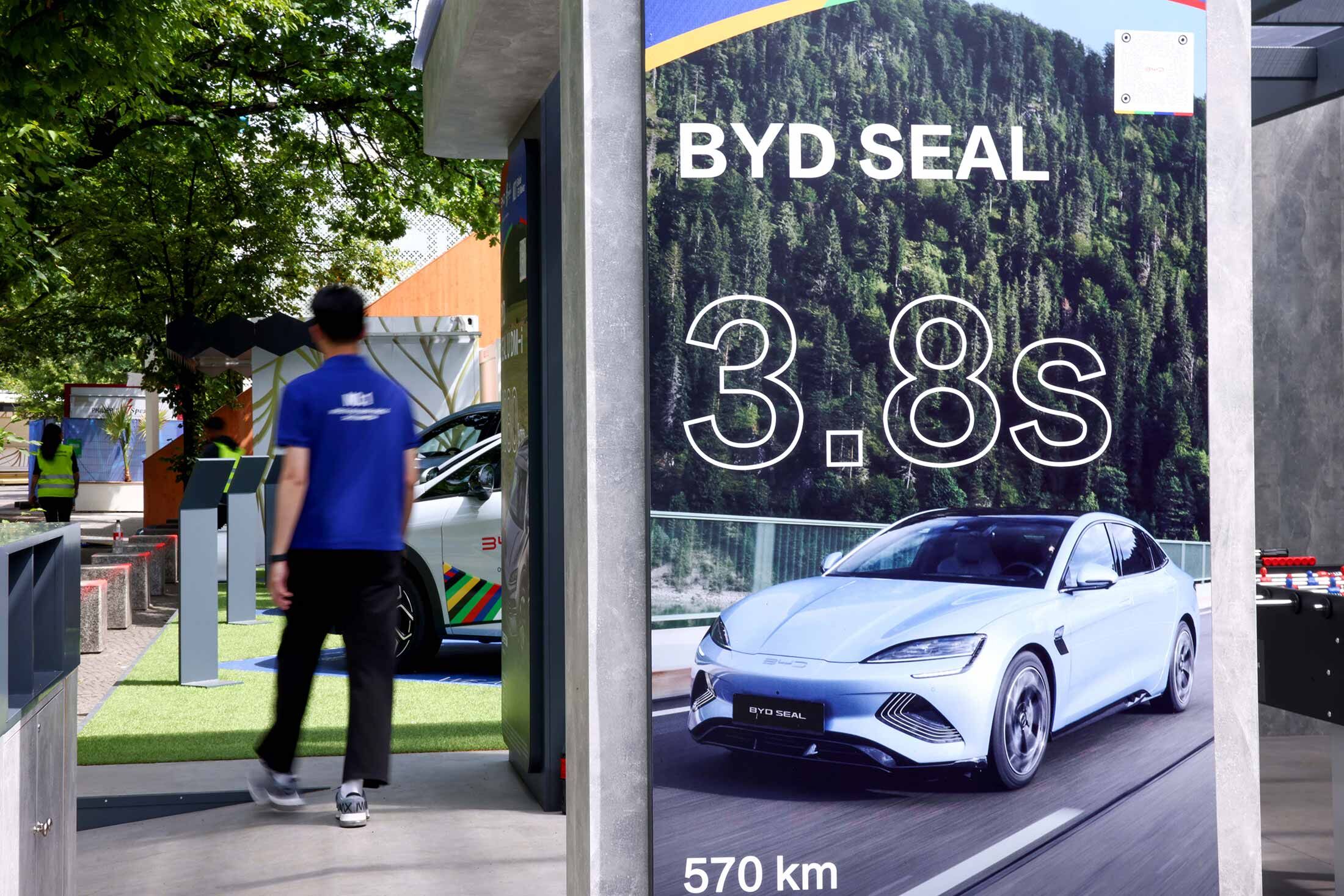
However, the Canadian government's main concern isn't Tesla, but the prospect of cheap cars made by Chinese automakers eventually becoming available. BYD informed the Canadian government in July that it intends to lobby lawmakers and officials about its plans to enter the country.
Trudeau also faced political and industry pressure to protect domestic jobs and wages. The government has bet big on automakers and manufacturers from democratic allies: the government has agreed to to multibillion-dollar subsidies for electric vehicle plants or battery factories for Stellantis NV, Volkswagen AG and Honda Motor Co., among others.
With an upcoming review of the US-Mexico-Canada Agreement in 2026, there is “simply too much at stake” for the auto industry and economy if Canada is misaligned with the US, Brian Kingston, president and chief executive officer of the Canadian Vehicle Manufacturers' Association, said in a statement.
Steel and aluminum producers in Canada have also publicly and repeatedly urged the government to restrict China's access. Catherine Cobden, president and chief executive officer of the Canadian Steel Producers Association, said the move won't create major supply chain challenges.
“Of course there will be adjustments that will have to take place, but we're confident there's enough steel to meet the needs of Canadian and American consumers without unfairly traded, highly subsidized Chinese steel,” she said in an interview.
--With assistance from Curtis Heinzl and Jacob Gu.
(Adds Freeland quote, reaction from China, industry groups starting in paragraph eight.)
More stories like this are available on bloomberg.com
©2024 Bloomberg L.P.

-
The Curious Case of Equitas Small Finance Bank And A CEO Who Quit For Stock

PN Vasudevan believes persistent investor concerns over a perceived conflict of interest had become a governance overhang on Equitas Small Finance Bank's stock, even as the lender improved profitability and asset quality.
-
Talking Points This Week: AI Cash Burn, A Tiger Comeback And An India That Still Finds Its Own Path
India is not immune to higher oil or tighter global liquidity, yet its earnings base is broader, its domestic policy levers are still available.
-
Foreign Investors Own Half Of HDFC Bank and ICICI Bank. An LTCG Cut Could Matter Most Here
Foreign portfolio investors have US$115 billion parked in HDFC Bank, ICICI Bank. If the government cuts long-term capital gains tax, Jefferies says returning foreign money could land here first.
-
'Never Seen This Level Of Negativity': Sandeep Tandon Says The Next Rally May Be Closer Than You Think
Veteran investor Sandeep Tandon says foreign selling is easing, large-caps are due a comeback and mid-caps are crowded, while he turns positive on gold, power and pharma this Diwali.
-
Indians Stay With Family, Not In Hotels | The Reason Why
India still lacks enough clean, reliable and affordable hotels for budget-conscious travellers.
-
The Economic Imperative: Analysing The Material Driving Force Behind India-Canada Strategic Reset
This economic complementarity is further reinforced by deep institutional investment ties and talent mobility, which form the bedrock of the bilateral framework.
-
Medicine Pricing: Where Must Profit Stop?
India must confront excessive margins, hidden incentives and regulatory gaps that threaten the integrity of medicine.
-
Why Amazon And Flipkart Are Struggling To Beat Meesho In India's Smaller Cities
With 274 million users and lowest-cost logistics, Meesho is defending its value commerce crown against giants like Amazon and Flipkart.
-
High US Salaries, No Green Card Certainty: The Financial Calculation Facing Indian H-1B Families
The suspension of PERM processing at eight technology employers does not cancel existing H-1B visas. What it does is force a question many Indian families have been avoiding: is the US salary worth tying your career and family plans to one employer?
-
Swiggy vs Eternal: Food Delivery's Two Rivals Are No Longer In The Same Race
Eternal is building a private AI assistant, dark.ai. Swiggy is still working out how to make Instamart pay, with an operating loss of Rs 895 crore in the July-September quarter while Blinkit stayed profitable.










