Does The Flat Yield Curve Point To A Looming Recession?
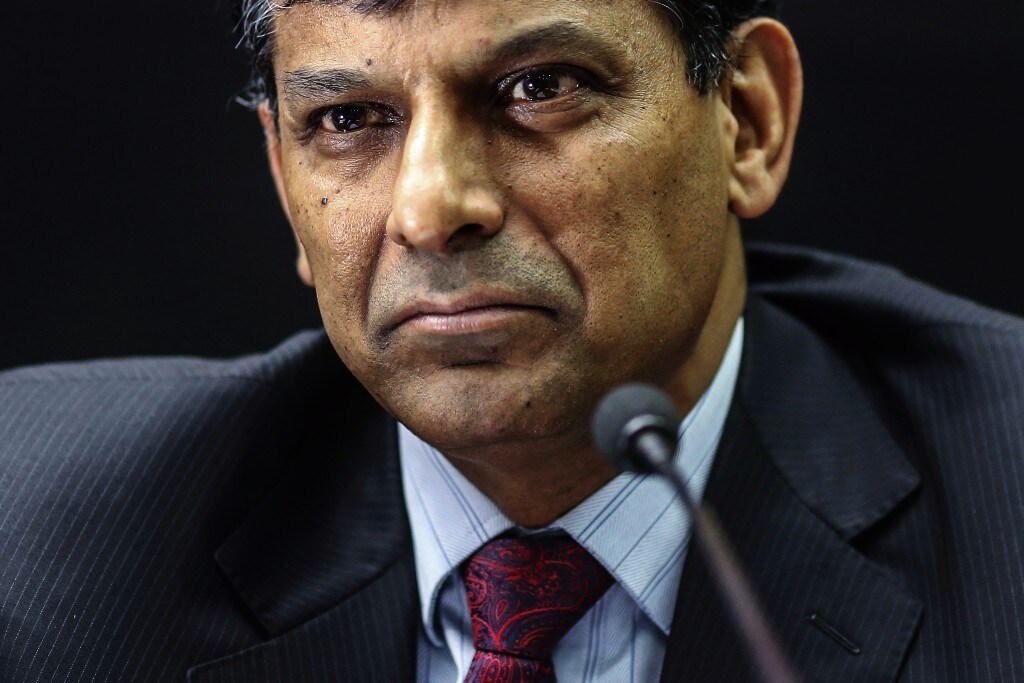
Is the flattening yield curve in the U.S. bond market sending signals of a looming recession? That's still not clear, Former RBI Governor Raghuram Rajan wrote in the Financial Times.
The difference or the spread between the yield on two-year Treasury bills and 10-year benchmark bond is narrowing. It “has compressed to less than 40 basis points, he wrote. In trader parlance, that means ‘the yield curve has been flattening', which has previously been a strong predictor of recessions,” he wrote. “Is that the case today?”
The Fed's conviction to increase rates every quarter till the end of the next year could be one of the reasons pushing the two-year yield higher despite inflation around its 2 percent target, according to Rajan, professor of finance at the University of Chicago's Booth School. While that should push up rates, it hasn't.
One obvious explanation is that the European Central Bank and the Bank of Japan are continuing their quantitative easing. The sheer flow of money still pouring into the long end may be keeping yields down — after all, the five-year German Bund is at -0.3 per cent and 10-year Japanese bonds yield zero.Raghuram Rajan, Former RBI Governor
Rajan, however, thinks that eventually the rates would start moving up. “Perhaps it is just a matter of time before yields start moving up. This certainly is my preferred explanation,” he wrote.
But he also highlighted the conflicting view that Fed is “mistaken” and will “eventually pause, if not cut”. “The term spread is then low because it is pricing in recession,” he wrote.
And what could hurt growth was over-tightening by Fed, he said. Years of low rates had prompted “companies and sovereigns to borrow lots of money”. And rising rates will increase interest costs, he said citing McKinsey estimates that corporate debt worth $10 trillion is due in the next five years.
A fear about tighter debt market and a threat of a flight to safe haven assets would “would help explain low Treasury yields”, Rajan said.
Concerns over a full-blown trade war might have also made investors fear a recession, he wrote. While the impact of first round of tariffs would be small, it's difficult to capture the exact effect on “intertwined” global supply chains, he said. “And a trade war will be costly.”
While negotiations can prevent conflict, Rajan wrote that the U.S. administration is shoring up support for mid-term polls. That, according to him, may make negotiations difficult.
And if China, already cleaning if up its financial system, gets caught in a trade war, “its difficulties could spread abroad.”
Rajan hoped that politicians don't put the economy that has recovered from the previous crisis “in emergency room again”.

-
Signature Play: The Classic Cocktail Is Dead. Or Is It?

Classic cocktails are disappearing from India's cocktail menus. But they're still being ordered, taught to bartenders and borrowed from. So, who's really having the last drink?
-
A New Samvat Wishlist: Inclusive Prosperity And Human Development
India has strengthened its economic foundations through infrastructure, digital access and enterprise. Its next growth chapter must deepen productivity, create better livelihoods and widen participation in prosperity.
-
Love, Sex Aur Dhokha: The Audacious Plot To Spy On Jensen Huang
A Taipei dinner, a Singapore chip buyer and a suspected Chinese asset: inside the alleged spy operation that got close to NVIDIA's Jensen Huang.
-
Ten Things I Learnt This Samvat
Patience can be a trap. Cheap stocks can stay cheap. Leverage can wipe you out. What did Samvat 2082 teach us? Niraj Shah writes on 10 lessons from the year gone by.
-
Talking Points This Week: Tech Nerves, FII Buying, And A Faraway Banking Shock
The global markets are not shining this Diwali. The exception in the large markets is, India.
-
Midterm Rally Lasted A Day. The Hard Reality Of A Divided US May Last Two Years | Opinion
Between a contested AI boom, a debt ceiling that arrives in 2027 and a president with every incentive to act alone, the next two years may prove more volatile than the first day's rally suggests.
-
Blue Wave Will Derail the AI Trade but Won't Dismantle the AI Era | Unhedged Position
The Democrats' sweep of the US Congress will see politics collide with economic forces both over the long and short term.
-
It's Time To Take The GST Council's Bet On Trust Global
Payment records can prove India's services exports, and clear, proportionate rules can bring foreign digital sellers into the tax net.
-
Opinion | India at 38: From Innovation Overperformer to Innovation Powerhouse
India now has 453 VC-backed deep science startups, 18 of them late-stage, after 117 percent growth since 2020. Laurus Labs, at USD 9.3 billion, is the most valuable deep science company in any middle-income economy outside China.









