Biden’s Israel Balancing Act Gets Harder As Gaza Offensive Grows
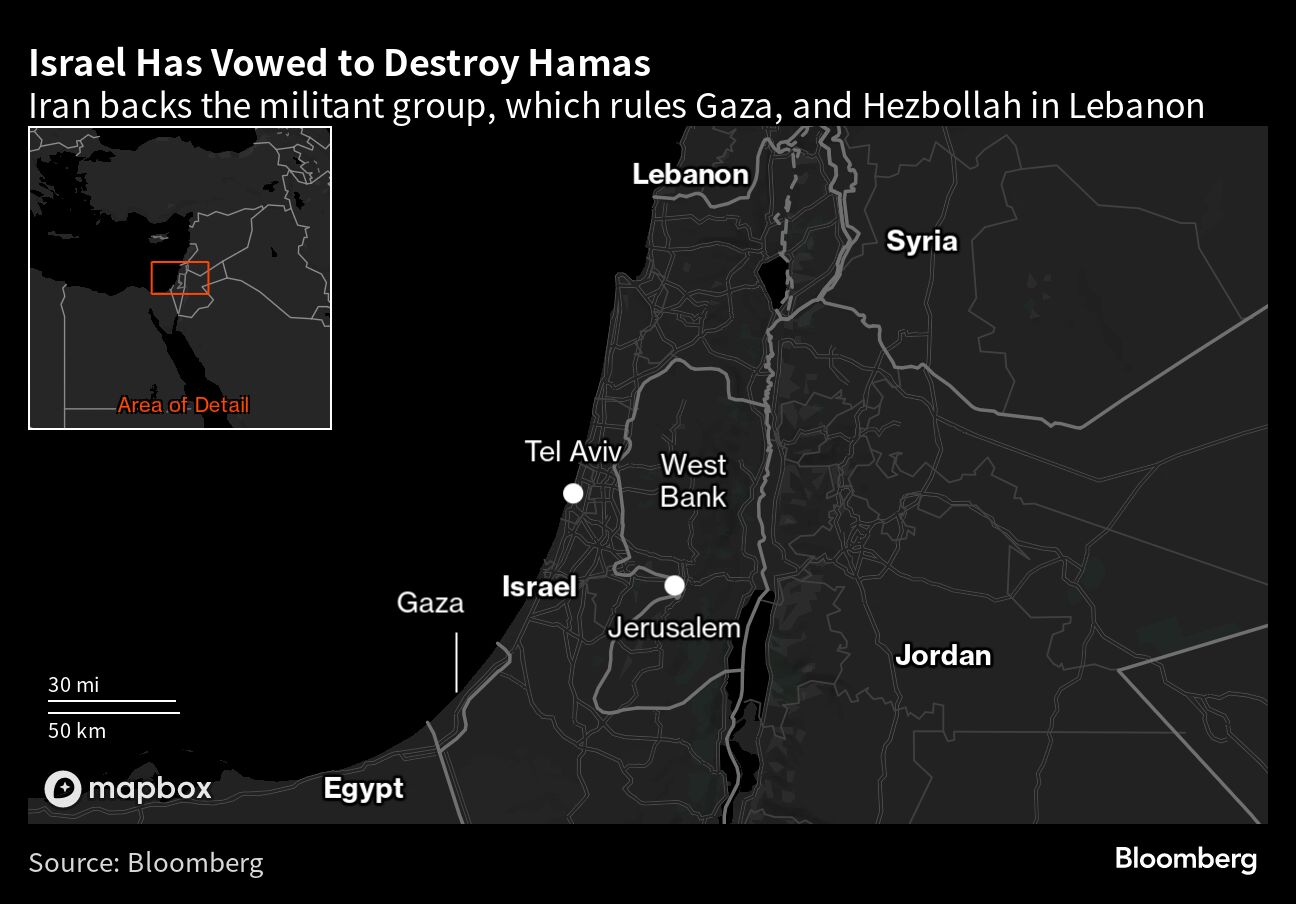
(Bloomberg) -- After internet and mobile phone service abruptly disappeared in the Gaza Strip on Friday, US officials gave Israel a quiet but clear message: Get the networks up and running again.
Prime Minister Benjamin Netanyahu's government quickly obliged, even as Israeli tanks and troops pushed into the enclave in the opening assaults of its ground invasion.
For the US administration, the episode was the latest example of how combining full-on public support of Israel with softer but still insistent signals on protecting civilians and limiting the spread of the conflict is getting results.
“That close public embrace gives you the ability to whisper the more challenging aspects of your advice quietly, and also gives the other side a greater capacity to hear what you're saying,” said Mara Rudman, a former White House adviser on the Middle East who is now a senior counselor at the Center for American Progress think-tank.
But the balancing act is getting harder as Israel steps up its attacks, worsening the humanitarian crisis in Gaza, and fighting spreads on Israel's northern borders with Lebanon and Syria, fueling fears of a wider war.
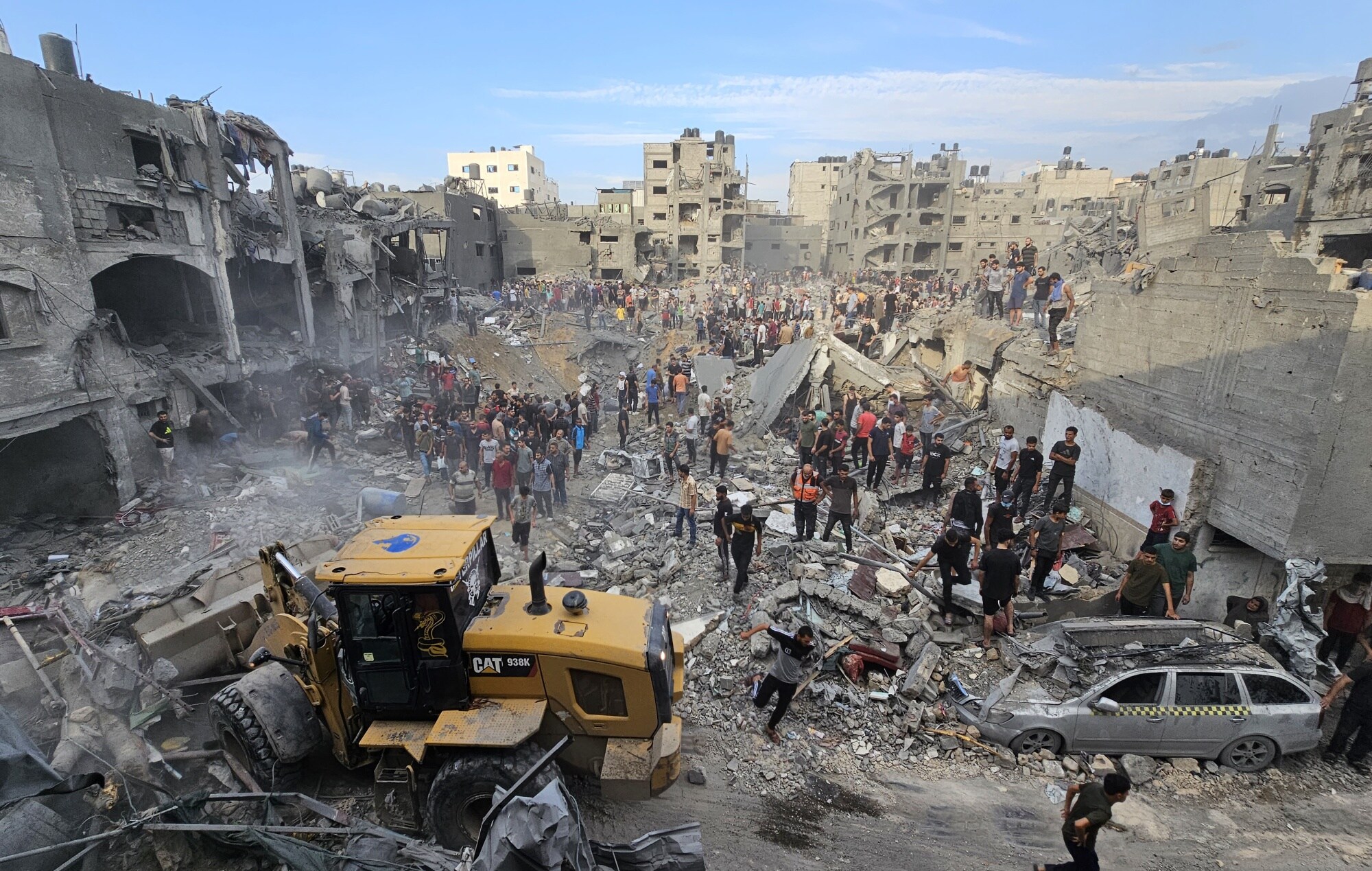
On Tuesday, Israel struck a refugee camp in the north of Gaza, with Palestinian officials in the Hamas-run territory saying hundreds of people were killed or wounded. Arab governments strongly condemned the strike on the Jabaliya camp, which Israel said Hamas was using as a training center.
The rising civilian death toll — Palestinian authorities say thousands of people have been killed by Israeli airstrikes — raises fresh questions about whether the US's relatively unconditional public support is the right approach and whether President Joe Biden is doing enough to prevent the conflict spinning out of control. Meanwhile, the administration is running into growing congressional opposition to its push for more aid to Israel.
“We have leverage — the question is are we using it?” said Daniel Kurtzer, a former US ambassador to Egypt and Israel. “If there has been a message about the bombing, that apparently has not had an impact, because you would have seen some reduction in the scope and scale of what's going on.”
US officials argue that the situation could have been even worse, given Israel's shock and anger in the days after the Oct. 7 attack by Hamas that left more than 1,400 dead, many of them children.
So far, Washington's track record on influencing Netanyahu has been mixed.
The US pushed Israel to delay the ground operation to give time for talks to get more of the 230 hostages abducted by Hamas and other militants on Oct. 7 released. But Hamas, designated a terrorist group by the US and European Union, has let only a handful go. Since launching the ground operation over the weekend, Israel has said the group is using the talks as a delaying tactic.
Israel's battle plan has changed, in part under US pressure, according to officials on both sides, with initial ideas of an even more devastating assault put aside in favor of the current more targeted approach. The Israeli military has described it as a “slow, meticulous” strategy mostly concentrated on northern Gaza, with civilians urged to evacuate to the south.
But as the civilian death toll in Gaza mounts, that may not be enough.
Washington's efforts to get Israel to let more humanitarian aid into Gaza via Egypt have borne limited fruit so far, though officials are hopeful that will begin to change in the coming days.
‘Do a Better Job'
The US has little direct leverage over the only non-Israeli route, the Rafah border crossing. Egypt, Israel and Hamas each blame the other for holding up deliveries. Israel has restored some water and other supplies, however.
On Wednesday, some foreigners and injured Palestinians were allowed to begin leaving Gaza for Egypt for the first time since the Israel-Hamas war began. But the numbers so far are small.
“Israel has to do a much better job than it has been doing of making sure humanitarian assistance is coming in and people have somewhere to go,” said Dennis Ross, who served as the White House Middle East envoy under President Bill Clinton and is now a senior advisor at WestExec Advisors. “All of this needs to be part of Israeli strategy if they're going to have the time and space to do what's necessary, and have us help them.”
The US has recently talked more openly about the need for pauses in the fighting to allow aid in, although Israel has been cool to those ideas. The White House also warned that fuel in Gaza may run out imminently. Israel has refused to allow fuel in, saying that it be used by Hamas for military operations.
The Biden administration's attempts to get Israel to think through options for how to run Gaza after the operation also so far have yielded limited results, according to US officials. While those discussions have begun around possible international involvement in running the enclave, they are still at a very early stage, officials said.
The White House is beginning discreet conversations with Gulf partners about mapping out what happens next, according to two people familiar with the discussions.
US and Israel Weigh Peacekeepers for Gaza Strip After Hamas
The war has already led to attacks on US military bases in the Middle East — Iraq and Syria — that the Pentagon has blamed on Iranian proxies. The attacks have prompted the US, which has sent two aircraft carriers to the eastern Mediterranean, to authorize attacks on targets in Syria that are linked to Iran.
The conflict's also prompted rising anger across the Arab world, including violent protests, that could unwind longstanding, US-led diplomatic efforts to integrate Israel more with its Arab neighbors. The main thrust of those efforts was to try to ensure Israel and Saudi Arabia formalized diplomatic relations.
One key US concern has been that an unrestrained retaliation in Gaza could ruin Israel's nascent security relationships in the region, making it harder for the country to share intelligence with Arab countries and the likes of Turkey.
--With assistance from Fiona MacDonald, Jennifer Jacobs and Sylvia Westall.
More stories like this are available on bloomberg.com
©2023 Bloomberg L.P.

-
Talking Points This Week: Leadership Shock At Nvidia, Earnings Strength, And The Fog Over Hormuz

The Anthropic IPO pricing and first trading day, Nvidia's upcoming earnings, and any fresh signals from Iran will set the tone for the following week.
-
Signature Play: The Classic Cocktail Is Dead. Or Is It?
Classic cocktails are disappearing from India's cocktail menus. But they're still being ordered, taught to bartenders and borrowed from. So, who's really having the last drink?
-
A New Samvat Wishlist: Inclusive Prosperity And Human Development
India has strengthened its economic foundations through infrastructure, digital access and enterprise. Its next growth chapter must deepen productivity, create better livelihoods and widen participation in prosperity.
-
Love, Sex Aur Dhokha: The Audacious Plot To Spy On Jensen Huang
A Taipei dinner, a Singapore chip buyer and a suspected Chinese asset: inside the alleged spy operation that got close to NVIDIA's Jensen Huang.
-
Ten Things I Learnt This Samvat
Patience can be a trap. Cheap stocks can stay cheap. Leverage can wipe you out. What did Samvat 2082 teach us? Niraj Shah writes on 10 lessons from the year gone by.
-
Talking Points This Week: Tech Nerves, FII Buying, And A Faraway Banking Shock
The global markets are not shining this Diwali. The exception in the large markets is, India.
-
Midterm Rally Lasted A Day. The Hard Reality Of A Divided US May Last Two Years | Opinion
Between a contested AI boom, a debt ceiling that arrives in 2027 and a president with every incentive to act alone, the next two years may prove more volatile than the first day's rally suggests.
-
Blue Wave Will Derail the AI Trade but Won't Dismantle the AI Era | Unhedged Position
The Democrats' sweep of the US Congress will see politics collide with economic forces both over the long and short term.
-
It's Time To Take The GST Council's Bet On Trust Global
Payment records can prove India's services exports, and clear, proportionate rules can bring foreign digital sellers into the tax net.
-
Opinion | India at 38: From Innovation Overperformer to Innovation Powerhouse
India now has 453 VC-backed deep science startups, 18 of them late-stage, after 117 percent growth since 2020. Laurus Labs, at USD 9.3 billion, is the most valuable deep science company in any middle-income economy outside China.









