Biden Enacts Most Sweeping Reform Of Gun Exports In Decades
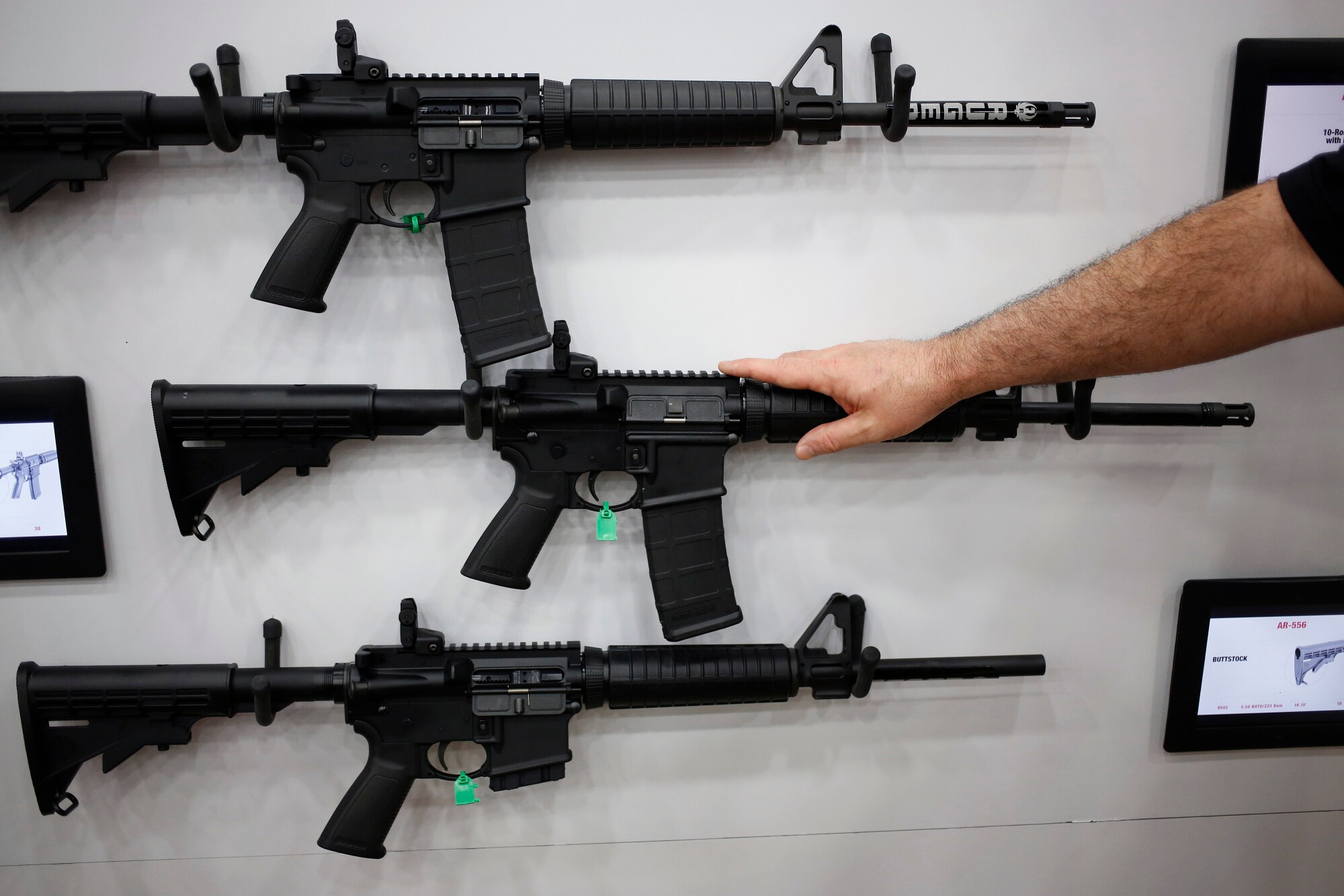
(Bloomberg) -- To curb the use of US-made civilian guns in crimes and human rights abuses abroad, the Biden administration will require exporters to better vet their customers and tighten sales to 36 countries deemed “high-risk” for illicit diversion of semiautomatic firearms.
The new rules — the most sweeping in decades — also cut the length of export licenses from four years to one and give the State Department greater authority to block sales.
The plan resulted from the department's review of its support for the US gun industry — a process that began after a Bloomberg News investigation last year linked record civilian gun exports to higher rates of gun crime in countries including Guatemala, Brazil and Canada.
During the past decade, Republican and Democratic administrations alike pitched US-made guns as a retail product in some of the most violence-prone countries in the world. The investigation documented how legally exported weapons had been used in crimes ranging from a 2022 massacre at a preschool in Thailand to the assassination last August of the leading presidential candidate in Ecuador.
In late October, the Biden administration announced a 90-day freeze of many US firearms exports so it could consider revising the regulations. The new measure, a detailed 150-page document that will now go through the regulatory revision process, was unveiled six months into the freeze.

“The Commerce Department is protecting America's national interest by making it harder for criminals, terrorists and cartels to get their hands on US made firearms,” said Commerce Secretary Gina Raimondo. “Too often, firearms exports fall into the wrong hands and end up being used in ways that directly undermine US national interests.”
Gun rights advocates have called the policy review an “assault on American firearms industry” that would cost US manufacturers and exporters hundreds of millions in lost sales a year. Their supporters in Congress have pressed the administration to end the freeze, vowing to overturn any new restrictions on such exports.
“The rule will simply shutter small businesses all across America by cutting them off from the export market, resulting in the loss of good paying jobs,” Larry Keane, senior vice president of the National Shooting Sports Foundation, said in an email. The new regulations will “do nothing to improve national security,” he added.
The measure falls short of President Biden's campaign promise to return oversight of gun exports to the State Department, which regulated foreign gun sales until March 2020. It will now lead an inter-agency review process that will examine any export applications involving potential human rights concerns.

Those reviews will include any application to export US guns to countries that the State Department has identified as a risk for human-rights abuses and arms trafficking. The new rules require the Commerce Department to evaluate commercial export license applications to those countries with a presumption of denial rather than the current presumption of approval.
The list of countries deemed high risk includes many where the influx of US-made weapons have been linked to widespread violence, including Vietnam, Jamaica, Indonesia and Pakistan as well as countries in the Organization of American States, which includes much of Central and South America.
But the high-risk list omits several places where US guns have been tied to violent gangs or human rights violations, such as Mexico, Thailand, the Philippines and Saudi Arabia.
Despite those omissions, gun-control advocates welcomed the new regulations as an important step toward reducing the US role in abetting crime and armed conflict overseas. Nick Wilson, senior director of gun violence prevention at the Center for American Progress, said the rules offer the US “the opportunity to mitigate the risks posed by irresponsible arms exports while advancing our national security interests.”
Like other advocates of tighter export restrictions, Wilson called on Congress to pass pending legislation that would return oversight of gun exports to the State Department. “Congress must stop prioritizing gun industry profits over national security and human rights,” he said.
For gun exporters, the new regulations not only narrow the potential market, they require more screening of customers and more expense. Exporters must renew export licenses every year and will be required to file more thorough purchase orders in many countries. They also must collect copies of passports or national ID cards from gun dealers and other customers who are overseas.
The new rules also aim to make it easier for federal regulators to scrutinize exports of the most dangerous weapons by creating distinct trade categories for semiautomatic firearms and the components used to create them. Those products had been classified in a catchall group that included everything from hunting rifles to antique collectibles.
(Updates with quote from Commerce Secretary in sixth graph.)
More stories like this are available on bloomberg.com
©2024 Bloomberg L.P.

-
We May Need Another Tukaram Mundhe To Fight Air Pollution | The Reason Why

Developers may install basic measures such as sprinklers and green nets, resume work, and continue violating rules when this equipment stops working.
-
Extracting Value From Battery Scrap Could Be Challenging For India | The Reason Why
A discarded lithium-ion battery still contains valuable materials such as lithium, nickel and cobalt. These can be recovered and reused. When such batteries are crushed and shredded, they produce a dark powder called black mass.
-
One El Nino, India Can Handle. Two Could Break The Granary
India's grain stocks can absorb one bad year, but a second El Nino could drain the buffer in two to three years, economists say.
-
India's Troika Of Good Luck | Joining The Dots
As Jensen Huang's exit drags Nvidia down, a cooling AI trade and resilient earnings have revived investor interest in India. A likely RBI rate hike looms.
-
Talking Points This Week: Leadership Shock At Nvidia, Earnings Strength, And The Fog Over Hormuz
The Anthropic IPO pricing and first trading day, Nvidia's upcoming earnings, and any fresh signals from Iran will set the tone for the following week.
-
Signature Play: The Classic Cocktail Is Dead. Or Is It?
Classic cocktails are disappearing from India's cocktail menus. But they're still being ordered, taught to bartenders and borrowed from. So, who's really having the last drink?
-
A New Samvat Wishlist: Inclusive Prosperity And Human Development
India has strengthened its economic foundations through infrastructure, digital access and enterprise. Its next growth chapter must deepen productivity, create better livelihoods and widen participation in prosperity.
-
Love, Sex Aur Dhokha: The Audacious Plot To Spy On Jensen Huang
A Taipei dinner, a Singapore chip buyer and a suspected Chinese asset: inside the alleged spy operation that got close to NVIDIA's Jensen Huang.
-
Ten Things I Learnt This Samvat
Patience can be a trap. Cheap stocks can stay cheap. Leverage can wipe you out. What did Samvat 2082 teach us? Niraj Shah writes on 10 lessons from the year gone by.
-
Talking Points This Week: Tech Nerves, FII Buying, And A Faraway Banking Shock
The global markets are not shining this Diwali. The exception in the large markets is, India.









