Biden Plans Solar Manufacturing Push to End Project Slowdown
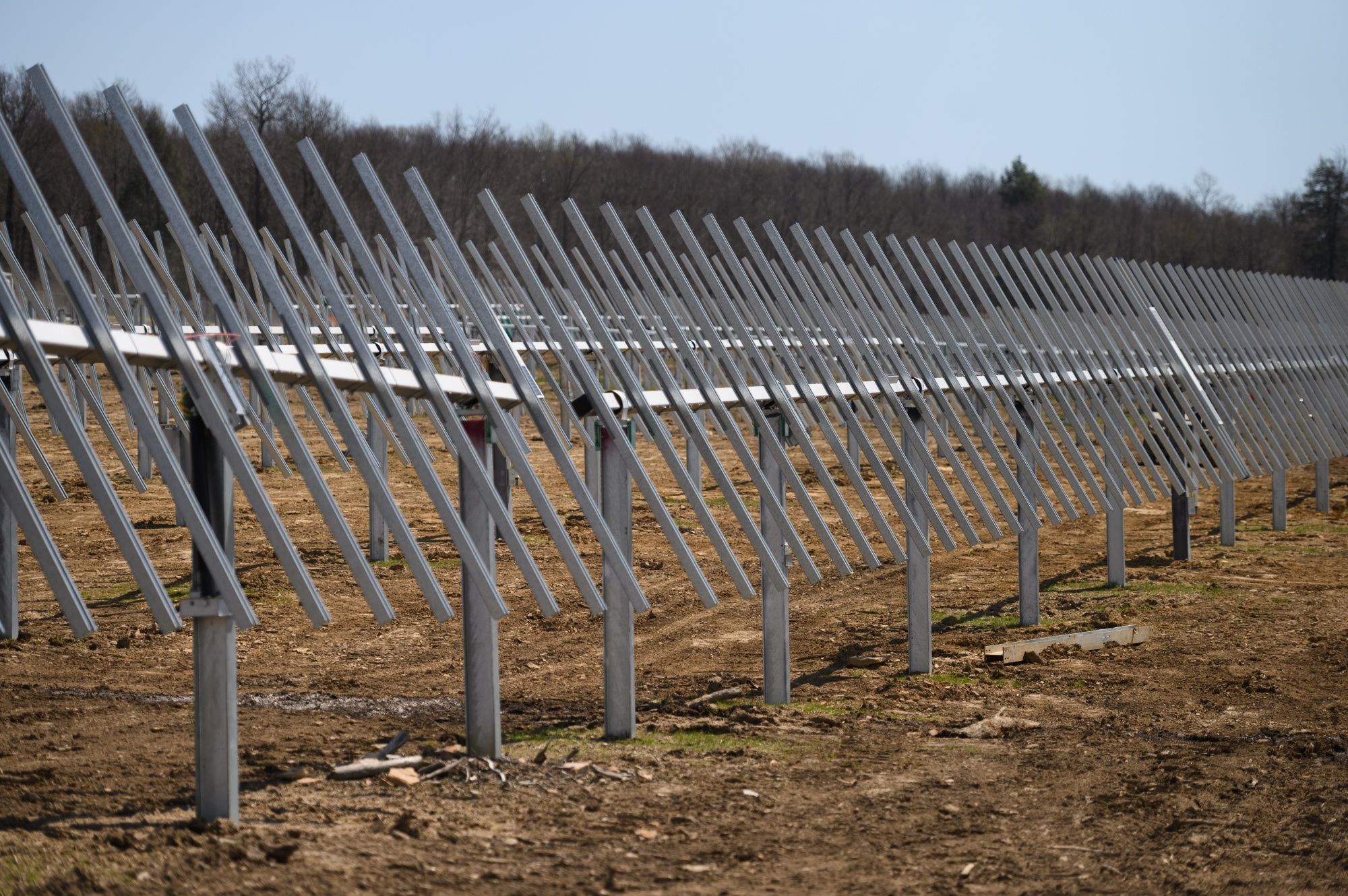
(Bloomberg) -- President Joe Biden will take executive action to boost the US solar sector, seeking to revive clean energy projects stalled by a trade dispute and bolster domestic manufacturing so the nation's climate efforts are less reliant on foreign suppliers.
Biden plans to invoke the Defense Production Act to provide support for US-made solar panels, said people familiar with the matter, who asked for anonymity to discuss private details before a public announcement expected as soon as Monday.
At the same time, the president is set to announce a two-year halt in new solar tariffs, which would allow domestic project developers to continue using foreign-made equipment while US manufacturing ramps up, two of the people said.
Read more: Tariff Fight Paralyzing US Solar Threatens American Steelmakers
The moves are aimed at boosting oft-competing political priorities: combating climate change and nurturing domestic solar manufacturing that has struggled to compete with cheap imports. It's possible Biden's plan could do both in one swoop.
The White House did not immediately respond to requests for comment on details of the plans. Some elements of Biden's proposals were reported earlier by Reuters.
Biden's expected announcement caps days of brainstorming by administration officials over methods to revive clean energy projects that have been hampered by a Commerce Department trade investigation that's led some exporters to halt or slow equipment sales into the US.
“The president's action is a much-needed reprieve from this industry-crushing probe,” Abigail Ross Hopper, chief executive officer of the Solar Energy Industries Association, said in a statement. “During the two-year tariff suspension window, the US solar industry can return to rapid deployment while the Defense Production Act helps grow American solar manufacturing.”
Biden has come under increasing pressure to compel the production of solar panels and other clean energy technology using the Defense Production Act, the same authority wielded by President Harry Truman to make steel for the Korean War and Donald Trump to spur mask production to battle the spread of coronavirus.
The White House is also set to use the federal government's purchasing power to help support American clean energy manufacturers, one of the people said.
The Commerce Department has been investigating whether some Chinese companies are circumventing decade-old tariffs by assembling solar cells and modules in Cambodia, Malaysia, Thailand and Vietnam -- nations which now constitute about 80% of annual panel imports into the US.
The case raised the prospect of retroactive tariffs, prompting manufacturers to halt shipments to the US and slowing solar installations. That disruption is undermining the country's fight against climate change and Biden's efforts to pare greenhouse gas emissions from the power sector.
At least one US utility had made plans to keep a coal plant operating longer as a result of delays to solar projects.
Yet administration officials have been steadfast that they could not interfere with the Commerce Department investigation, which is tied to antidumping and countervailing duties imposed against China a decade ago to offset subsidization and predatory pricing.
Biden would not be taking action to dismiss the case, which is a quasi-judicial proceeding meant to be apolitical, said the people.
The Commerce Department is set to issue preliminary findings in the case by late August.
One route to end the matter would be if Auxin Solar Inc., the small California-based panel maker that instigated the probe, decides to withdraw its petition, according to trade lawyers. Executive action under the Defense Production Act could support purchases of panels from Auxin and other domestic manufacturers.
Chinese solar panel makers gained on news of Biden's plans, with Longi Green Energy Technology Co., shares rising as much as 7.6% in Shanghai.
(Updates with details of case and strategy from fourth paragraph.)
More stories like this are available on bloomberg.com
©2022 Bloomberg L.P.

-
Talking Points This Week: Leadership Shock At Nvidia, Earnings Strength, And The Fog Over Hormuz

The Anthropic IPO pricing and first trading day, Nvidia's upcoming earnings, and any fresh signals from Iran will set the tone for the following week.
-
Signature Play: The Classic Cocktail Is Dead. Or Is It?
Classic cocktails are disappearing from India's cocktail menus. But they're still being ordered, taught to bartenders and borrowed from. So, who's really having the last drink?
-
A New Samvat Wishlist: Inclusive Prosperity And Human Development
India has strengthened its economic foundations through infrastructure, digital access and enterprise. Its next growth chapter must deepen productivity, create better livelihoods and widen participation in prosperity.
-
Love, Sex Aur Dhokha: The Audacious Plot To Spy On Jensen Huang
A Taipei dinner, a Singapore chip buyer and a suspected Chinese asset: inside the alleged spy operation that got close to NVIDIA's Jensen Huang.
-
Ten Things I Learnt This Samvat
Patience can be a trap. Cheap stocks can stay cheap. Leverage can wipe you out. What did Samvat 2082 teach us? Niraj Shah writes on 10 lessons from the year gone by.
-
Talking Points This Week: Tech Nerves, FII Buying, And A Faraway Banking Shock
The global markets are not shining this Diwali. The exception in the large markets is, India.
-
Midterm Rally Lasted A Day. The Hard Reality Of A Divided US May Last Two Years | Opinion
Between a contested AI boom, a debt ceiling that arrives in 2027 and a president with every incentive to act alone, the next two years may prove more volatile than the first day's rally suggests.
-
Blue Wave Will Derail the AI Trade but Won't Dismantle the AI Era | Unhedged Position
The Democrats' sweep of the US Congress will see politics collide with economic forces both over the long and short term.
-
It's Time To Take The GST Council's Bet On Trust Global
Payment records can prove India's services exports, and clear, proportionate rules can bring foreign digital sellers into the tax net.
-
Opinion | India at 38: From Innovation Overperformer to Innovation Powerhouse
India now has 453 VC-backed deep science startups, 18 of them late-stage, after 117 percent growth since 2020. Laurus Labs, at USD 9.3 billion, is the most valuable deep science company in any middle-income economy outside China.









