Asian Currency Levels To Watch As Trump Returns To White House
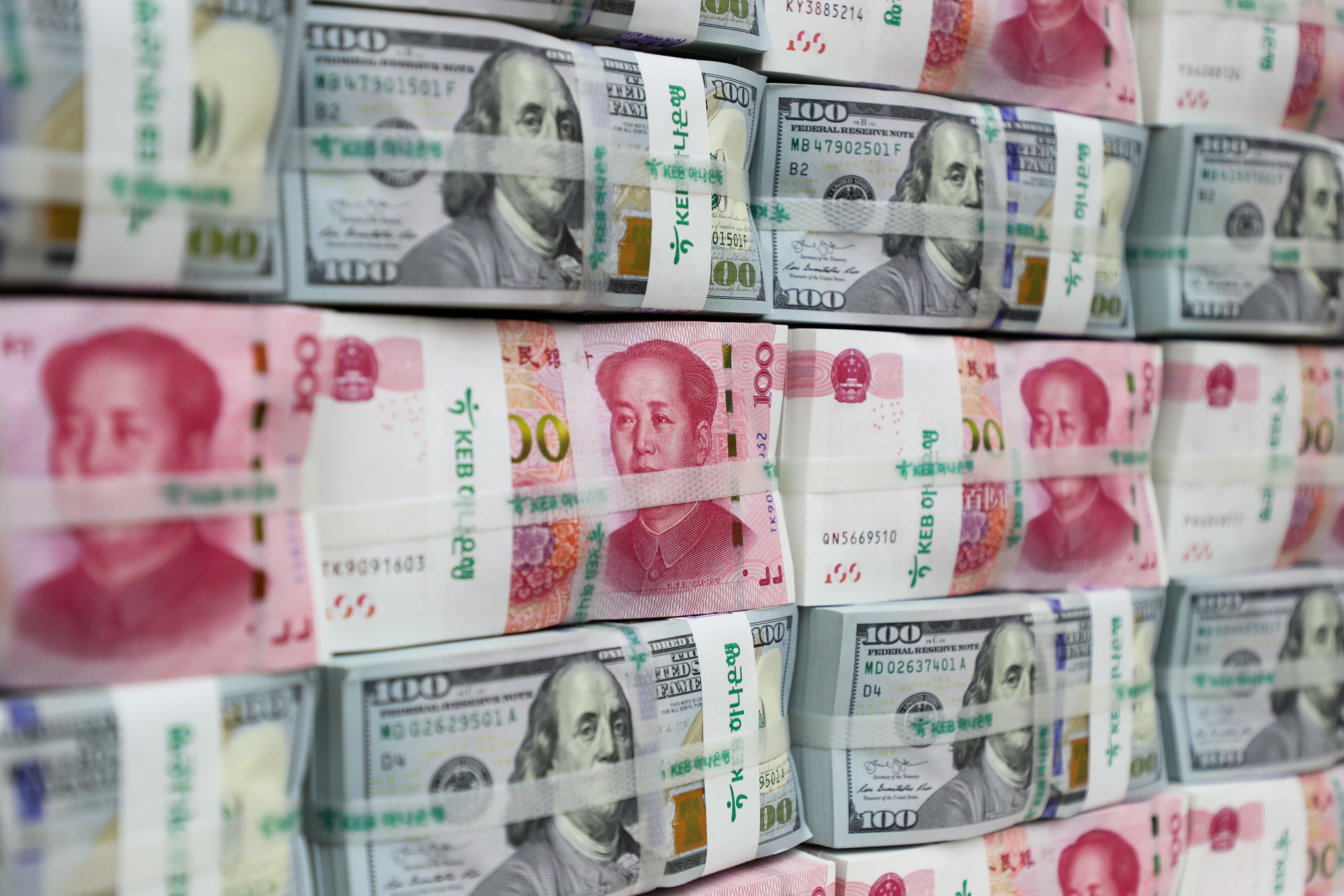
The weakness in Asian currencies is bringing some key levels into view as traders brace for further dollar gains under a Donald Trump administration.
The Bloomberg Asia Dollar Index is on track for a third straight monthly loss on bets that Trump's low-tax, high-tariff policies will fan inflation and bolster the dollar. Latest data from Commodity Futures Trading Commission show both hedge funds and asset managers ramped up their long dollar positions to the highest since May, signaling more downside risk for Asian currencies.
“As the fog of tariff weighs, the path of least resistance for dollar-Asia ex-Japan are broadly skewed to the upside,” said Christopher Wong, a currency strategist at Oversea-Chinese Banking Corp. in Singapore. There may be some pull-back in the dollar in the first quarter given that the Federal Reserve is still in its interest rate cut cycle, and as the dollar will probably start the year strong, he said.
Here are the key levels traders are watching:
Yuan

The onshore yuan is trading near a one-year low as concern over US tariffs and bets that the People's Bank of China will cut interest rates further to prop up the economy pummelled the currency.
Investors expect China to allow for a weaker yuan to counter the impact of tariffs. The PBOC has sought to avert any disorderly move by keeping the yuan fixing capped around 7.2 per dollar, around which the currency is allowed to trade in a 2% band. However, the gap between the fixing versus market estimates has widened to around 900 pips in recent days signaling growing bearish views on the currency.
The onshore yuan came within striking distance of 7.3 per dollar earlier this month, the breach of that would put Sept. 8, 2023 low of 7.3510 into view.
Won

Won fell to the bottom of Asia's currency rankings this year following South Korean President Yoon Suk Yeol's botched attempt to declare martial law. It remains near its weakest level since 2009 even after Yoon was impeached, as investors are once again focusing on the impact of potential US tariffs on the export-oriented nation.
Dollar-won's Dec. 3 high of 1,444.65 is currently serving as a near-term resistance level for the currency pair as local authorities have ramped up warnings against market volatility and indicated readiness to step in to stabilise markets.
Rupee

The rupee fell to a fresh record low versus the dollar last week after the Reserve Bank of India took steps to boost liquidity in the banking system, spurring wagers it may be preparing to cut interest rates soon.
Easing inflation is also adding to expectations that the newly appointed RBI governor Sanjay Malhotra may be more inclined to ease policy.
The dollar-rupee is in the overbought territory based on the relative strength indicator, which means the Indian currency may get a temporary reprieve from depreciation. If there is further downward pressure on the rupee, the next level on watch would be 85 per dollar, a record low.
Rupiah

Dollar resilience weakened the Indonesian rupiah past the key psychological level of 16,000 per greenback. That's put 16,325, its July 30 low as the next important level to watch for currency traders.
Bank Indonesia signalled last week it's using “quite bold” intervention to support the rupiah. The central bank is expected to keep interest rates unchanged on Dec. 18, partially to defend the currency, in a closely called decision.
Ringgit

The ringgit has posted a rare gain among Asian currencies versus the dollar so far this year, with a 3% advance, as the nation's improving economic prospect and Bank Negara Malaysia's repatriation appeal to state firms drove inflows. However, it's narrowed its lead from more than 11% at the end of September due to concern over US tariffs.
Near-term resistance for the dollar-ringgit is seen at 4.49, its Nov. 15 high.

-
We May Need Another Tukaram Mundhe To Fight Air Pollution | The Reason Why

Developers may install basic measures such as sprinklers and green nets, resume work, and continue violating rules when this equipment stops working.
-
Extracting Value From Battery Scrap Could Be Challenging For India | The Reason Why
A discarded lithium-ion battery still contains valuable materials such as lithium, nickel and cobalt. These can be recovered and reused. When such batteries are crushed and shredded, they produce a dark powder called black mass.
-
One El Nino, India Can Handle. Two Could Break The Granary
India's grain stocks can absorb one bad year, but a second El Nino could drain the buffer in two to three years, economists say.
-
India's Troika Of Good Luck | Joining The Dots
As Jensen Huang's exit drags Nvidia down, a cooling AI trade and resilient earnings have revived investor interest in India. A likely RBI rate hike looms.
-
Talking Points This Week: Leadership Shock At Nvidia, Earnings Strength, And The Fog Over Hormuz
The Anthropic IPO pricing and first trading day, Nvidia's upcoming earnings, and any fresh signals from Iran will set the tone for the following week.
-
Signature Play: The Classic Cocktail Is Dead. Or Is It?
Classic cocktails are disappearing from India's cocktail menus. But they're still being ordered, taught to bartenders and borrowed from. So, who's really having the last drink?
-
A New Samvat Wishlist: Inclusive Prosperity And Human Development
India has strengthened its economic foundations through infrastructure, digital access and enterprise. Its next growth chapter must deepen productivity, create better livelihoods and widen participation in prosperity.
-
Love, Sex Aur Dhokha: The Audacious Plot To Spy On Jensen Huang
A Taipei dinner, a Singapore chip buyer and a suspected Chinese asset: inside the alleged spy operation that got close to NVIDIA's Jensen Huang.
-
Ten Things I Learnt This Samvat
Patience can be a trap. Cheap stocks can stay cheap. Leverage can wipe you out. What did Samvat 2082 teach us? Niraj Shah writes on 10 lessons from the year gone by.
-
Talking Points This Week: Tech Nerves, FII Buying, And A Faraway Banking Shock
The global markets are not shining this Diwali. The exception in the large markets is, India.









