As Israel Expands Gaza Offensive, West Tilts Towards Two-State Solution: What Is It?
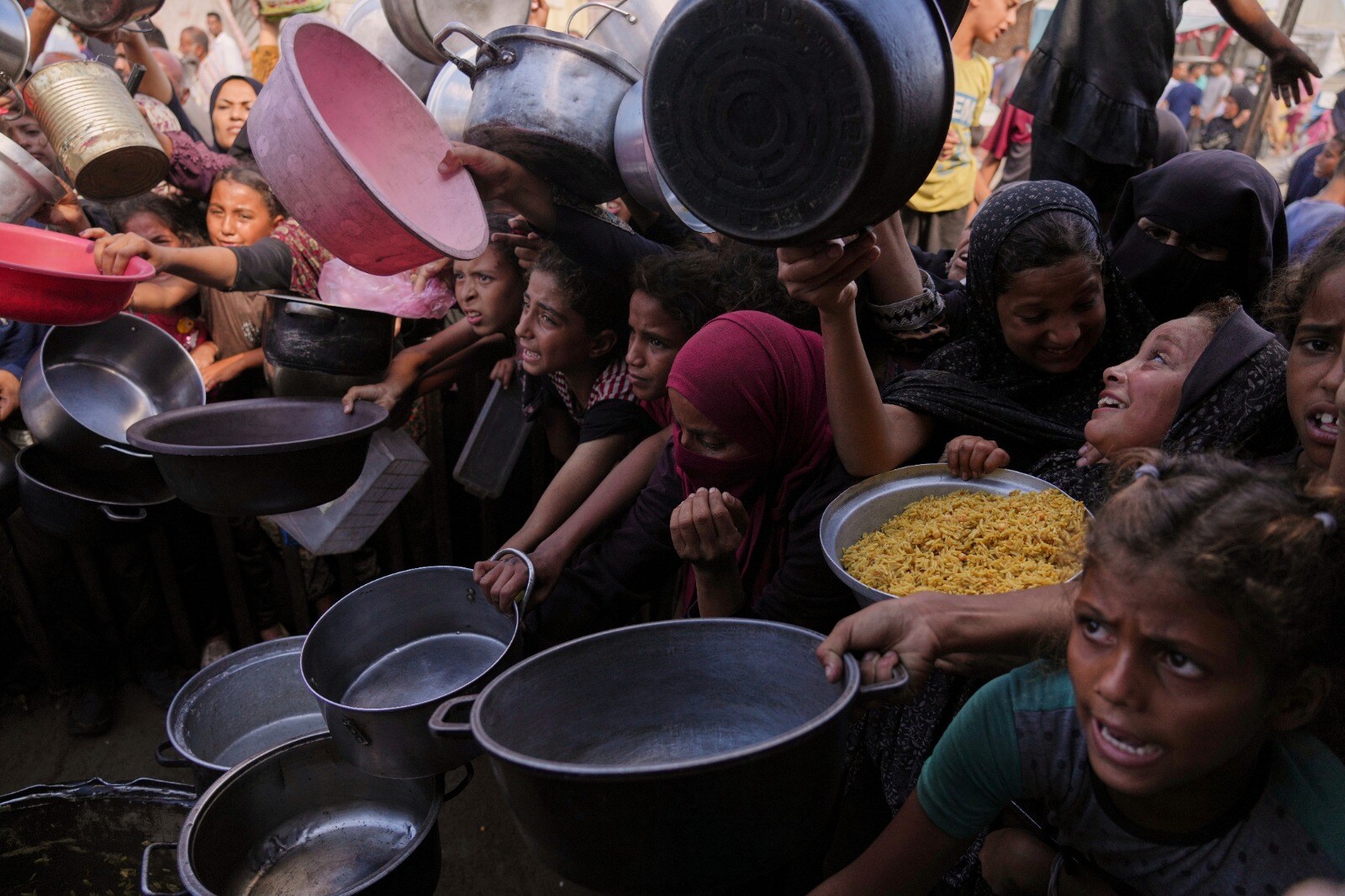
Almost a week after the United Nations declared that Israel has committed genocide in Gaza and released recommendations for the Israeli government and member states, a slew of Western countries are backing the idea of 'two-state solution' to resolve the Israel-Palestine conflict.
The two-state solution is expected to remain in focus at the United Nations General Assembly, and, separately, France and Saudi Arabia are spearheading a one-day summit at the UN to mull over and revive the age-old and long-halted two-state solution for Palestine and Israel.
So, what exactly is the two-state solution?
The two state solution essentially proposes creation of two separate nation states for two different people, that is, the Jewish and the Palestinians. However, the idea is not a creation itself, it is a resurrection of an old one.
In 1947, the United Nations green lit a plan that would partition Palestine into Arab and Jewish states with international rule over Jerusalem. On receiving 56% of the land, Jewish leaders accepted the plan but the Arab League turned it down.
Later, in 1993, the US backed Oslo Accords' had the two state solution as the foundation of its peace talks. Since then, the process has succumbed to heavy opposition from various stakeholders.
On Sunday, Britain, Canada, Australia and Portugal accepted and recognised the existence of a Palestinian state, and France is expected to announce its recognition formally during the UN summit on the question of Palestine, at the UN Headquarters in New York.
Terming the summit as a "circus", Israel's UN Ambassador Danny Danon announced that both United States and Israel will boycott it. The US government has also warned of possible consequences against those who plan on acting against Israel, including against France, whose President, Emmanuel Macron, is one of the main hosts for the summit.
While five other European countries will be recognising the existence of Palestine on Monday, Germany and Italy have hinted otherwise, as per news agency Reuters. Italy believes that the two-state solution could be counter productive, whereas Germany, which has grown reproving of Israeli policy, still finds itself restrained due to the horrors of holocaust.
Israel Expands Gaza Offensive
Israeli forces expanded their ground offensive in Gaza city on Monday even as world leaders gathered in New York for the UNGA wherein even more countries are expected to recognise a Palestinian state.
The Israeli military ordered the evacuation of Jordanian Hospital, a key health clinic, a Palestinian health official was reported as saying on Monday by the Associated Press.
The latest Israeli offensive, which began last Tuesday, pushes the possibility of a ceasefire further away. The Israeli military has threatened to destroy Hamas' military infrastructure within a matter of months.
Israel has also been furthering plans of complete annexation of West Bank, with a goal of extinguishing any window for a prospective future Palestinian state, Al Jazeera reported. This comes as a response to the growing consensus among major countries for a two-state solution to resolve one of the oldest conflicts plaguing the Middle East.
During air raids on the homes in the Sabra neighbourhood of the Gaza city, the Israeli army killed at least 25 members of a Palestinian family on Sunday while advancing with its tanks and claiming that the attacks were aimed at and hitting “terrorist” targets, the AP report added.

-
Getting To Work Costs Women More | The Reason Why

It is not just about women paying more than men. It is about women paying much more in cities than in villages.
-
AI Bias In Investing Cannot Be Eliminated, But It Can Be Governed
Framing is a particularly important example as identical financial information presented in terms of gains rather than losses can lead an LLM to reach a different assessment.
-
Joining The Dots | Dark Skies, Steady Diya: Why Hope Holds This Diwali
With war, a weak rupee and foreign outflows weighing on sentiment, policymakers at the NDTV World Summit and market veterans at NDTV Profit Ignite: Diwali Edition offered the same advice: stay invested and filter out the noise.
-
The Curious Case of Equitas Small Finance Bank And A CEO Who Quit For Stock
PN Vasudevan believes persistent investor concerns over a perceived conflict of interest had become a governance overhang on Equitas Small Finance Bank's stock, even as the lender improved profitability and asset quality.
-
Talking Points This Week: AI Cash Burn, A Tiger Comeback And An India That Still Finds Its Own Path
India is not immune to higher oil or tighter global liquidity, yet its earnings base is broader, its domestic policy levers are still available.
-
Foreign Investors Own Half Of HDFC Bank and ICICI Bank. An LTCG Cut Could Matter Most Here
Foreign portfolio investors have US$115 billion parked in HDFC Bank, ICICI Bank. If the government cuts long-term capital gains tax, Jefferies says returning foreign money could land here first.
-
'Never Seen This Level Of Negativity': Sandeep Tandon Says The Next Rally May Be Closer Than You Think
Veteran investor Sandeep Tandon says foreign selling is easing, large-caps are due a comeback and mid-caps are crowded, while he turns positive on gold, power and pharma this Diwali.
-
Indians Stay With Family, Not In Hotels | The Reason Why
India still lacks enough clean, reliable and affordable hotels for budget-conscious travellers.
-
The Economic Imperative: Analysing The Material Driving Force Behind India-Canada Strategic Reset
This economic complementarity is further reinforced by deep institutional investment ties and talent mobility, which form the bedrock of the bilateral framework.
-
Medicine Pricing: Where Must Profit Stop?
India must confront excessive margins, hidden incentives and regulatory gaps that threaten the integrity of medicine.










