America’s Mistake With Modi Is Making Trade Personal: Mihir Sharma
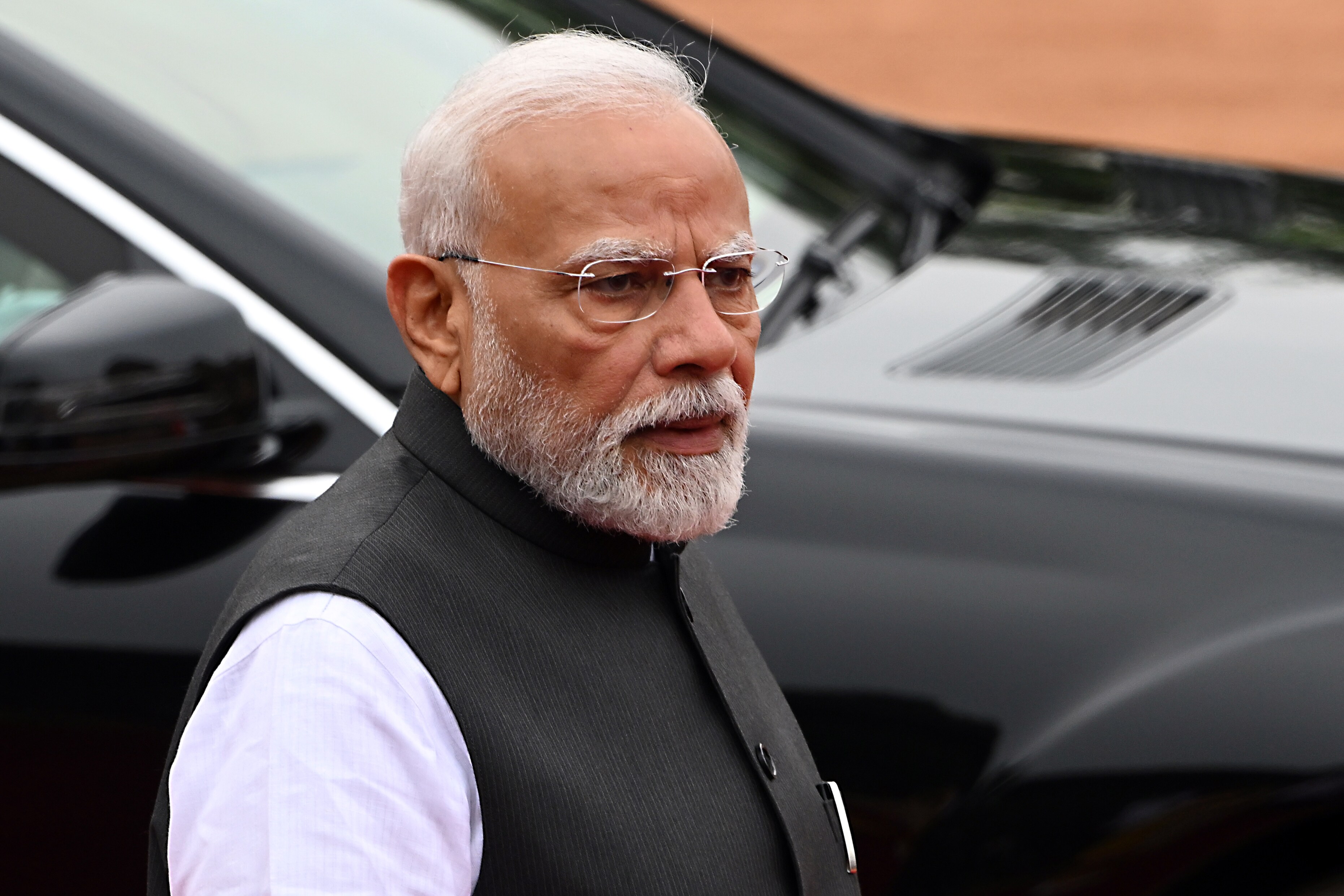
As Donald Trump's 50% tariffs on India kick in, the country seems more defiant than it is worried. If the US president intended this rate — the highest he has levelled so far alongside Brazil — as just another salvo in an ongoing negotiation, then he has misjudged the mood here. The political costs to Prime Minister Narendra Modi if he compromises on trade would be unendurable.
The US administration has committed a series of unforced errors that have not helped its case in New Delhi. These include swipes at India that appear unnecessary and gratuitous. Trump adviser Peter Navarro, for example, called the Russian invasion of Ukraine “Modi's war,” holding the Indian leader personally responsible for its continuation — a statement that will startle many, not least Russian President Vladimir Putin.
The truth and fairness of accusations that India is propping up Russia through its energy purchases are one thing. What is worse, at least in terms of domestic politics, is the tone of recent statements by American officials. Rather than recognizing that this is a moment when New Delhi needs to be given some time to re-examine its approach to trade, they seem intent on torching the rest of the bilateral relationship as well.
For diplomats in New Delhi, the shocks have come quick and fast. First, Trump compared India's fast-growing economy to Russia's, and said both were “dead”. Subsequently, the US treasury secretary called India a “profiteer” at a time of war, and the commerce secretary described the H1-B visa, beloved of the diaspora, as a “scam.”
And then there's Trump's nomination of his ambassador to New Delhi: Sergio Gor, the White House personnel director. You would think officials would welcome the arrival of a trusted Trump loyalist who might still have the president's ear when other channels of communication are breaking down.
On the other hand, the circumstances of the appointment seemed designed to generate resentment. Gor will also serve as Special Envoy for South and Central Asian Affairs, at a time when India is striving anew to distance itself from Pakistan in American eyes. When asked about Gor's appointment, Indian Foreign Minister S Jaishankar said merely “ I have read about it too,” implying that American officials told the media before their counterparts in New Delhi. If so, that would be a break with convention, at a time when long-honored traditions could have provided a bit of reassurance and calm.
Calm is exactly what is needed at the moment. Indians can't be expected to be pleased about the tariffs. Nor might they ever see them as a way to reorder global economic relations, the way that the Trump faithful do. But they could certainly be brought to understand them as a temporary measure, meant to rebalance the bilateral relationship while India proceeds with economic reform and openness at its own pace.
For that, however, Modi needs to be given the political space to make the changes — to domestic regulations and agriculture — that would let him give Trump a mutually acceptable deal. Those reforms might happen if the conversation is kept focused on economic costs and benefits.
No changes will be possible, however, if they are seen as India giving in to bullying by the US. The prime minister will balk at that: His popularity depends on his image as a resolute defender of national interests. If his fervent supporters come to the conclusion that this series of exhortatory statements by US officials amount to a campaign to belittle India, Modi will have no space to maneuver at all.
Tariffs are one thing, but surely you don't need to go out of your way to wound a country trying to deal with the shock? This risks alienating an even wider swathe of Indian opinion — in the one country in the world, remember, where Donald Trump's election to a second term was extremely popular. According to a poll conducted by the European Council for Foreign Relations, 84% of Indians felt Trump's return would be good for their country, as compared to 30% in Indonesia, 22% in the European Union and 15% in the UK.
Evan Feigelbaum, who worked on South Asia policy in the George W. Bush administration, feels that some in Washington are “arsonists who are deliberately torching 25 years of work to build US-India relations.” That is too strong a description — but there's certainly a whiff of smoke in the air.
Here's the thing about trade policy: It's not personal, it's just business. Down the road, a deal's still possible. But if you make it personal, then all bets are off.

-
We May Need Another Tukaram Mundhe To Fight Air Pollution | The Reason Why

Developers may install basic measures such as sprinklers and green nets, resume work, and continue violating rules when this equipment stops working.
-
Extracting Value From Battery Scrap Could Be Challenging For India | The Reason Why
A discarded lithium-ion battery still contains valuable materials such as lithium, nickel and cobalt. These can be recovered and reused. When such batteries are crushed and shredded, they produce a dark powder called black mass.
-
One El Nino, India Can Handle. Two Could Break The Granary
India's grain stocks can absorb one bad year, but a second El Nino could drain the buffer in two to three years, economists say.
-
India's Troika Of Good Luck | Joining The Dots
As Jensen Huang's exit drags Nvidia down, a cooling AI trade and resilient earnings have revived investor interest in India. A likely RBI rate hike looms.
-
Talking Points This Week: Leadership Shock At Nvidia, Earnings Strength, And The Fog Over Hormuz
The Anthropic IPO pricing and first trading day, Nvidia's upcoming earnings, and any fresh signals from Iran will set the tone for the following week.
-
Signature Play: The Classic Cocktail Is Dead. Or Is It?
Classic cocktails are disappearing from India's cocktail menus. But they're still being ordered, taught to bartenders and borrowed from. So, who's really having the last drink?
-
A New Samvat Wishlist: Inclusive Prosperity And Human Development
India has strengthened its economic foundations through infrastructure, digital access and enterprise. Its next growth chapter must deepen productivity, create better livelihoods and widen participation in prosperity.
-
Love, Sex Aur Dhokha: The Audacious Plot To Spy On Jensen Huang
A Taipei dinner, a Singapore chip buyer and a suspected Chinese asset: inside the alleged spy operation that got close to NVIDIA's Jensen Huang.
-
Ten Things I Learnt This Samvat
Patience can be a trap. Cheap stocks can stay cheap. Leverage can wipe you out. What did Samvat 2082 teach us? Niraj Shah writes on 10 lessons from the year gone by.
-
Talking Points This Week: Tech Nerves, FII Buying, And A Faraway Banking Shock
The global markets are not shining this Diwali. The exception in the large markets is, India.









