Davos 2025: AI’s Job Impact Hinges On Reskilling, Says Publicis Sapient Chief Nigel Vaz
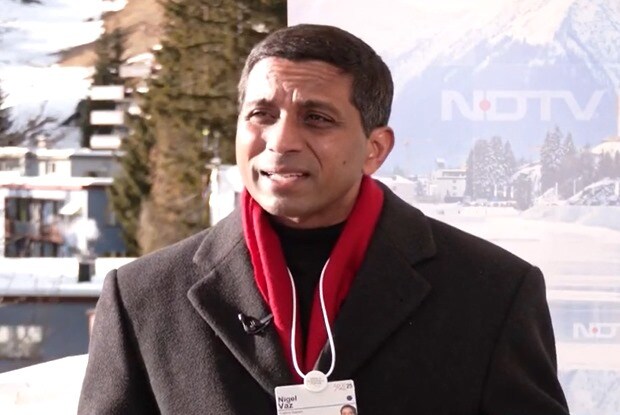
AI will create new job opportunities, especially in energy, healthcare, and financial services, even as concerns exist over AI-induced job losses, particularly in labour-intensive economies like South Asia.
That's the word coming in from Nigel Vaz, CEO of Publicis Sapient, who believes that AI will drive digital business transformation by augmenting human workforces and enabling greater efficiencies.
"AI is going to be embedded in every single aspect of transformation. We are moving from human action-driven processes to more agentic architectures, where digital and physical workforces operate together," Vaz told NDTV's Vishnu Som on the sidelines of the World Economic Forum at Davos on Thursday.
The comments come amid growing concerns about job losses due to AI, particularly in economies reliant on traditional employment structures. However, Vaz argues that AI's ability to handle repetitive tasks will free human workers to focus on higher-value roles.
Services As Software
Vaz highlighted a shift from software as a service to services as software, where AI platforms generate software dynamically based on real-time needs. This transition allows companies to create and evolve software solutions more efficiently.
"Software is now able to create opportunities in the services space, producing outcomes that were previously unattainable. Companies are moving from deploying software products to creating AI-driven platforms that generate software on demand," Vaz said.
Ethics In AI
Addressing ethical concerns, Vaz emphasised that AI relies on data, making data strategy a critical factor in ensuring responsible AI use. The relevance of AI-driven decisions depends on the quality and contextual accuracy of the data used.
"If you have bad data, you will have bad AI. AI models must be trained on relevant and context-specific data to provide meaningful insights. Organisations must ensure their AI solutions create value for users rather than simply extracting data without benefits," Vaz said.
Regulating AI
On AI regulation, Vaz noted the challenge of implementing uniform global standards, given the diverse regulatory environments across countries. He cited the example of GDPR as a framework that gained wider adoption despite being region-specific.
"Regulation will need to be tailored to different markets and expectations. While global forums aim to set standards, local regulations will shape AI deployment. Companies must focus on using AI responsibly to deliver value to consumers," Vaz said.
AI Will Transform India's Consumption: Nigel Vaz | Watch

-
India Exports Capital. Why Not Export Trusteeship?

The big question, then, is whether India can build an institution that global borrowers, investors, banks, and lawyers can trust, even without an Indian connection.
-
France's Economy & Politics Are In Crisis | The Reason Why
Let's look at how the French economy and politics evolved under Nicolas Sarkozy, Franois Hollande and Emmanuel Macron.
-
You May Inherit The Business. You Must Earn Its Credibility.
Succession tests the founder's ability to share authority as much as it tests the next generation's readiness to assume it.
-
Signing Deals Is One Thing; Making Them Work Is Another | The Week In Whys
Sometimes, things don't turn out as planned. Indian companies have lost some bids to rivals, some projects won't produce until 2030.
-
FOMC Wall, PERM Suspension, Hospital Stocks | Talking Points This Week
A PERM suspension would directly affect green-card sponsorship rather than H-1B visas, so the near-term earnings impact could remain relatively limited. The key question is whether this marks a new phase in US scrutiny of Indian IT.
-
Everything, Everywhere, All At Once: Dalal Street's Week To Forget | Joining The Dots
Visa curbs, a Starlink spat and cancer drug caps: what connects this week's shocks for Indian markets
-
India Is Going Abroad For Critical Minerals. But It May Take Years To Pay Off | The Reason Why
Although India's steps are in the right direction, they remain modest compared with India's growing dependence.
-
When Everyone Has AI, What Gives You An Edge?
India's young workforce is entering an uncertain world of work where powerful AI tools are becoming widely accessible. The advantage will belong to those who combine deep expertise with digital fluency, and the distinctly human capabilities that technology cannot manufacture.
-
Wrong Labels, High Pesticide Residues Holding Back Agri Exports | The Reason Why
India needs stronger domestic food-safety and labelling standards, with best practices becoming part of everyday business for farmers, traders and food companies.
-
India Is Easy To Enter, Harder To Attract | The Week In Whys
The question is no longer just whether India can attract companies and capital. It is how much value they create here, how deeply they invest, and whether India remains relatively attractive when they have plenty of other options.