How An Erratic Monsoon Wreaks Havoc On India And Beyond
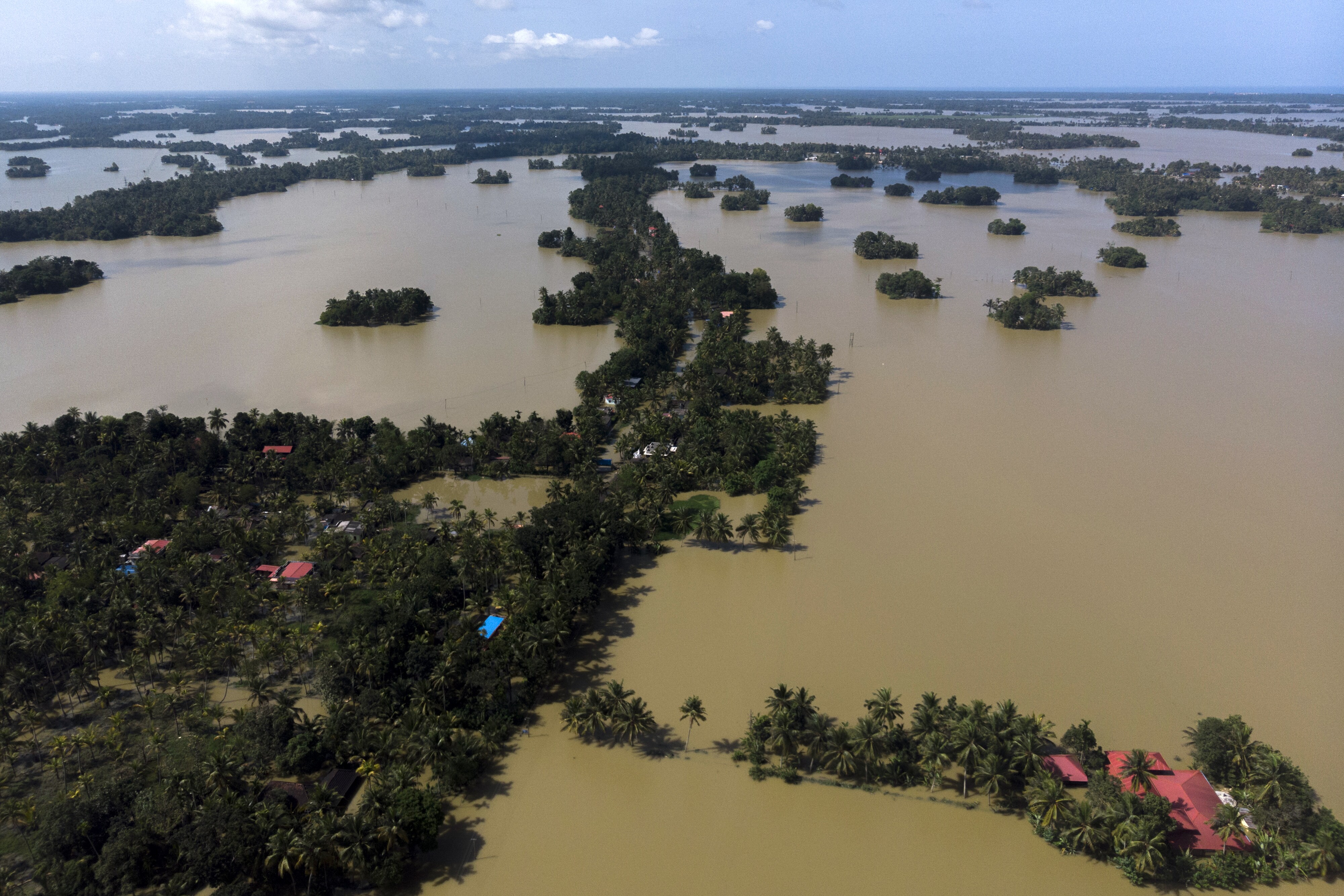
The thunderous rains of India's monsoon season determine the nation's fate for the rest of the year. The June-through-September downpours deliver more than 70 percent of the annual rainfall. When there's too much rain, floods cause landslides and wash crops away; hundreds of people die each year. When there's too little, families go hungry and power plants go dark. This year's monsoons brought both too much and too little rain, depending on the region.


Too Much, Too Little
Agriculture accounts for 16 percent of the country's GDP and 40 percent of jobs, so a failed monsoon season hurts India's economy. Rainfall around the country this year was 9 percent lower than the 50-year average, and more than 30 percent of the country was drier than normal.
In a dry year, crop yields may drop as much as 7.6 percent in areas where farmland is dependent on rain for irrigation, according to a government report. In the event of excessive rainfall, yields may fall as much as 15 percent, the report said. Back-to-back droughts in 2014 and 2015 turned farm growth negative in 2014–15, with only 0.6 percent growth the following year. In Gujarat, the country's biggest producer of cotton, this year's drier-than-normal monsoon season threatened the harvest.
Meanwhile heavy monsoon showers can cause damage worth billions of dollars. About 8.3 million people—almost equal to Switzerland's population—were affected due to floods caused by heavy rainfall this year. In Kerala, the country's top rubber-growing region, nearly 500 people were killed in this year's monsoon, according to government data; floods after heavy showers also damaged thousands of rubber trees, compromising production.

What It Meant for Crops
Traders and analysts across the world keep a close eye on the southwest monsoon that largely influences India's farm output. The rainy season can determine whether the country will be a commodity importer or exporter in any given year, and how much some of the commodities that most affect consumers' lives are going to cost.

This year's monsoon means T-shirts and bedsheets may get more expensive. A smaller-than-expected cotton crop in India this year—mainly due to dry weather and unseasonable rainfall in some parts—and forecasts for a global deficit in 2018–19 may help boost New York prices, which are trading near a nine-month low.
India's cotton exports are expected to fall 20 percent this year, while imports of some high-quality fiber are set to surge 33 percent, according to Vinay N. Kotak, a director at Kotak Commodity Services Pvt., who has been trading cotton for about 38 years.

Global coffee prices may rise this year as production in India is likely to slump to the lowest in 21 years—a result of heavy showers, flooding and landslides damaging trees in the main growing areas. Output in the year ending Sept. 30, 2019 may be about 25 percent lower than the 316,000 tons estimated by the state-run Coffee Board for 2017–18, according to A.L.R.M. Nagappan, vice president at the United Planters' Association of Southern India. That would be the lowest since 1997–98, government data shows.

Rubber prices may also rise, lifting the cost of household products like gloves, pipes and mats. Kerala's floods destroyed crops, while the heavy rain also caused an abnormal leaf disease that may reduce yields. The result is that Indian output will probably drop the most in four years, according to a person with knowledge of preliminary surveys conducted by the state-run Rubber Board after Kerala floods. The lower production may lead to higher imports and increase benchmark Tokyo rubber prices, which have slumped 16 percent this year.
This year's monsoon hasn't been adverse for all crops. Production of rice, corn and sugarcane are all expected to rise, thanks to well-distributed rains over some areas of India's northwest, central and southern regions. Global sugar prices have dropped more than 14 percent in 2018 on concerns that record production in India, the world's second-biggest producer after Brazil, may result in a biggest-ever global glut.

Sugarcane output may rise 1.85 percent from a year earlier to 383.89 million tons. Monsoon-sown rice production will likely climb 1.8 percent to 99.24 million tons, while corn output is seen rising 6 percent to 21.47 million tons, according to the farm ministry.

It Comes Down To Politics
Various Indian government ministries had been handling rescue and relief efforts after disasters until 2005. India set up a panel after the deadly Gujarat earthquake in 2001, which killed thousands of people, to suggest necessary measures to deal with natural calamities. India passed a disaster management law in 2005 and set up a national agency to coordinate relief operations. The agency works in overdrive during the monsoon season as every year some part of the country gets flooded while some other areas get scant rains.

Ultimately, a nationwide irrigation system would be the best way to minimize the adverse impact of the monsoon's fickle patterns, something the government acknowledges. The government has approved 500 billion rupees ($6.7 billion) to spend on various irrigation projects in five years ending March 2020, according to the farm ministry. The program will help increase the crop under assured irrigation and improve water use efficiency.
Investments in irrigation have reduced the dependence on monsoons over the years, but the progress has been slow and still almost half of the country's farmland is rain-fed.
This year's below-average monsoon has taken away at least one form of ammunition from Prime Minister Narendra Modi's political arsenal. The popular ruling party was betting on normal showers, bumper crops, higher rural incomes and smiling faces of farmers before a general election in early 2019, but will now look for other issues to ensure Modi's re-election. However, the monsoon probably wasn't bad enough to give the opposition the edge.
Additional work by: Jeremy Scott Diamond, Chloe Whiteaker, Adrian Leung, Vrishti Beniwal, Bibhudatta Pradhan, Jody Megson and Richard Eldred
Editors: Anne Cronin, Alyssa McDonald, Unni Krishnan and Arijit Ghosh
©2018 Bloomberg L.P.

-
AI Bias In Investing Cannot Be Eliminated, But It Can Be Governed

Framing is a particularly important example as identical financial information presented in terms of gains rather than losses can lead an LLM to reach a different assessment.
-
Joining The Dots | Dark Skies, Steady Diya: Why Hope Holds This Diwali
With war, a weak rupee and foreign outflows weighing on sentiment, policymakers at the NDTV World Summit and market veterans at NDTV Profit Ignite: Diwali Edition offered the same advice: stay invested and filter out the noise.
-
The Curious Case of Equitas Small Finance Bank And A CEO Who Quit For Stock
PN Vasudevan believes persistent investor concerns over a perceived conflict of interest had become a governance overhang on Equitas Small Finance Bank's stock, even as the lender improved profitability and asset quality.
-
Talking Points This Week: AI Cash Burn, A Tiger Comeback And An India That Still Finds Its Own Path
India is not immune to higher oil or tighter global liquidity, yet its earnings base is broader, its domestic policy levers are still available.
-
Foreign Investors Own Half Of HDFC Bank and ICICI Bank. An LTCG Cut Could Matter Most Here
Foreign portfolio investors have US$115 billion parked in HDFC Bank, ICICI Bank. If the government cuts long-term capital gains tax, Jefferies says returning foreign money could land here first.
-
'Never Seen This Level Of Negativity': Sandeep Tandon Says The Next Rally May Be Closer Than You Think
Veteran investor Sandeep Tandon says foreign selling is easing, large-caps are due a comeback and mid-caps are crowded, while he turns positive on gold, power and pharma this Diwali.
-
Indians Stay With Family, Not In Hotels | The Reason Why
India still lacks enough clean, reliable and affordable hotels for budget-conscious travellers.
-
The Economic Imperative: Analysing The Material Driving Force Behind India-Canada Strategic Reset
This economic complementarity is further reinforced by deep institutional investment ties and talent mobility, which form the bedrock of the bilateral framework.
-
Medicine Pricing: Where Must Profit Stop?
India must confront excessive margins, hidden incentives and regulatory gaps that threaten the integrity of medicine.
-
Why Amazon And Flipkart Are Struggling To Beat Meesho In India's Smaller Cities
With 274 million users and lowest-cost logistics, Meesho is defending its value commerce crown against giants like Amazon and Flipkart.










