How Apple’s Vision Pro Could Save Its VR Competitors
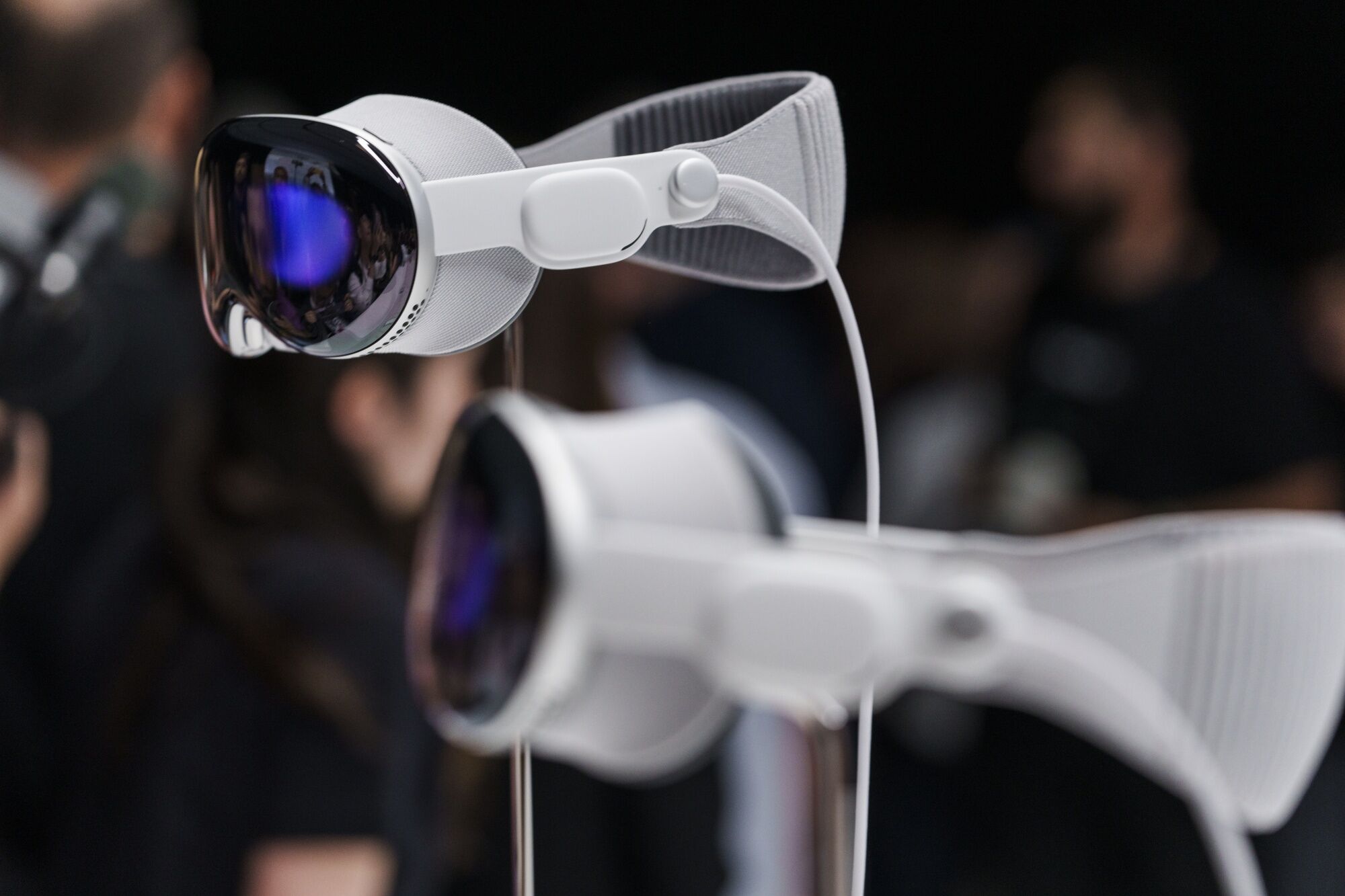
(Bloomberg Opinion) -- Apple Inc.'s Vision Pro headset is an overpriced laggard with no proven market and a decade of history to show why it should fail. Which is precisely the reason its entry into the virtual-reality sector could ignite a boom among rivals fighting to improve their own devices using cheaper components and new technologies.
It's rare that Apple is first to market on anything. We know it wasn't the premier laptop maker, was late to the MP3 business, and certainly didn't invent the smartphone. Yet in each case, the Cupertino-based company brought out what it envisioned was the best version of a device, one that focused heavily on user experience and needs.
A key feature of its new-product strategy is to not get trapped by technological barriers, and instead plow ahead confident in the belief they can be overcome. And if not, Apple leaders have rarely been shy to pull a product or re-engineer to ensure the user experience remains the top priority.
One famous example is Steve Jobs's dissatisfaction with the iPhone screen mere months before launch. It was originally to be made of plastic, but a few weeks with a demo device in his pocket jangling with a set of keys revealed how easy it was to scratch. He got to work rebuilding the device around a glass panel instead.
When the company suddenly switched materials its suppliers were crucial to solving the problem. Apple doesn't assemble its own products, but it does work very closely with vendors to create new chemicals, develop innovative technologies and engineer production processes. This approach means Apple has historically blazed a path forward in hardware and materials that allowed the rest of the sector to ride its coattails. It's common for suppliers to quietly tout their famous client as proof of technical prowess.
Two other case studies show just how influential the US company is in clearing the way for rivals to enjoy easy access to world-changing technology.
Apple's Powerbook G4, released 20 years ago, introduced a metal shell to the laptop market when most competitors were still using plastic.(1) But these new materials required a whole new approach to manufacturing. So Apple worked closely with its Taiwanese supplier to develop a laser welding technique for assembling these cases. The result was a groundbreaking approach that, while initially challenging, taught the industry a new way to envision and build laptops. Within a few years, others followed, including brands such as Google, Dell, HP and Huawei.
Not long after, the iPhone appeared on Apple's radar. From the outset, Jobs knew that he needed to do away with a keyboard — like that sported by the BlackBerry — and go with a touch interface. At the time, one of the most common techniques was to lay two thin plastic sheets close to each other, but not touching. A finger press pushed one against the other, completing a circuit and identifying the location of the touch. It was slow, unresponsive and flimsy.
But Taipei-based startup TPK Holding Co. had a better approach. It used a single layer that sensed changes in electrical current caused by a finger press. This new technology was far better than anything else available, but had not yet been perfected and as a result manufacturing capacity was still lacking.
Rivals, including HTC Corp., Nokia Oyj and Research in Motion Ltd. soon got wind of this superior solution and started using it in their own devices. Within five years, TPK's sales to non-Apple clients had climbed 10-fold and surpassed that to the iPhone maker.
We can expect a similar story to play out with with Vision Pro, which might best be called a mixed-reality device because it combines real and virtual worlds. HTC, Meta Platforms Inc. and Microsoft Corp. are among the companies that, until now, believed they had the best VR products. But Apple has put them back in their places. Some of this is because of the ecosystem that allows the new headset to play nicely with iPhones, iPads, AirPods and Macs.
But a major reason the Vision Pro is widely regarded as the best, after just a few days of its highly controlled demonstration to the world, is because Apple clearly spent a lot of time and money perfecting the underlying technology. This includes the “singular piece of three-dimensionally formed laminated glass” which acts as the lens, alongside a suite of advanced sensors, as well as the miniature high-quality micro‑OLED screens.
Apple has been working hard to develop its own displays for at least eight years and says it filed more than 5,000 patents related to the Vision Pro alone. This means that a lot of the technologies deployed in the device will be exclusive. But not all of them — many may not even be owned by the company.
Equally important for both Apple and its rivals is the $3,499 price tag that prohibits it from becoming a mass-market device, but gives a lot of room for cost shrinkage. Over time, components will get cheaper and production volume will escalate as vendors become more efficient at manufacturing. As happened for metal laptop cases and touch screens, the benefits will be shared across the entire supply chain.
With Apple giving rivals a template for how a mixed-reality headset should work, and by providing vendors a guide for making the parts required, the entire industry will get the kind of boost not seen since Steve Jobs unveiled the iPhone.
More From Bloomberg Opinion:
- Apple Has 520 Reasons Its $3,499 Headset Will Prevail: Dave Lee
- This Key Health Metric Still Evades Gadget Makers: Tim Culpan
- Zuckerberg's Faltering $36 Billion Metaverse Vision: Parmy Olson
(1) Apple started with titanium before going on to release aluminum models.
This column does not necessarily reflect the opinion of the editorial board or Bloomberg LP and its owners.
Tim Culpan is a Bloomberg Opinion columnist covering technology in Asia. Previously, he was a technology reporter for Bloomberg News.
More stories like this are available on bloomberg.com/opinion
©2023 Bloomberg L.P.

-
AI Agents Are Gaining Power. Who Governs Them?

Artificial intelligence agents promise to transform productivity by moving machines from assisting decisions to executing them. But as organisations delegate greater authority to these AI-agents, they must first establish who controls that authority and who remains accountable when things go wrong.
-
Why Swapping Your Old Gold Can Trigger A Rs 5 Lakh Tax Bill, And How You Can Avoid It Legally
Swapping old gold for new is taxed as a sale and a fresh purchase. Getting your own gold remade can cut most of that bill, though it has its own costs.
-
The AI Trade is Done. The Real Opportunity for Investors Starts in 2027 | Unhedged Position
As pureplay AI stocks plunge and circular, capex-led financing unwinds, 2027 is set to be a year of reckoning for AI companies. Yet the bust clears the way for a better opportunity for investors in 2027 -- shifting the spotlight from AI builders to the companies using AI.
-
Leadership As Mission: Why The Age Of AI Demands More Human Leadership
Debjani Ghosh examines how AI is changing leadership, arguing that its success must be measured by its impact on people and the accountability of those guiding its use.
-
We May Need Another Tukaram Mundhe To Fight Air Pollution | The Reason Why
Developers may install basic measures such as sprinklers and green nets, resume work, and continue violating rules when this equipment stops working.
-
Extracting Value From Battery Scrap Could Be Challenging For India | The Reason Why
A discarded lithium-ion battery still contains valuable materials such as lithium, nickel and cobalt. These can be recovered and reused. When such batteries are crushed and shredded, they produce a dark powder called black mass.
-
One El Nino, India Can Handle. Two Could Break The Granary
India's grain stocks can absorb one bad year, but a second El Nino could drain the buffer in two to three years, economists say.
-
India's Troika Of Good Luck | Joining The Dots
As Jensen Huang's exit drags Nvidia down, a cooling AI trade and resilient earnings have revived investor interest in India. A likely RBI rate hike looms.
-
Talking Points This Week: Leadership Shock At Nvidia, Earnings Strength, And The Fog Over Hormuz
The Anthropic IPO pricing and first trading day, Nvidia's upcoming earnings, and any fresh signals from Iran will set the tone for the following week.
-
Signature Play: The Classic Cocktail Is Dead. Or Is It?
Classic cocktails are disappearing from India's cocktail menus. But they're still being ordered, taught to bartenders and borrowed from. So, who's really having the last drink?









