WAVES Summit | Aamir Khan's Recipe For Hindi Cinema Industry: 'Focus On Writing Scripts And Not Genres'
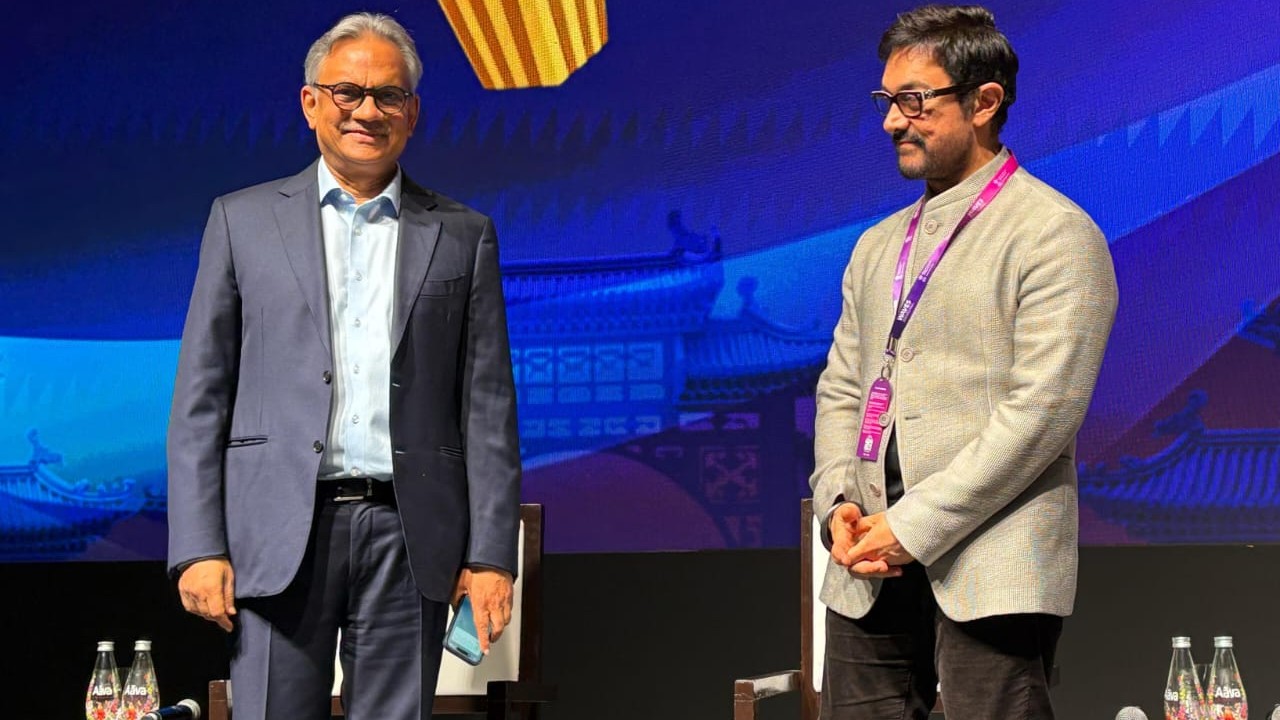
Bollywood needs to start focusing on scripts with universal and gripping themes rather than genre and casting, famed actor Aamir Khan said on Friday, at a session moderated by NDTV at the WAVES Summit in Mumbai.
Khan was speaking at a panel titled 'Indian Cinema, Oriental Outlook', moderated by NDTV Group Editor-In-Chief Sanjay Pugalia. He was joined by fellow Indian filmmaker Prasad Shetty along with noted Chinese filmmakers Stanley Tong and Peter Ho-sun Chan.
The panel discussed the way forward when it came to collaborations between the stakeholders of Indian and Chinese cinema.
Khan noted that the appeal of Indian films with a Chinese audience hinges on emotional resonance and connection that they feel with regard to the movie they are watching.
"When we think about a story from a creative perspective, I don't think we should take into consideration what market are we looking at," Khan said.
He spoke about movies in the Hindi film industry being 'pre-planned' with a set genre and a particular cast in mind in order to appeal to a specific market, and how creatives should instead consider the script as the inception point of the film instead of deeming it a secondary process.
"There's no right or wrong in the creative field, but I'm hesitant to go down that road," Khan said, alluding to the pre-planned style of filmmaking.
According to Khan, the story and the script are the main aspects of a film that excites a creative. And that form of organic storytelling should contain themes that appeal to both Indian and Chinese cultures and audiences, connecting them thematically.
Prasad Shetty shared his observations on the similarities between Indian and Chinese cultures and perspectives, noting that they had similar concerns, family values and emotional makeup.
"The way human emotions work, family emotions work, the value system for parents aspiring for their kids to be successful, worrying about their marriage, taking care of them till they're 45-46 is not very different," he said.
He shared an anecdote where he was watching the Aamir Khan-starrer 'PK' with subtitles and his Chinese assistant walked in and laughed and cried at the same parts of the movie that he did, irrespective of the language barrier.
Shetty said that this meant that there was no need to "customise" a film for a market but instead, filmmakers should focus on making a film with honesty towards the craft and the story.
Ho-sun Chan said that filmmakers should not think in terms of mass appeal and try to artificially capture an audience of people from another country by casting popular actors from there.
He instead pushed for localised storytelling to take precedence, saying that race and colour was not the point but that the story should resonate with the filmmaker and the audiences.
"It could be as local as possible. I still believe local is global, since we're human beings after all," Chan said.
He also advocated to build a collective between filmmakers in Asia to collectively bargain with the pipeline of distribution which is still heavily controlled by Hollywood.
Tong also shared similar thoughts, noting that when he was helming his 1995 Jackie Chan-starrer 'Rumble In The Bronx', the distributors told him that international distribution would cost $30 million, compared to the $5 million budget used to make the movie. Tong advocated for improved collaborations between distributors for wider reach of movies from both nations.

-
India's Troika Of Good Luck | Joining The Dots

A weaker Trump, a cooling AI trade and resilient earnings have put Indian markets back in favour. Rising inflation could spoil the party.
-
Talking Points This Week: Leadership Shock At Nvidia, Earnings Strength, And The Fog Over Hormuz
The Anthropic IPO pricing and first trading day, Nvidia's upcoming earnings, and any fresh signals from Iran will set the tone for the following week.
-
Signature Play: The Classic Cocktail Is Dead. Or Is It?
Classic cocktails are disappearing from India's cocktail menus. But they're still being ordered, taught to bartenders and borrowed from. So, who's really having the last drink?
-
A New Samvat Wishlist: Inclusive Prosperity And Human Development
India has strengthened its economic foundations through infrastructure, digital access and enterprise. Its next growth chapter must deepen productivity, create better livelihoods and widen participation in prosperity.
-
Love, Sex Aur Dhokha: The Audacious Plot To Spy On Jensen Huang
A Taipei dinner, a Singapore chip buyer and a suspected Chinese asset: inside the alleged spy operation that got close to NVIDIA's Jensen Huang.
-
Ten Things I Learnt This Samvat
Patience can be a trap. Cheap stocks can stay cheap. Leverage can wipe you out. What did Samvat 2082 teach us? Niraj Shah writes on 10 lessons from the year gone by.
-
Talking Points This Week: Tech Nerves, FII Buying, And A Faraway Banking Shock
The global markets are not shining this Diwali. The exception in the large markets is, India.
-
Midterm Rally Lasted A Day. The Hard Reality Of A Divided US May Last Two Years | Opinion
Between a contested AI boom, a debt ceiling that arrives in 2027 and a president with every incentive to act alone, the next two years may prove more volatile than the first day's rally suggests.
-
Blue Wave Will Derail the AI Trade but Won't Dismantle the AI Era | Unhedged Position
The Democrats' sweep of the US Congress will see politics collide with economic forces both over the long and short term.
-
It's Time To Take The GST Council's Bet On Trust Global
Payment records can prove India's services exports, and clear, proportionate rules can bring foreign digital sellers into the tax net.









