Prada’s Kolhapuri Chappal Row: Five Times Global Fashion Brands Got Slammed For Cultural Theft
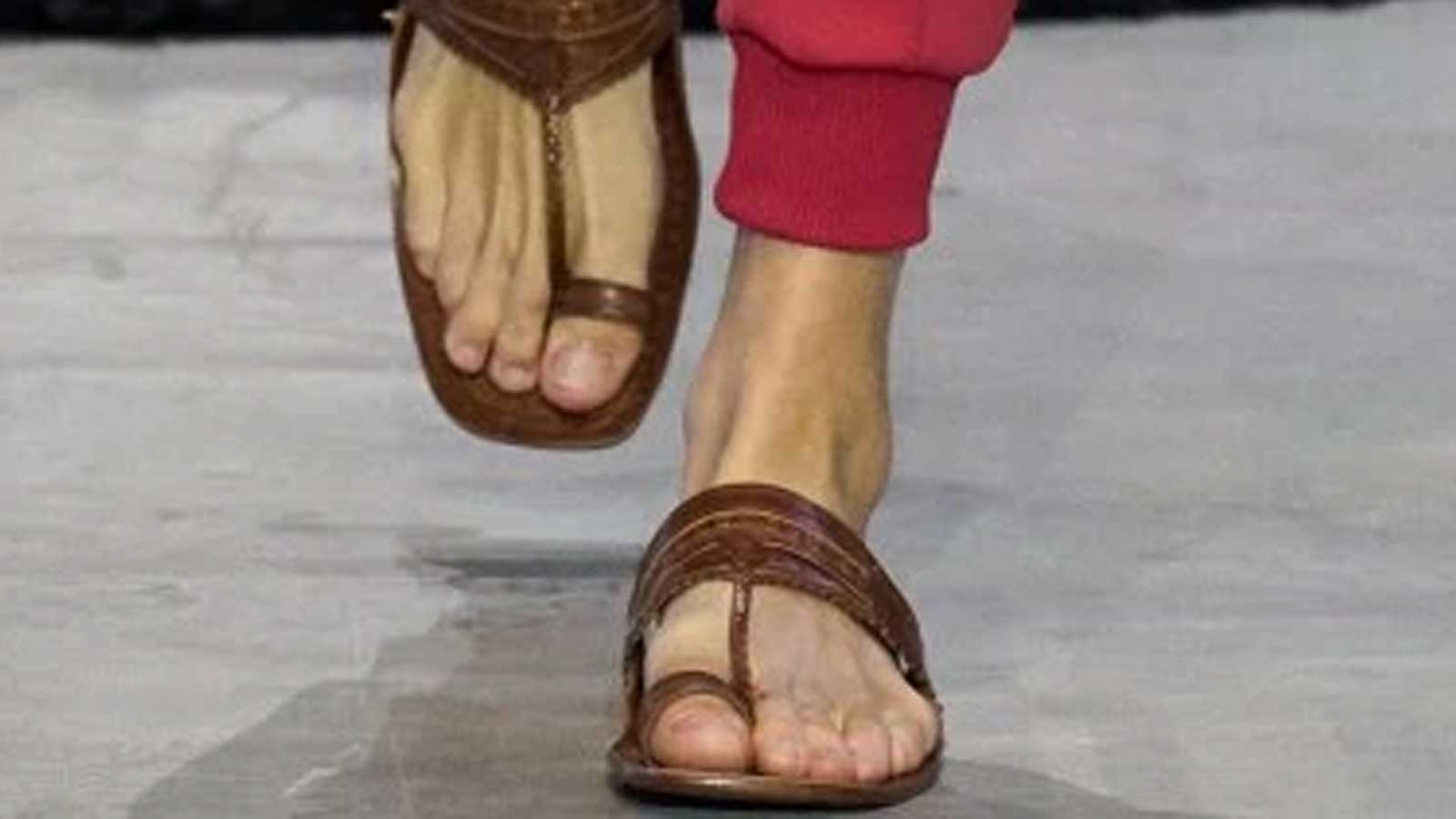
Italian luxury fashion brand Prada is facing backlash following the launch of its Spring/Summer 2026 menswear collection at Milan Fashion Week on Wednesday. The brand's mix of sharp tailoring and flat leather sandals gained global praise, but stirred a controversy on social media.
It turns out that the sandals introduced at Prada's Milan Fashion Week appear to be identical to Kolhapuri chappals, the traditional Indian footwear with a history dating back to the 13th century.
What has upset many Indians is that the brand, while receiving praise for its collection, has offered no acknowledgment of its inspiration. Prada's SS26 sandals, priced at a whopping more than Rs 1.25 lakh, closely resemble Kolhapuri chappals, mirroring their open-toe design, vertical straps and tanned leather finish. These handcrafted shoes hold a GI tag in Maharashtra.
Many social media users are upset because this isn't the first time Western brands have decided to borrow from Indian culture without credit. India has long influenced global fashion. From paisley patterns and mirror embellishments to zardozi embroidery, these designs have featured at global fashion shows many times with little context or acknowledgment of their link to India's ethnic wear and culture.
Times When Western Brands Borrowed Indian Fashion Without Credit
1. At the recent Cannes Film Festival held in May, actress Alia Bhatt's Gucci look stirred debate after the luxurious Italian brand labelled it a “gown,” despite its saree-inspired design.
2. At an earlier show, French luxury fashion house Hermes showcased “flowing silhouettes”, which were clearly inspired by the Indian sari. However, the brand chose to call them a “new exotic silhouette” and did not give any recognition to India.
3. French brand Isabel Marant has been criticised for its tunic that clearly resembles the Indian kurta. Despite the side slits and cotton fabric, the brand calls its design a “bohemian blouse”. The label drew extensive criticism for whitewashing cultural roots and erasing the traditional significance of the design.
4. Ajrakh block print, native to Gujarat and the Sindh region and preserved by the Khatri community, often appears in Zara and H&M collections. The brands have long benefitted from the designs without crediting their cultural heritage or the artisans behind it.
5. Dior recently showcased an Angarkha-inspired wrap tunic, reimagined with a European twist and a very high price. The brand presented no acknowledgment of its Indian origins or cultural significance.

-
'Never Seen This Level Of Negativity': Sandeep Tandon Says The Next Rally May Be Closer Than You Think

Veteran investor Sandeep Tandon says foreign selling is easing, large-caps are due a comeback and mid-caps are crowded, while he turns positive on gold, power and pharma this Diwali.
-
Indians Stay With Family, Not In Hotels | The Reason Why
India still lacks enough clean, reliable and affordable hotels for budget-conscious travellers.
-
The Economic Imperative: Analysing The Material Driving Force Behind India-Canada Strategic Reset
This economic complementarity is further reinforced by deep institutional investment ties and talent mobility, which form the bedrock of the bilateral framework.
-
Medicine Pricing: Where Must Profit Stop?
India must confront excessive margins, hidden incentives and regulatory gaps that threaten the integrity of medicine.
-
Why Amazon And Flipkart Are Struggling To Beat Meesho In India's Smaller Cities
With 274 million users and lowest-cost logistics, Meesho is defending its value commerce crown against giants like Amazon and Flipkart.
-
High US Salaries, No Green Card Certainty: The Financial Calculation Facing Indian H-1B Families
The suspension of PERM processing at eight technology employers does not cancel existing H-1B visas. What it does is force a question many Indian families have been avoiding: is the US salary worth tying your career and family plans to one employer?
-
Swiggy vs Eternal: Food Delivery's Two Rivals Are No Longer In The Same Race
Eternal is building a private AI assistant, dark.ai. Swiggy is still working out how to make Instamart pay, with an operating loss of Rs 895 crore in the July-September quarter while Blinkit stayed profitable.
-
Where You Live Shapes How You Get To Work | The Reason Why
Two-wheelers are the most popular way to get to work in India, accounting for nearly 43% of workplace commutes.
-
Unhedged Position: Can India See An Indonesia-Style Time Correction?
The Nifty is trading below levels it first clocked in 2024. Is there, then, as I have suggested in the headline, potential that the current time correction drags on painfully for the next three-five, even ten years?
-
Navigating Friction And Energy Realities: An Analysis Of Marco Rubio's October Visit To India
Occurring at a critical juncture marked by stalled trade negotiations and escalating geopolitical pressures over global energy supplies, the visit offers a profound window into modern US-India relations.










